
Weekly inspections are the correct baseline for a luxury home-watch membership on any property that sits empty for meaningful stretches. Increase that cadence to twice weekly when pools, HVAC systems, or active mechanical equipment run unattended, when a hurricane or monsoon season is underway, or when an absence stretches past a few weeks. The sections ahead cover insurance compliance, specialist scheduling, reporting standards, and what a proper membership should cost.
TL;DR:
- Inspecting a property weekly limits undetected failure windows to no more than one week, reducing potential damage from leaks or system failures.
- For homes with active systems or during storm seasons, increasing inspection frequency to twice weekly is highly recommended to mitigate risks.
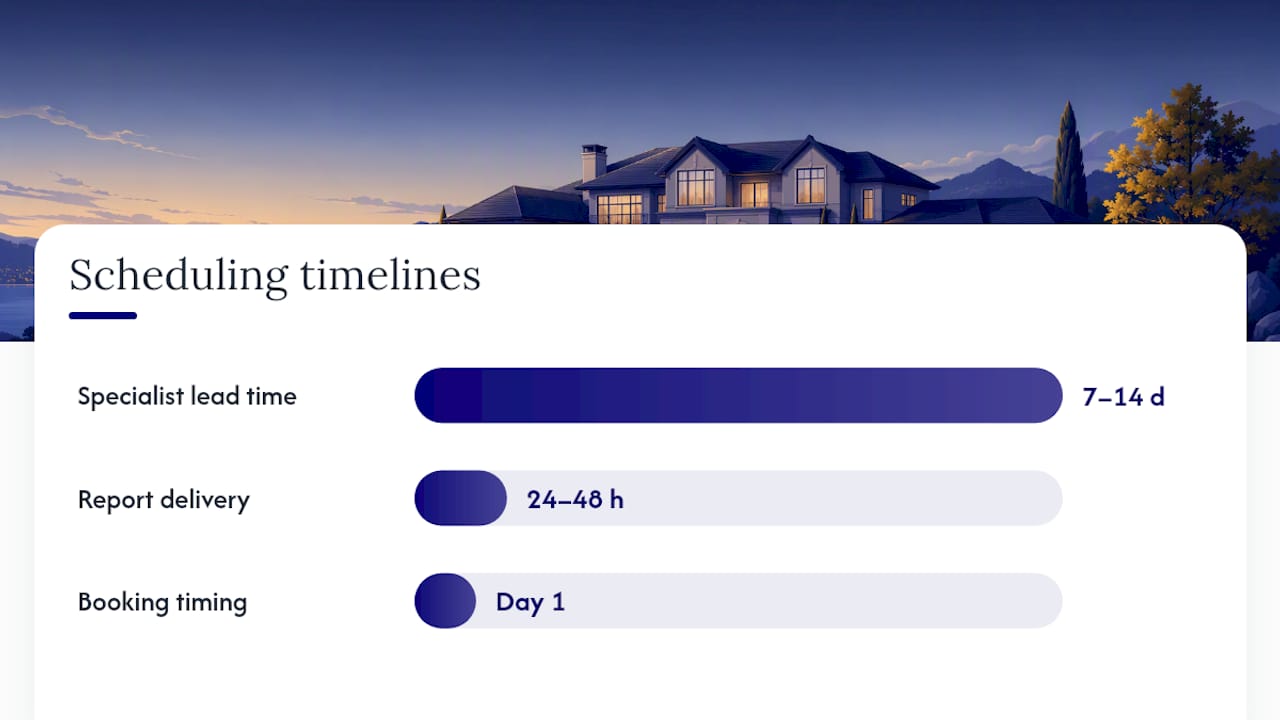
- Specialists should be scheduled proactively on day one of any service window, with reports delivered within 24 to 48 hours, including photos and prioritized actions.
- Post-storm and seasonal upgrades should be pre-embedded into contracts, with clear trigger dates and pricing, to ensure timely inspections during high-risk periods.
- A proper membership guarantees documented weekly visits, timely specialist scheduling, and insurance-compliant reporting standards, minimizing liability and remediation costs.
Table of Contents
- How often should a luxury estate be inspected?
- What risk factors push inspection frequency higher?
- When should specialists be scheduled and reports delivered?
- Do seasonal upgrades and post-storm inspections matter?
- What reporting standards should a membership guarantee?
- Is weekly inspection worth the cost compared to remediation risk?
- How do you evaluate and contract a home-watch membership?
- How does 30A Property Collective apply this standard?
- What the cadence debate gets wrong
- Ready for a membership built around weekly protection?
- Sources
How often should a luxury estate be inspected?
The logic behind weekly visits comes down to what happens between checks. Every inspection interval creates a failure window: the stretch of time a leak, a failed sump pump, or a cracked pool line can run undetected. A weekly cadence caps that window at one week. Stretch it to monthly and you have accepted a significantly longer window, during which a slow leak becomes a subfloor replacement.
Most professional home-watch organizations recommend at least one visit per week for an unoccupied home, treating that cadence as the floor rather than a premium option. For estates with real mechanical complexity, the standard tightens further: a weekly visual inspection paired with a monthly systems check is the accepted minimum, and smart-home sensors supplement that physical presence without replacing it.
Match cadence to your property profile:
- Weekly fits any home with an active pool, running HVAC, smart-irrigation, or absences longer than two weeks.
- Bi-weekly may work for a modest, systems-light home during a mild season with no active water features.
- Monthly is acceptable only for stripped-down, winterized, or fully shut-down properties with no active systems at all.
The quick rule: active pool, plus HVAC running, plus an extended absence, equals weekly, no exceptions.
What risk factors push inspection frequency higher?
Three variables decide whether weekly is enough or whether you need more.
- Active-equipment exposure. A running HVAC compressor, a pool with a working pump, or a wine cellar cooling unit all fail on their own schedule, not yours. Each piece of equipment left unattended shortens the realistic safe interval between checks.
- Climate and seasonal overlap. Coastal hurricane exposure, desert monsoon cycles, and hard freeze events each carry their own damage clock. When storm season overlaps with peak vacancy season, as it often does for seasonal residents, that overlap is the single strongest argument for temporary weekly-plus service.
- Multi-structure complexity and insurance terms. A guest house, pool house, boat house, and main residence are functionally four separate buildings, each capable of failing independently. Layer in your policy's vacancy clause, since many high-value insurance policies set inspection intervals as a condition of coverage rather than a suggestion.
Confirm your policy's language before you settle on a cadence. Insurers frequently require inspection intervals of seven to fourteen days as a condition of vacancy coverage, which means weekly or bi-weekly service is not just prudent, it is often contractual.
When should specialists be scheduled and reports delivered?
The single biggest scheduling mistake owners make is waiting until a problem shows up to call a specialist. HVAC technicians, pool engineers, geotechnical consultants, and smart-home auditors routinely carry lead times of seven to fourteen days, so the booking has to happen on day one of any service window, not after a preliminary walkthrough flags a concern.
A properly run membership should guarantee:
- Day-1 outreach to every specialist category relevant to your property's systems.
- Written reports delivered within 24 to 48 hours of each visit.
- Reports that include a narrative summary, timestamped photos, and a prioritized action list, not a bare checklist.
Pro Tip: Ask your provider to book HVAC and pool specialists automatically at the start of every contingency or membership cycle, even before a walkthrough. Waiting for a red flag before calling can cost you the two weeks a specialist needs to show up.
A narrative report with photographs delivered within 24 to 48 hours is worth more than any checklist format, because it tells you what changed, not just what was checked.
Do seasonal upgrades and post-storm inspections matter?
Hurricane season, monsoon season, and hard freeze windows all justify a temporary bump in cadence, and the smartest owners build that bump into the contract before the season starts rather than negotiating it mid-storm. Two pricing structures work: a flat seasonal premium that covers the upgraded cadence for the entire risk window, or per-visit pricing for each additional check.
- Move to twice-weekly or more during named storm season and hard freeze events.
- Trigger a dedicated post-storm inspection within 24 to 72 hours of any severe weather event.
- Prioritize the exterior envelope, roofline, pool equipment, and stormwater drainage during that post-storm check.
Providers should inspect within 24 to 72 hours after severe weather and give weekly clients priority response over less frequent tiers. Put the seasonal upgrade language directly into your contract, specifying trigger dates and per-visit or flat-rate cost, so there is no renegotiation when a storm is already forming.
What reporting standards should a membership guarantee?
A membership is only as good as the paper trail behind it. The baseline reporting cadence for a serious luxury program is a weekly status note, a monthly summary that rolls up trends across visits, and an annual property condition review that reads like a health record for the estate.
Every report should include:
- Timestamped, dated photos for each area checked.
- A prioritized list of findings, ranked by urgency.
- Vendor actions taken or recommended.
- A rough cost-to-fix estimate for anything flagged as a concern.
A management proposal that leans on vague language like "regular visits" without defining frequency, or that cannot produce a sample report on request, is a signal to keep looking. Slow report turnaround, past 48 hours, is the second most common red flag among owners who later switch providers.
Is weekly inspection worth the cost compared to remediation risk?
Weekly service costs more than monthly, but the math almost always favors the higher cadence once you compare it against remediation costs. A slow roof leak caught within a week might mean a single shingle repair. The same leak left for a month can mean torn-out drywall, mold remediation, and a five-figure invoice.
- Weekly cadence: the highest annual cost, but the tightest failure window and lowest remediation exposure.
- Bi-weekly cadence: a middle-ground cost, acceptable only for lower-risk, systems-light properties.
- Monthly cadence: the lowest annual cost, but the widest exposure window and highest chance of late-stage discovery.
The cost differential between weekly and monthly service is typically a small fraction of a single late-caught water or storm loss, which is the entire argument for treating a seasonal upgrade as insurance rather than an add-on expense. A modest annual premium buys protection against a loss that could run into six figures.
How do you evaluate and contract a home-watch membership?
Before signing anything, confirm the proposal spells out cadence in writing, not in vague terms.
- Get the exact visit frequency in writing, along with what triggers a temporary increase.
- Request a redacted sample report before you sign anything.
- Confirm an emergency response SLA, including expected response time after a flagged issue.
- Verify Day-1 specialist scheduling is contractual, not discretionary.
- Add a clause confirming the cadence satisfies your policy's vacancy insurance requirements.
Pro Tip: Ask the provider to put insurance-compliance language directly into the contract, something like "inspection frequency meets or exceeds the policyholder's vacancy clause requirements." A verbal assurance is not the same as a written guarantee your insurer will honor after a claim.
Multi-structure estates need the same rigor applied across every building. A luxury inspection engagement covering guest houses and pool houses as separate checklists, rather than an afterthought tacked onto the main residence, is the standard worth insisting on.
How does 30A Property Collective apply this standard?
30A Property Collective specializes in luxury estate management for homeowners along Florida's Emerald Coast, and weekly inspections sit at the center of that model, not as an upsell. Anticipatory care, from storm preparedness to arrival readiness, runs on the same weekly rhythm described above, with absolute discretion maintained throughout.
Owners evaluating this standard against their own property can review the digital inspection reporting format and the seasonal maintenance checklist that shape how visits get documented. Redacted sample reports are available on request for owners comparing providers before committing to a membership.
What the cadence debate gets wrong
Most advice on this topic treats inspection frequency as a simple cost question: pay more, get more visits. That framing misses the real driver, which is the failure window and how it interacts with your insurance policy. Owners fixate on price per visit and skip the harder question of whether their vacancy clause even permits monthly service in the first place.
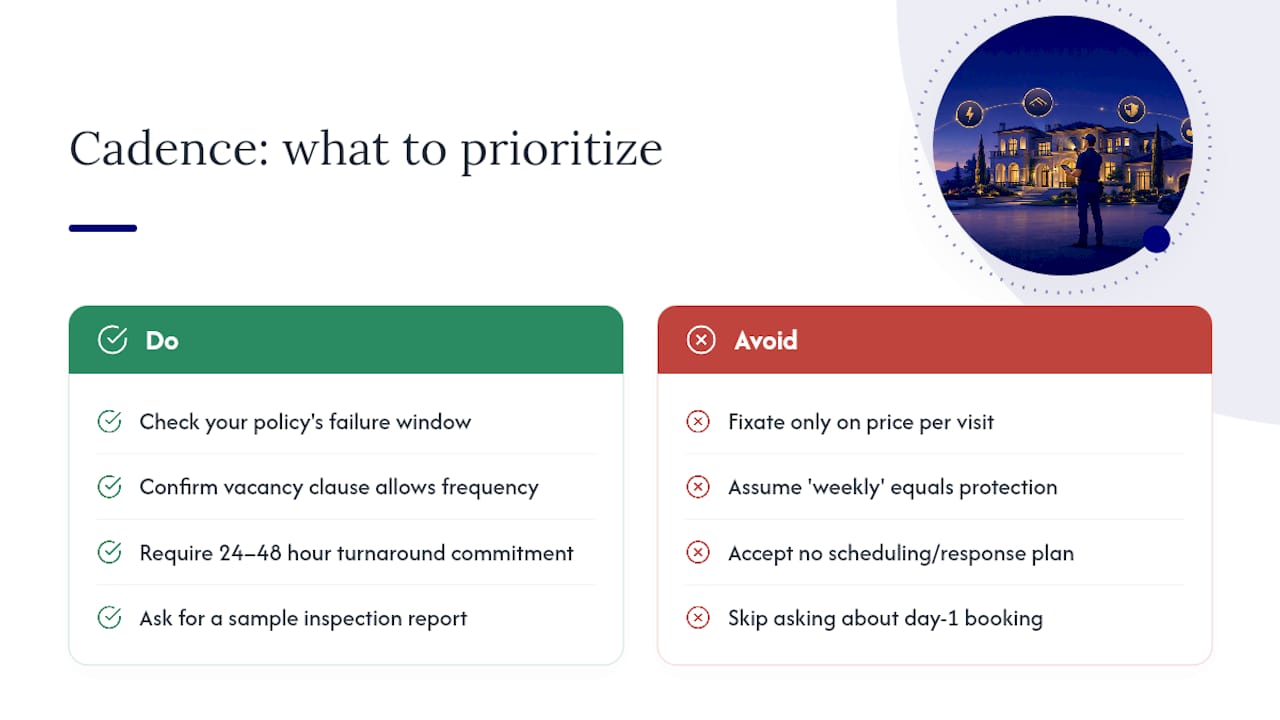
The bigger blind spot is scheduling discipline. Weekly inspections mean nothing if the HVAC specialist can't show up for two weeks after a problem surfaces. Day-1 booking protocols matter as much as the inspection cadence itself, and most home-watch shoppers never ask about it until after something has already gone wrong.
If you take one thing from this, prioritize the paper trail. A provider who can't produce a sample report or commit to 24 to 48 hour turnaround is not offering weekly protection, regardless of what the contract says. Frequency without documentation is just a promise, and promises don't survive a claim dispute with an insurer.
— Zackary
Ready for a membership built around weekly protection?
30A Property Collective is built for owners who need more than a checklist and a promise of "regular visits." Every membership tier, Essential, Signature, and Estate, is structured around a documented weekly inspection cadence, with Day-1 specialist coordination built in rather than negotiated after something breaks.
Signature and Estate tiers add post-storm priority response and multi-structure coverage for guest houses, pool houses, and other secondary buildings, while every tier includes the concierge-level anticipatory care that keeps a property arrival-ready year-round. If you want the details in writing before committing, request a bespoke proposal and ask for a redacted sample report so you can compare documentation standards directly. Owners interested in add-on services like private chef coordination or holiday decorating can also review the concierge service options alongside their membership tier.
Sources
- How Often Should a Home Watch Service Visit?
- Luxury Property Management for International Owners: How to Run a Home You Are Rarely In - LuxuryEstate Journal
- Home Watch Frequency for Scottsdale Luxury Homes (2026): Weekly vs Bi-Weekly vs Monthly Cost-Benefit Decision Guide