
What your home maintenance seasonal checklist should cover

A complete home maintenance seasonal checklist covers six core categories: exterior, interior, plumbing, HVAC, safety devices, and landscaping. Each season demands a different focus, and skipping any of them compounds into repair bills that dwarf the cost of prevention.
Here is the short version of what each season requires:
- Spring: Gutter cleaning, roof inspection, AC service, exterior paint and screen repair, plumbing check, lawn prep, pest control, safety device testing
- Summer: HVAC filter replacement, deck and patio inspection, irrigation check, fence and driveway repair, tree pruning, tile grout sealing
- Fall: Heating system service, gutter cleaning, weatherstripping, outdoor plumbing winterization, attic insulation check, smoke and CO detector testing, chimney inspection, winter supply stocking
- Winter: Pipe freeze prevention, ice dam monitoring, monthly heating checks, humidity control, storm damage inspection, walkway ice management, appliance maintenance
- Monthly: HVAC filter cleaning, safety device testing, vent vacuuming, garbage disposal cleaning, faucet aerator inspection
The NAHB's routine maintenance guide frames this kind of structured upkeep as the single most reliable way to protect long-term home value. Fall is the season that carries the most weight, and the sections below explain exactly why.
1. Spring tasks that repair winter damage and prep for warm weather
Winter leaves a trail. Your spring checklist is about finding it before it gets worse.
- Gutters and downspouts: Clear out debris left from winter. Clogged gutters push water toward your foundation, and that is an expensive fix.
- Roof inspection: Look for missing or damaged shingles and check flashing around chimneys and vents. Catching a small leak in april costs far less than a ceiling repair in july.
- AC service: Schedule a professional tune-up before the first hot week. Replace the filter while you are at it.
- Exterior paint and siding: Scan for peeling, cracking, or moisture damage. Touch up before humidity sets in.
- Window and door screens: Repair tears now so you are not dealing with insects all summer.
- Outdoor plumbing: Remove insulation from outdoor faucets, flush irrigation lines, and check for any freeze damage from winter.
- Lawn and garden: Fertilize, aerate, and prune. Spring is also the right time for a pest control inspection before populations build.
- Safety devices: Test smoke alarms and carbon monoxide detectors. Replace batteries if they have not been swapped since fall.
2. Summer upkeep that protects your exterior and keeps cooling costs down
Summer maintenance is mostly about the outside of your home and keeping your cooling system running efficiently.
- HVAC filters: Replace them every month during peak cooling season. A clogged filter makes your system work harder and shortens its life.
- Deck and patio: Inspect for rot, loose boards, and fading sealant. Reseal wood surfaces before the heat bakes them dry.
- Irrigation system: Check heads for clogs and misalignment. A leaking irrigation line can waste hundreds of gallons before you notice it.
- Fences and driveway: Fill cracks in concrete or asphalt before summer rain works its way in and widens them.
- Tree and shrub pruning: Trim back branches that overhang the roof or touch the siding. Storm damage from overgrown trees is preventable.
- Tile grout: Seal grout in kitchens and bathrooms to stop water from getting behind walls. It takes an afternoon and prevents mold.
- Plumbing fixtures: Check under sinks and around toilets for slow leaks. Summer is a good time to replace worn faucet washers before they fail.
3. Fall maintenance: the season that determines your winter
Fall is the most critical maintenance season because what you do in september and october directly determines how your home handles december through march. Heating system failures, ice dams, and burst pipes are almost always traceable to fall tasks that got skipped.
Pro Tip: Schedule your heating system inspection in late summer or early september. HVAC contractors book up fast once the first cold snap hits, and waiting means either a long delay or an emergency call rate.
- Heating system service: Have a professional inspect and tune your furnace or heat pump before you need it. This is not a DIY task. Complex HVAC work requires a licensed technician to meet safety standards.
- Gutter cleaning: Do it again, even if you cleaned them in spring. Leaves from october and november will clog them before the first freeze.
- Weatherstripping: Check every exterior door and window. Drafts drive up heating bills and signal gaps that let moisture in.
- Outdoor plumbing winterization: Drain and shut off irrigation systems. Disconnect garden hoses. Insulate outdoor faucets and any pipes in unheated spaces.
- Attic insulation and ventilation: Poor attic insulation is the primary cause of ice dams. Check that vents are clear and insulation is adequate.
- Smoke and CO detectors: Replace batteries now, before heating season starts. Test every unit.
- Chimney and fireplace: Have a certified chimney sweep inspect and clean the flue before the first fire of the season.
- Winter supplies: Stock ice melt, a quality snow shovel, and an emergency kit before the first storm.
4. Winter monitoring tasks that prevent cold-weather damage
Winter maintenance is less about big projects and more about staying alert. Most of the heavy lifting should already be done.
- Pipe freeze prevention: Keep cabinet doors under sinks open on the coldest nights. Let faucets drip slightly when temperatures drop below freezing. Insulate pipes in crawl spaces and garages.
- Ice dam monitoring: Watch for ice buildup along roof edges after snowfall. Ice dams force water under shingles and into ceilings.
- Heating system checks: Inspect your filter monthly and replace it when it looks gray. A dirty filter in january is a breakdown waiting to happen.
- Indoor humidity: Keep humidity between 30–50% to prevent condensation on windows and mold growth inside walls.
- Post-storm inspection: After any significant storm, walk the exterior and check the roof, gutters, and downspouts for damage.
- Walkways: Keep sidewalks and driveways clear of ice. Stock sidewalk salt before the season starts, not after the first fall.
- Appliances: Vacuum refrigerator coils and clean drains in sinks, tubs, and dishwashers. These small tasks prevent breakdowns during the months when you use appliances most.
5. Monthly tasks that keep your home running between seasons
A seasonal house maintenance checklist only works if monthly upkeep fills the gaps. These recurring tasks take less than an hour combined and prevent the kind of slow deterioration that seasonal inspections miss.
- HVAC filters: Monthly filter cleaning extends system life and keeps energy costs down. Check it every four weeks without exception.
- Safety devices: Test smoke alarms, carbon monoxide detectors, and fire extinguisher gauges. A detector with a dead battery is the same as no detector.
- Heat registers and vents: Vacuum them to keep airflow clear. Blocked vents make your system work harder.
- Garbage disposal: Grind ice cubes, then flush with hot water and baking soda to clear buildup and odor.
- Faucet aerators and showerheads: Unscrew and soak in vinegar every month or two to dissolve mineral deposits.
- Quick exterior walk: Spend five minutes looking for new cracks, peeling paint, or anything that changed since last month. Catching problems early is the whole point of a systematic maintenance routine.
6. How to inspect drainage and your foundation by season
Your foundation and drainage system need attention in every season, and the signs of trouble change depending on the weather.
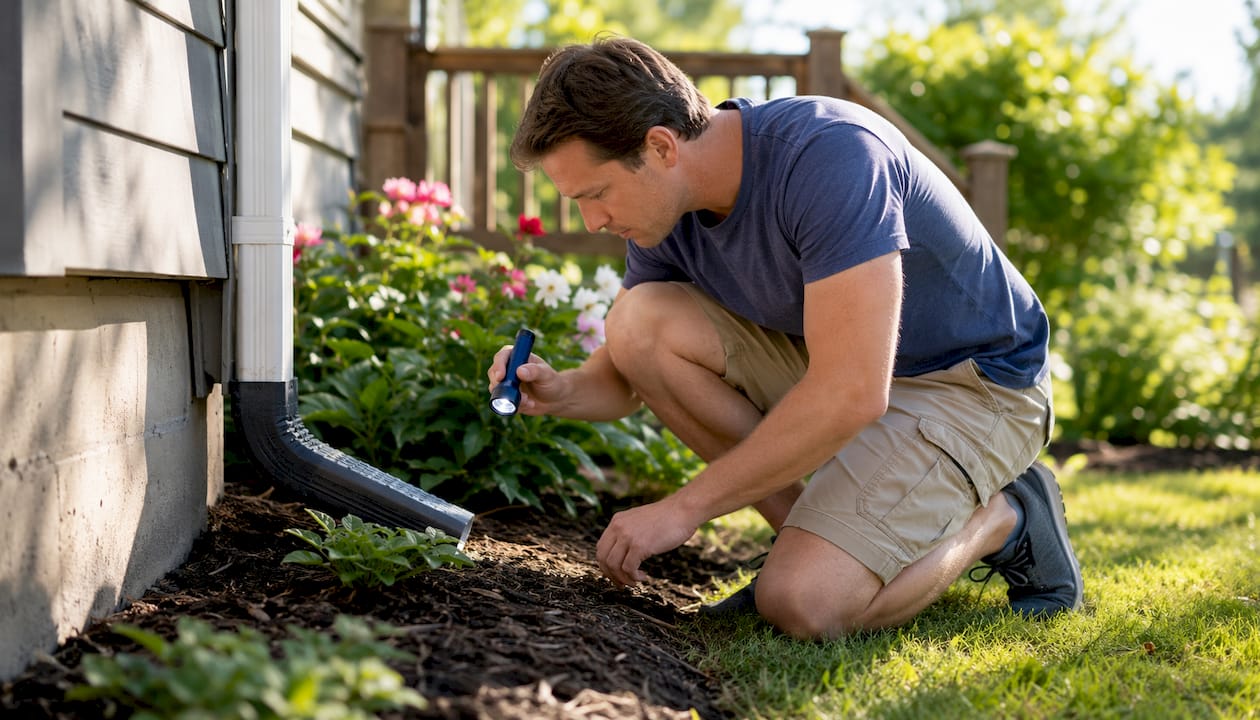
Spring is when drainage problems reveal themselves. After snowmelt and spring rain, walk the perimeter of your home and watch where water flows. It should move away from the foundation, not pool against it. Check window wells for standing water and clear any debris from area drains.
Summer is the time to address what spring revealed. Regrade soil that has settled toward the foundation. Extend downspouts if they discharge too close to the house. Inspect basement walls for efflorescence, the white mineral deposits that signal water is moving through the concrete.
Fall calls for one more drainage check before the ground freezes. Clear leaves from all drains and make sure downspout extensions are in place. Frozen standing water against a foundation expands and can crack it over time.
Winter means monitoring. Check the basement during thaws for any new seepage. If water appears after a warm spell, the source is usually a drainage issue that was present in fall but went unnoticed.
Key Takeaways
Consistent seasonal upkeep prevents the majority of costly home repairs, with fall maintenance carrying the most weight in determining how a home handles winter stress.
| Point | Details |
|---|---|
| Fall is the pivotal season | Heating service, gutter cleaning, and pipe winterization done in fall prevent the most expensive winter failures. |
| Monthly tasks fill the gaps | Replacing HVAC filters and testing safety devices monthly keeps systems running between seasonal checks. |
| Drainage protects the foundation | Grading soil away from the foundation and clearing drains each season prevents water intrusion and structural damage. |
| Professional help is required for some tasks | HVAC service and chimney cleaning require licensed professionals to meet safety standards. |
| Consistency beats intensity | A manageable checklist done every season outperforms a single annual overhaul every time. |
Let 30apropertycollective handle it for you

If your home is on Florida's Emerald Coast, keeping up with a full seasonal checklist from a distance is genuinely difficult. 30apropertycollective handles the entire process through weekly property inspections, vendor coordination, storm preparation, and arrival readiness, so nothing slips between seasons. Their estate management services cover everything from HVAC oversight to post-storm assessments, with digital reports after every visit. For homeowners who want every detail managed without lifting a finger, their concierge membership plans are built exactly for that.