
For luxury estates, the single most effective move is enrolling in a documented, weekly inspection program before a problem surfaces. The systems that fail most catastrophically at high-value properties are roofing and roof penetrations, complex HVAC, pools and spa equipment, concealed plumbing, electrical panels and whole-house generators, moisture and mold behind finished walls, and dock or boat systems. Each of these can produce five-figure damage within days of a first symptom.
- Roofing and penetrations: A failed flashing seal becomes a structural repair if water reaches the decking.
- Zoned HVAC and VRF systems: Compressor failure during a Florida summer can destroy interior finishes and trigger mold within 48 hours.
- Pools and spas: Chemistry imbalance and pump failures accelerate surface degradation and create liability.
- Concealed plumbing: Slow leaks behind tile or cabinetry go undetected for months without weekly eyes on the property.
- Electrical and generators: Panel corrosion and generator fuel degradation are silent until the power goes out.
- Docks, seawalls, and boat systems: Saltwater exposure accelerates deterioration faster than any inland property.
Table of Contents
- What property maintenance issues cost luxury estates the most?
- Why preventive maintenance and documentation outperform reactive repairs
- What should your inspection schedule actually look like?
- How to manage repairs, contractors, and the documentation bottleneck
- What should you budget for repairs and how long do they take?
- How to evaluate and hire an estate-management partner
- Key Takeaways
- Why the conventional wisdom on estate maintenance gets it backwards
- What a 30apropertycollective membership actually removes from your plate
- Useful sources and further reading
What property maintenance issues cost luxury estates the most?
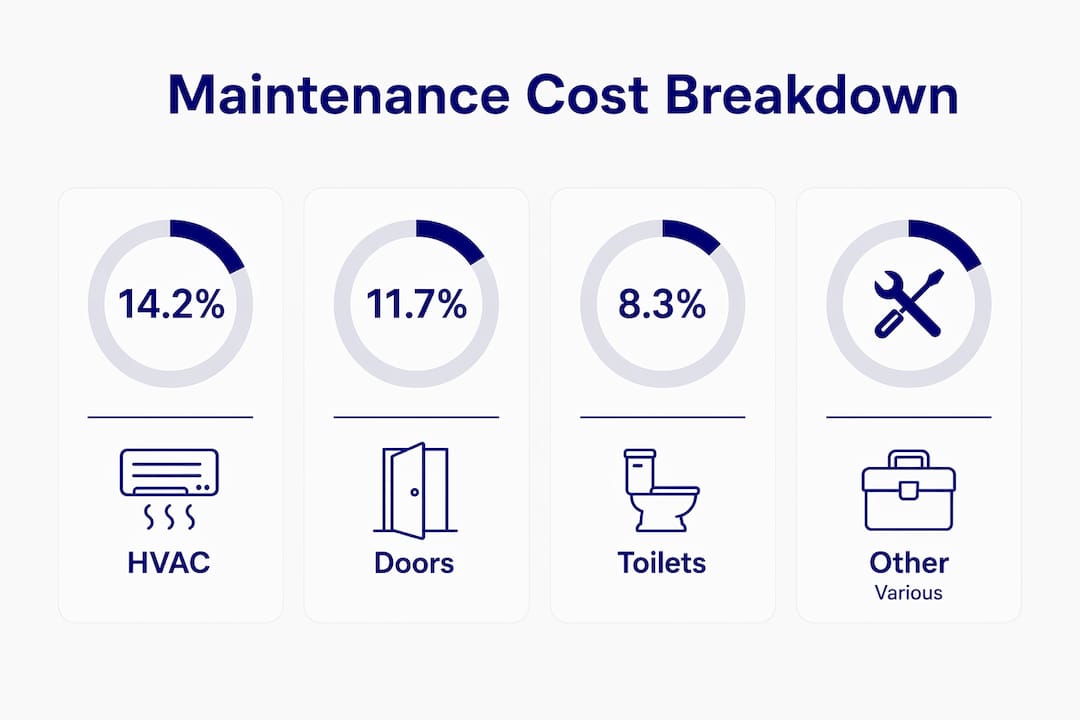
HVAC leads all maintenance categories at 14.2% of reported issues, followed by doors at 11.7%, toilets at 8.3%, and sinks at 5.0%. For luxury estates, those percentages understate the dollar exposure because the systems are more complex and the finishes more expensive to match.
| System | Reported Issue Frequency | Why It Costs More at Luxury Properties |
|---|---|---|
| HVAC | 14.2% | Zoned/VRF systems require specialized technicians |
| Doors/windows | 11.7% | Custom millwork and hardware multiply repair cost |
| Toilets/plumbing | 8.3% | Concealed runs and high-end fixtures raise labor time |
| Sinks/drains | 5.0% | Stone and specialty surfaces complicate access |
| Moisture/mold | Underreported | Hidden behind premium finishes; remediation is extensive |
| Dock/seawall | Underreported | Saltwater corrosion and marine contractor scarcity |
Roof leaks deserve special attention. Hidden moisture and code changes often force full replacement rather than a patch, a distinction that can shift a $4,000 repair into a $40,000 project. Exterior stucco and high-end cladding behave the same way: a hairline crack admits water, water migrates behind the substrate, and by the time a stain appears inside, the damage is already structural.
Pro Tip: Sticking window sills, minor sealant cracks, and slow-draining fixtures are not cosmetic annoyances. They are early indicators of larger failures. Catching them on a weekly walk costs almost nothing; catching them after the damage is done costs multiples.
Why preventive maintenance and documentation outperform reactive repairs
Scheduled preventive inspections and documented repairs reduce total lifecycle cost and liability exposure for luxury estates. That is not a general principle; it is the operational reality that separates estates that hold their value from those that quietly deteriorate between owner visits.
Proactive inspections identify minor issues before they escalate into major structural or habitability crises. Reactive maintenance, by contrast, attracts emergency labor premiums, unplanned contractor travel, and cascading damage from issues that were small when they started. A compressor replaced on a scheduled service call costs a fraction of an emergency replacement that also includes mold remediation and drywall repair.
The documentation angle matters just as much. Maintenance records now function as legal evidence: documented checks, repair decisions, and contractor engagement demonstrate proper stewardship and directly affect insurance claim outcomes and liability exposure. An insurer presented with timestamped inspection photos and signed work orders processes a claim very differently than one handed a verbal account.
Structured schedules with monitored performance thresholds let estate managers predict failure and plan capital replacement instead of reacting to crises. The difference between those two modes is not just cost; it is the owner's peace of mind.
What should your inspection schedule actually look like?
The right cadence is a weekly walk plus a monthly quick systems check, quarterly mechanical inspections, and an annual life-safety and building-envelope survey. Each tier catches what the previous one cannot.
Weekly and monthly checklist
- Check exterior drains, gutters, and downspouts for blockage or storm debris.
- Inspect pool and spa water level, skimmer baskets, and visible equipment.
- Confirm HVAC is running and thermostat settings are correct.
- Walk all exterior elevations for new cracks, sealant failures, or pest entry points.
- Verify security system health and smart-home device status.
- Collect mail and packages; confirm arrival-readiness condition of all interior spaces.
Quarterly and annual items
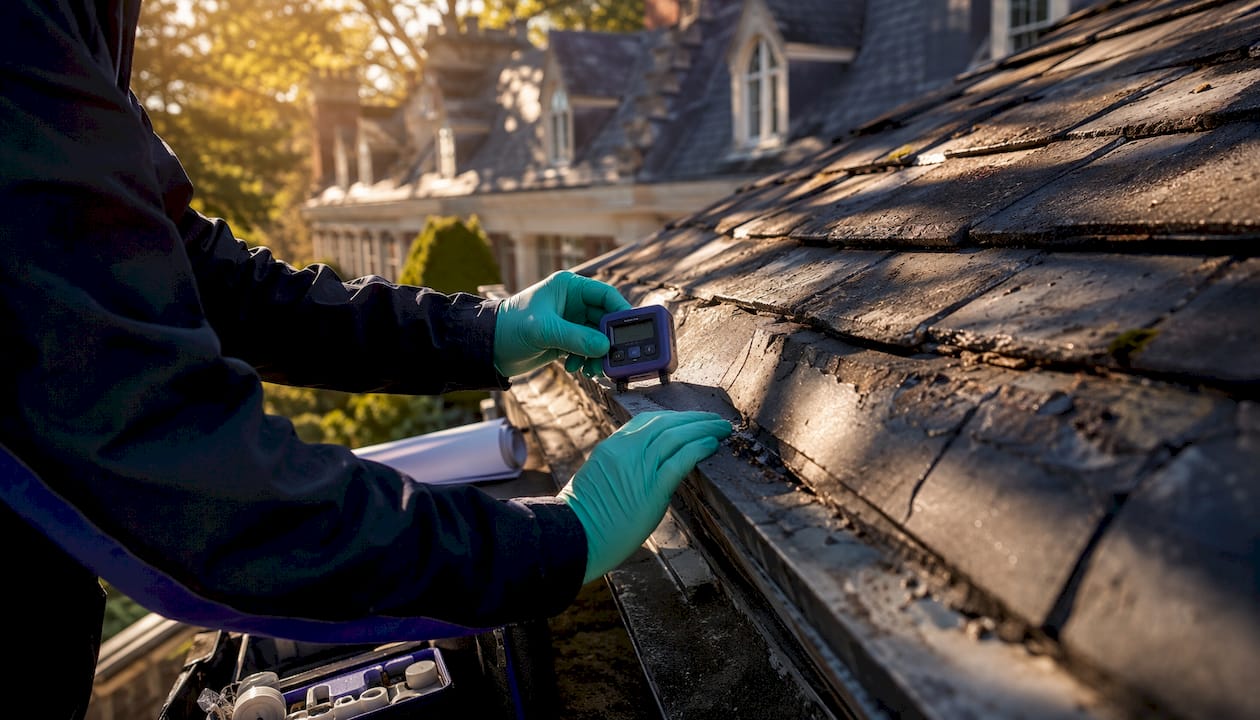
Quarterly inspections add full HVAC filter replacement, plumbing pressure spot-checks, pool chemistry service, roof flashing visual checks, and irrigation system tests. The annual survey goes deeper: a full roof inspection, complete HVAC service, electrical panel and generator inspection, dock and seawall survey, and invasive moisture testing where any indicator warrants it. Diagnosing root causes rather than symptoms at each tier prevents the same failure from recurring.
| Cadence | Assigned Role | Key Deliverables |
|---|---|---|
| Weekly | Estate manager / home watch | Photo log, exterior/interior condition notes, system status |
| Quarterly | Licensed technician + estate manager | HVAC report, pool chemistry record, irrigation test results |
| Annual | Licensed inspector + estate manager | Full roof report, electrical certificate, dock/seawall assessment |
A sample report template should capture: property address and inspection date, timestamped and GPS-tagged photos for each finding, measured readings (pool chemistry, HVAC delta-T, water pressure), recommended next action with SLA target, and contractor sign-off fields for completed work.
How to manage repairs, contractors, and the documentation bottleneck
Standardized workflows, photo-verified work orders, and contractor vetting remove the biggest hidden cost drivers. A single repair request can involve scheduling, access coordination, parts sourcing, site verification, and invoice reconciliation. Without a defined process, each step creates delay and cost.
- Capture: Log the issue with timestamped photos and a written description the moment it is identified.
- Triage: Classify as emergency, urgent, or routine and assign an SLA target.
- Schedule: Confirm contractor availability, access instructions, and parking before the visit.
- Verify: Require photo evidence of completed work, serial numbers for replaced parts, and a signed completion field.
- Close: Match the invoice to the work-order record before approving payment.
Vendor vetting should confirm active licensing and insurance, scope alignment with the specific task, and familiarity with the property's access requirements. Pre-positioning common spare parts (HVAC filters, pool chemicals, generator fuel) eliminates the most common cause of repeat visits.
Pro Tip: Require contractors to submit timestamped before-and-after photos as a condition of invoice approval. It takes 30 seconds on their end and eliminates every "we did the work" dispute on yours.
The administrative burden of maintenance coordination multiplies resolution time and cost when no single person owns the process end to end. That is the core argument for a dedicated estate manager rather than ad-hoc contractor calls.
What should you budget for repairs and how long do they take?
Reactive repairs typically cost 2–5× preventive servicing due to emergency labor premiums and cascading damage. That multiplier is the most important number in estate budgeting.
| Issue | Preventive Service Cost | Reactive Repair Estimate | Typical Timeline |
|---|---|---|---|
| Roof flashing seal | $600 | $4,000 | 1–3 days vs. 2–4 weeks |
| HVAC scheduled service | — | emergency | Same day vs. 3–10 days |
| Pool pump maintenance | — | $4,000 replacement | 1 day vs. 1–2 weeks |
| Plumbing pressure check | — | $40,000 reline | 1 day vs. 3–6 weeks |
Pre-vetted contractors compress timelines significantly. A vendor who already has site access instructions, knows the property layout, and has an active relationship with the estate manager can respond in hours rather than days.
For reserve budgeting, a common rule of thumb is setting aside 1–2% of property value annually for maintenance and capital reserves. Membership plans convert that reserve into predictable monthly operating expense with defined service scope, which simplifies both budgeting and accounting.
How to evaluate and hire an estate-management partner
Prioritize documented SLAs, transparent reporting, vetted contractor networks, and discreet concierge capabilities. Those four criteria separate a genuine estate-management partner from a basic property-check service.
Questions to ask during vetting:
- What is your guaranteed response time for emergency issues, and is it in writing?
- Can you provide a sample inspection report with timestamped photos?
- How do you screen and insure your contractor network?
- Do you carry your own liability insurance and bonding?
- What confidentiality or NDA provisions apply to owner information?
- How are disputes or unsatisfactory work handled?
Red flags:
- No timestamped inspection reports, only verbal updates
- Contractors without verifiable licensing or insurance
- No written emergency response plan
- Sample work orders that lack photo evidence or completion sign-offs
- Vague SLA language ("as soon as possible" with no defined window)
| Service Tier | Inspection Cadence | Response SLA | Typical Inclusions |
|---|---|---|---|
| Essential | Weekly home watch | rapid | Exterior check, photo report, mail collection |
| Signature | Weekly + quarterly | 4-hour emergency | Full interior/exterior, vendor coordination, storm prep |
| Estate | Weekly + monthly systems | Immediate escalation | All above + concierge, arrival readiness, smart-home monitoring |
30apropertycollective operates on this model along Florida's Emerald Coast: weekly inspections with digital reports, pre-vetted contractor oversight, storm preparation and post-storm assessments, and full arrival readiness. Their membership tiers and service scope are structured around exactly these SLA and documentation standards.
Key Takeaways
Preventive, documentation-led estate management is the single most effective way to protect a luxury property's value, reduce liability exposure, and eliminate the coordination burden that makes reactive maintenance so expensive.
| Point | Details |
|---|---|
| Inspect weekly, not reactively | A weekly walk catches small symptoms before they become five-figure repairs. |
| Documentation is legal evidence | Timestamped photos and signed work orders directly affect insurance claim outcomes. |
| Reactive repairs cost 2–5× more | Emergency labor premiums and cascading damage multiply the cost of any deferred issue. |
| Vet contractors before you need them | Pre-approved vendors with site access compress response timelines from days to hours. |
| 30apropertycollective | Provides weekly inspections, digital reports, storm prep, and concierge services for Emerald Coast estates. |
Why the conventional wisdom on estate maintenance gets it backwards
Most owners think about maintenance as a cost center. The smarter frame is that it is a liability and resale instrument. Every timestamped inspection report is a piece of evidence that the property was cared for. Every documented repair is a data point that supports an insurance claim, a sale price, or a defense against a contractor dispute.
What I see repeatedly is that the owners who spend the least on proactive maintenance spend the most on reactive repairs, and they also have the weakest documentation when something goes wrong. The two problems compound each other. A concealed leak discovered on a weekly walk is a $600 plumber call. The same leak discovered six months later when a wall stain appears is a $40,000 remediation project with no paper trail to support an insurance claim.
The other thing most guides understate is the coordination burden. Scheduling a contractor, confirming access, verifying the work, and closing the invoice is not a five-minute task. Multiply that across a dozen annual service events and you have a part-time job. A dedicated estate manager does not just catch problems earlier; they remove that entire administrative layer from the owner's life. For a high-net-worth owner whose time has real value, that removal is often worth more than the repair cost savings.
What a 30apropertycollective membership actually removes from your plate
A membership with 30apropertycollective converts irregular, reactive maintenance cost into predictable monthly service with documented proof of care at every step.
Their estate management and concierge services cover weekly property inspections with digital photo reports, licensed vendor coordination, storm preparation and post-storm assessments, smart-home system monitoring, arrival readiness, and full concierge support including grocery stocking and private chef coordination. Every inspection generates a timestamped digital record accessible through their client reporting portal.
- Predictable operating expense with no surprise emergency call-out fees
- Single point of accountability for every vendor, work order, and invoice
- Documented inspection trail that supports insurance claims and resale
- 4-hour emergency response on Signature and Estate tiers
To see the full service scope or request a sample inspection report, visit the services page or start your membership enrollment.
Useful sources and further reading
- PropertyMeld: Top 10 Most Common Property Maintenance Issues — frequency data by issue category, useful for prioritizing inspection focus areas.
- HappyCo: What Is Property Maintenance? — covers preventive vs. reactive cost dynamics and best practices for scheduled programs.
- Property Innovation Journal: Hidden Costs of a Simple Repair Request — explains coordination bottlenecks and invoice delay as the primary hidden cost driver.
- Texas Piers Consulting: Repair vs. Replace in Property Claims — building consultant analysis of when hidden moisture and code changes force replacement over repair.
- Baker Hughes / Cordant: 10 Common Routine Maintenance Issues — structured maintenance schedules and performance thresholds for predicting failure.
- Property Newsdesk: Repair Priorities as Maintenance Rules Tighten — documentation and contractor engagement as legal evidence of proper stewardship.
- Platinum Capital Advisors: Home Inspections and Florida Mortgage Loans — finance-side perspective on how inspection records affect property value and loan underwriting.
- 30A Property Collective — Emerald Coast estate management, weekly inspections, storm prep, and concierge services for luxury homeowners.