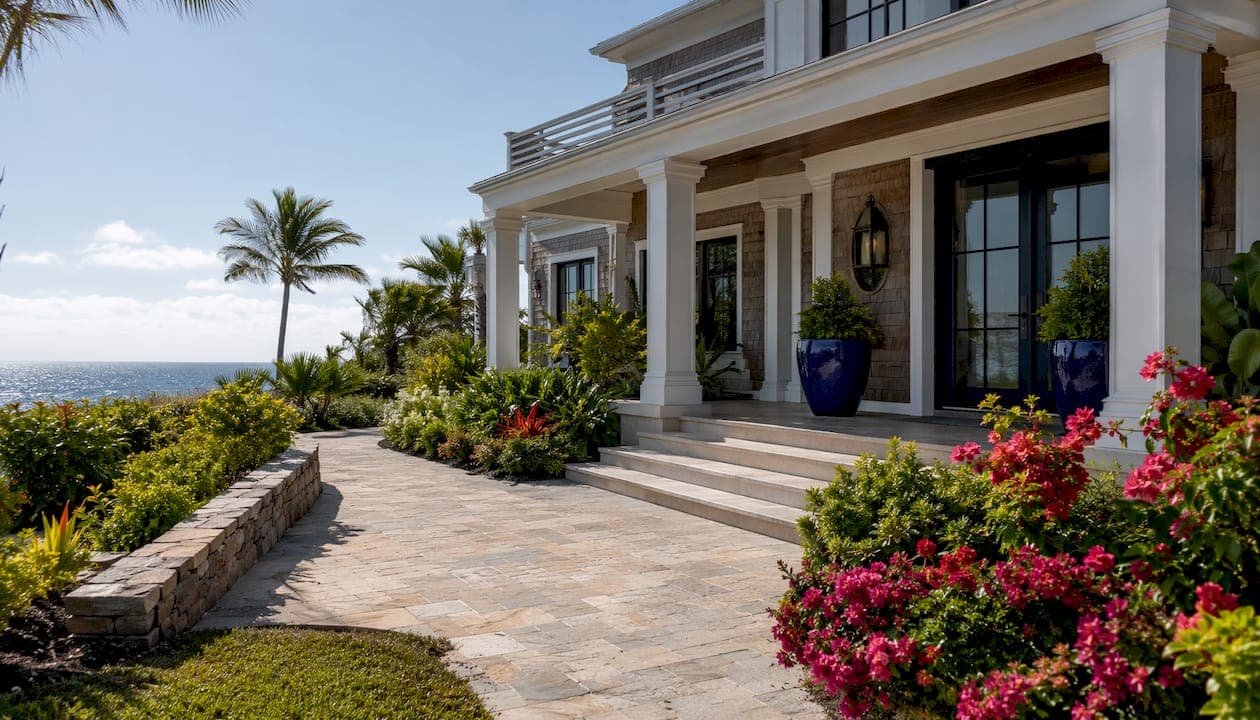
An absentee homeowner holds legal title to a property but does not reside there full-time or directly oversee day-to-day operations. For a luxury estate on Florida's Emerald Coast, that gap between ownership and presence is where expensive problems are born. The single most important step you can take right now: arrange weekly professional inspections and designate a local estate-management partner before your next absence.
Nearly 1 in 5 homeowners' insurance claims stem from water damage or freezing — and absentee owners are the most vulnerable because small problems go unnoticed until they become costly emergencies.
Table of Contents
- What does "absentee homeowner" mean for a luxury estate?
- What risks does absentee ownership create for high-value properties?
- What local rules and legal obligations do absentee owners need to check?
- How does proactive estate management differ from traditional property management?
- How do you select an estate-management partner for an Emerald Coast property?
- What do estate-management pricing models typically look like?
- 10-step checklist for absentee homeowners to act on now
- Why 30apropertycollective is the recommended local partner
- What are the tax implications for absentee homeowners?
- How does absentee ownership affect resale value and marketability?
- Insurance specifics and claims nuances for absentee luxury estates
- How to integrate remote monitoring technology into your estate
- Communication protocols that keep absentee owners informed
- Key Takeaways
- What most estate owners get wrong about being away
- 30apropertycollective: memberships built for Emerald Coast estates
- Authoritative sources and recommended next reads
What does "absentee homeowner" mean for a luxury estate?
The term covers more situations than most owners realize. You qualify as an absentee property owner whether you visit seasonally, travel for months at a time, inherited the property, or hold title through an LLC or family trust with no on-site presence.
Common scenarios along the Emerald Coast:
- Seasonal owners who occupy the property for limited periods each year and leave it unattended through hurricane season
- Long-term travelers or relocating professionals who retain the home as a future primary residence
- Inherited estates held by heirs living out of state, often in probate or transition
- LLC- or trust-held properties where no individual beneficiary lives on-site
- Leased-but-not-owner-occupied homes generating rental income without the owner nearby
Luxury estates add a layer of complexity that a standard vacation rental does not. Salt air accelerates corrosion on hardware and HVAC components. Gulf-Coast humidity invites mold inside walls and under custom millwork. High-value systems — whole-home automation, custom climate control, wine cellars, resort-grade pools — require specialty contractors and documented maintenance chains to keep warranties and insurance claims valid.
What risks does absentee ownership create for high-value properties?
The exposure is real and compounding. A slow plumbing leak behind a custom-built cabinet wall can go undetected for weeks. HVAC neglect in Florida's humidity creates mold conditions that destroy finishes and trigger insurance disputes. These are not hypothetical scenarios.
The four highest-impact risk categories for luxury absentee estates:
- Maintenance backlog and finish degradation. Without weekly eyes on the property, minor issues stack up. Humidity, salt air, and UV exposure degrade finishes, seals, and mechanical systems faster on the Gulf Coast than almost anywhere else in the country.
- Insurance exposure. Most standard homeowners' policies contain vacancy clauses that suspend or limit coverage when a home sits unoccupied beyond a policy-specific threshold, commonly 30–60 days. A claim filed after that window without a vacancy endorsement can be denied outright.
- Code violations and municipal fines. Overgrown landscaping, unsecured structures, and deferred exterior repairs generate code citations. Unresolved violations become liens. Liens complicate title and kill deals at closing.
- Storm damage without a pre-storm protocol. A property with no one to close hurricane shutters, move outdoor furniture, or document pre-storm condition is a liability. Post-storm, undocumented damage is harder to claim.
Hiring a property manager does not transfer legal liability to that manager. You, as the owner, remain ultimately responsible for premises liability and code compliance regardless of who you hire.
What local rules and legal obligations do absentee owners need to check?

Registration requirements vary by municipality, but the pattern is consistent. Many jurisdictions require absentee owners with code-violation histories to register annually, designate a local agent, and pay fees commonly in the $300–$500 range. San Antonio's ordinance, for example, sets a $500 annual registration fee and requires the designated agent to reside locally. Properties that stay violation-free for two consecutive years can exit the program.
Pro Tip: Run a search on your county's property appraiser portal and code enforcement records before your next extended absence. If your property is held in an LLC or trust, verify the registered agent's address through the Florida Secretary of State's business search — legal notices sent to a wrong address can result in default judgments you never see coming.
A practical compliance checklist:
- Confirm your insurer's occupancy threshold and request a vacancy endorsement if you'll exceed it.
- Verify your registered agent's address is current with the county and state.
- Pull code enforcement records for any open violations or pending citations.
- Check that your LLC or trust documents name a Florida-based registered agent.
- Review your property tax billing address to catch any misdirected notices.
Florida absentee owners should also note that absentee ownership carries homestead implications. A property that is not your primary residence does not qualify for the Florida homestead exemption, which affects both your annual tax bill and creditor-protection status.
How does proactive estate management differ from traditional property management?
Traditional property management is built around rental assets: tenant placement, rent collection, lease enforcement. Estate-focused management is a different discipline entirely. The client is the owner, not a tenant. The goal is preservation, not yield.
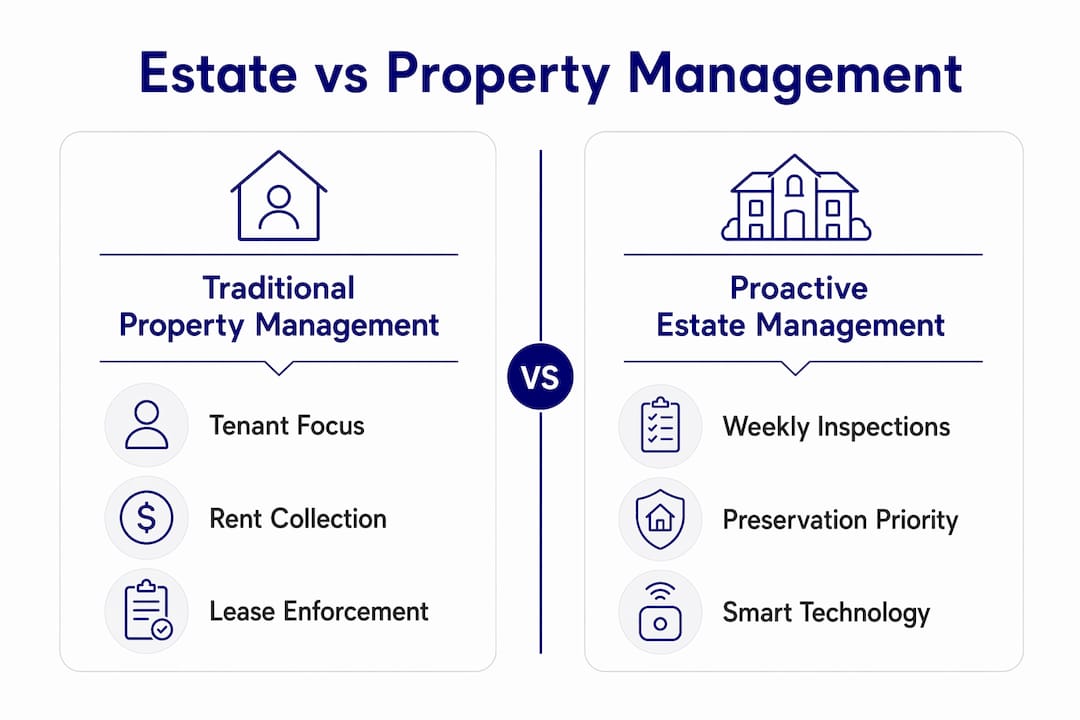
For a luxury absentee estate, the practical difference shows up in scope. Weekly interior and exterior inspections catch the slow leak, the HVAC fault code, the cracked pool coping before they become insurance claims. Vendor oversight means licensed specialty contractors, not the cheapest available handyman. Storm protocols mean pre-storm documentation and shutter deployment, not a post-storm phone call.
Pro Tip: For luxury finishes and high-value systems, prioritize preservation work over reactive repairs. A documented maintenance chain — who serviced what, when, with what materials — is often the difference between a valid warranty claim and a denied one.
Technology-enabled monitoring adds a second layer: water sensors, smart thermostats, and remote HVAC monitoring catch anomalies between inspections. But sensors alone are not a substitute for weekly in-person visits. They are a complement.
How do you select an estate-management partner for an Emerald Coast property?
The Emerald Coast is a specific operating environment. Salt air, Gulf storm tracks, and the seasonal vacancy patterns of luxury second-home ownership demand a partner with local, documented experience.
What to verify before signing:
- Gulf-Coast storm credentials. Ask for documented pre- and post-storm assessment workflows, not just a verbal assurance they "handle storms."
- Weekly inspection cadence with digital reporting. Timestamped photo reports delivered after every visit are the baseline standard. Anything less is not estate management.
- Contractor network depth. Luxury estates require licensed specialty contractors for custom systems. Confirm the partner has established relationships, not just a general handyman on call.
- Insurance-liaison capability. Can they document damage, coordinate with your adjuster, and produce the inspection history an insurer needs to process a claim?
- Emergency response time. A partner without a local office or a defined escalation protocol is a liability in a storm event.
Red flags: no local physical presence, vague emergency response language, inability to produce sample inspection reports, or a pricing model that bundles everything into a flat fee with no defined service cadence.
What do estate-management pricing models typically look like?
Most professional estate-management firms structure pricing around recurring membership tiers, with bespoke proposals for larger or more complex properties. A typical model runs three tiers: an entry-level plan covering weekly inspections and basic reporting, a mid-tier plan adding vendor coordination and concierge services, and a full-estate plan covering storm protocols, utility management, smart-home monitoring, and arrival preparation.
Cost drivers for Emerald Coast luxury estates include property size, inspection frequency, storm-season readiness requirements, and the volume of concierge services needed. One-off services — grocery stocking, private chef coordination, holiday decorating — are typically available outside the membership structure for owners who need occasional support.
Absentee owners evaluating financing or refinancing alongside management costs should also review common mortgage pitfalls specific to Florida properties, particularly around escrow and insurance requirements for non-primary residences.
10-step checklist for absentee homeowners to act on now
- (24 hours) Call your insurer and confirm the occupancy threshold in your policy. Request a vacancy endorsement if you'll exceed it.
- (24 hours) Verify your local registered agent's address is current with the county and the Florida Secretary of State.
- (7 days) Schedule a full-property inspection with photo documentation before your next absence.
- (7 days) Install water leak sensors at water heaters, under sinks, and near HVAC condensate lines.
- (7 days) Confirm smart thermostat and remote HVAC monitoring are active and reporting.
- (7 days) Pull code enforcement records and resolve any open violations.
- (30 days) Enroll in a weekly estate-management or home-watch program with a local Emerald Coast partner.
- (30 days) Establish a utility management plan: auto-pay, shutoff procedures, and generator test schedule.
- (Before June 1) Complete storm-season readiness: hurricane shutter inspection, outdoor furniture storage plan, emergency vendor contacts confirmed.
- (Ongoing) Review digital inspection reports after every visit and respond to flagged items within 48 hours.
Why 30apropertycollective is the recommended local partner
30apropertycollective was built specifically for the Emerald Coast's luxury estate market. Their estate management services cover the full spectrum an absentee owner needs: weekly home watch with digital reporting, vendor and contractor oversight, storm preparation and post-storm assessments, smart-home system monitoring, interior stewardship, and complete arrival and departure preparation.
The membership model — Essential, Signature, and Estate tiers — means recurring, documented stewardship rather than reactive calls when something goes wrong. Weekly inspections with timestamped digital reports give you a verifiable property history, which matters when you need to file an insurance claim or demonstrate maintenance compliance to a buyer. Their concierge services extend to grocery and pantry stocking, private chef coordination, housekeeping, and holiday decorating, so the property is genuinely ready when you arrive, not just structurally sound.
Their geographic focus is the Emerald Coast. That specificity matters: they know the local contractor network, the municipal code offices, and the storm patterns that a national property management firm does not.
What are the tax implications for absentee homeowners?
Absentee ownership carries real tax consequences that vary by how you use the property. Rental income must be reported and is taxable at your ordinary income rate. If you rent the property for more than 14 days per year, you lose the ability to treat it as a personal residence for tax purposes, which affects which deductions you can claim.
On the deduction side, legitimate expenses for a rental property include mortgage interest, property taxes, insurance premiums, depreciation, and management fees. Travel costs incurred to inspect or maintain the property may also be deductible. Depreciation is both a benefit and an obligation: you are required to recapture it upon sale, which creates a tax liability many owners underestimate.
Florida's homestead exemption is unavailable for absentee-owned properties. That means no cap on annual assessed-value increases and no creditor-protection benefit. For properties held in LLCs or trusts, the tax treatment depends on entity structure and should be confirmed with a CPA familiar with Florida real estate.
This article is general information, not tax or legal advice. Confirm your specific obligations with a qualified tax professional or attorney.
How does absentee ownership affect resale value and marketability?
A well-maintained absentee estate can sell at full market value. A neglected one often cannot. The gap between the two is almost entirely a function of documented stewardship.
Buyers and their inspectors look for evidence of consistent maintenance. A property with weekly inspection reports, a documented vendor history, and no deferred repairs signals a well-managed asset. One with peeling exterior paint, HVAC records gaps, and open code violations signals risk, and buyers price that risk into their offers or walk away.
The negative perception of absentee ownership is real but manageable. Visible, consistent stewardship — curb appeal, timely repairs, documented inspections — protects both marketability and community standing. Properties with a verifiable maintenance history also tend to move faster and with fewer contingencies, because buyers have the documentation they need to feel confident.
Insurance specifics and claims nuances for absentee luxury estates
Standard homeowners' policies are written with an occupied residence in mind. When a property sits vacant beyond the policy's occupancy threshold, typically 30–60 days, coverage for certain perils can be suspended or voided. Water damage, vandalism, and liability claims are the most commonly affected categories.
A vacancy endorsement or vacancy permit extends coverage during unoccupied periods, usually at an additional premium. For luxury estates, the cost of that endorsement is negligible compared to the exposure of an uninsured water-damage claim on a property with custom finishes.
Claims nuances specific to absentee estates: insurers will ask for the date the damage was first discovered and the date of last inspection. A property with no documented inspection history gives the insurer grounds to argue the damage was pre-existing or the result of neglect. Weekly inspection reports with timestamps and photos close that argument before it starts. Florida mortgage and insurance interactions for non-primary residences carry additional lender requirements worth reviewing before your next policy renewal.
How to integrate remote monitoring technology into your estate
Smart home technology is a force multiplier for absentee owners, not a replacement for in-person inspections. The right stack for a Gulf-Coast luxury estate typically includes water leak sensors at every appliance and plumbing connection, a smart thermostat with remote monitoring and alerts, a whole-home security system with cameras and motion detection, and a smart water shutoff valve that can isolate the supply if a leak is detected.
For high-value estates, a dedicated smart-home monitoring service that integrates with your estate manager's reporting workflow is worth the investment. That way, an alert at 2 AM triggers a human response, not just a push notification to your phone.
Security cameras should cover all entry points, the pool area, and any detached structures. Motion-activated exterior lighting reduces both intrusion risk and insurance exposure. All devices should be on a monitored network with redundant cellular backup so a power outage or internet disruption does not create a blind spot.
Communication protocols that keep absentee owners informed
Transparency between an absentee owner and their estate-management partner is not a nice feature. It is the foundation of the relationship. The standard that protects both parties: weekly written reports delivered after every inspection, with timestamped photos of flagged items, a clear status on any open work orders, and a defined escalation path for emergencies.
Owners should establish a preferred communication channel and response-time expectation at onboarding. For routine updates, a digital client portal that stores every report, photo, and vendor invoice in one place gives you a searchable property history accessible from anywhere. For emergencies, a direct phone line to a named contact, not a call center, is non-negotiable.
Quarterly summary calls or reports that cover maintenance trends, upcoming seasonal tasks, and any regulatory changes affecting the property keep you ahead of issues rather than reacting to them. The best estate-management relationships feel like a trusted advisor, not a service vendor.
Key Takeaways
Proactive, membership-based estate stewardship with weekly inspections, documented storm protocols, and a designated local agent is the most effective way to protect a luxury absentee estate on Florida's Emerald Coast.
| Point | Details |
|---|---|
| Vacancy endorsement is critical | Standard policies can void coverage after a vacancy period defined by the policy. Request an endorsement before your next absence. |
| Weekly inspections close insurance gaps | Timestamped photo reports create the documented history insurers require to process claims without dispute. |
| Local agent designation is a legal obligation | Many municipalities require a local agent for absentee owners; failure to designate one risks default judgments and code-violation fines. |
| Absentee ownership affects resale value | Documented, consistent stewardship protects marketability; deferred maintenance and open violations reduce buyer confidence and sale price. |
| 30apropertycollective is the Emerald Coast specialist | Their weekly home watch, storm protocols, and membership tiers are built specifically for luxury absentee estates on the Gulf Coast. |
What most estate owners get wrong about being away
The assumption I see most often is that a property in good condition when you leave will stay that way. It will not. The Gulf Coast climate is relentless. Salt air, humidity, and storm pressure work on a property every single day, and the issues that surface after a six-month absence are almost never the ones that were visible when you locked the door.
The other gap is insurance. Owners assume their policy covers them because they paid the premium. What they have not read is the vacancy clause buried in the conditions section. That clause has denied more legitimate claims than any other single policy provision I have seen. The fix is simple: call your insurer, ask the question directly, and get the endorsement in writing.
If you have not had a professional inspection in the last 30 days, that is the place to start. Not a checklist, not a neighbor walking through. A documented, photo-verified inspection by someone who knows what Gulf-Coast humidity does to a custom home.
30apropertycollective: memberships built for Emerald Coast estates
For absentee owners who want their luxury estate genuinely cared for, not just checked on, 30apropertycollective offers three membership tiers designed around the realities of Gulf-Coast ownership. The Essential plan covers weekly home watch and digital reporting. The Signature plan adds vendor coordination and concierge services. The Estate plan delivers full-spectrum stewardship: storm preparation and post-storm assessments, smart-home monitoring, utility management, interior stewardship, and complete arrival preparation.
Every membership includes timestamped digital reports after each weekly inspection, direct access to a named estate manager, and a contractor network built for luxury finishes and specialty systems. Onboarding begins with a full property assessment, so you know exactly where your estate stands before the first inspection cycle starts.
The next step is straightforward: explore membership options or request a concierge consultation to discuss your property's specific needs. If you are ready to move forward, the onboarding process takes minutes.
Authoritative sources and recommended next reads
The following sources informed this article's legal, insurance, and risk guidance. For any jurisdiction-specific question, verify current rules directly with the relevant authority.
- LegalClarity: What Does Absentee Owner Mean? — Covers registration ordinances, fee ranges, local agent requirements, and liability retention.
- Rocket Mortgage: What Is an Absentee Owner? — Clear definition and scenario overview for secondary and vacation properties.
- HouseFacts: Absentee Homeownership 101 — Risk overview including water-damage statistics and remote management strategies.
- Buildium: Absentee Owner — Frames the distinction between estate management and rental property management.
- Barnes Walker: Absentee Owner Legal Glossary — Florida-specific context on homestead exemption loss and tax implications.
For legal or insurance questions specific to your property, consult your county property appraiser's portal, your insurer directly, and the local code enforcement office. A Florida real estate attorney or CPA familiar with non-primary-residence ownership is the right resource for entity-structure and tax questions.