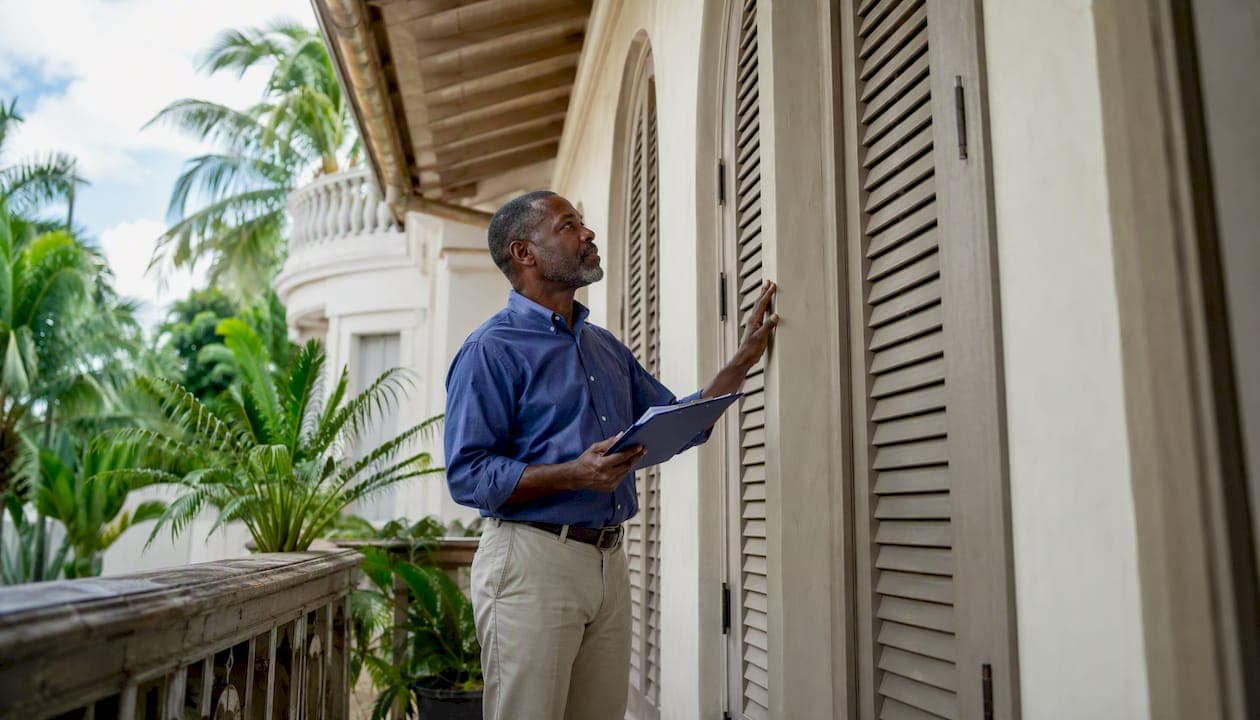
Destin hurricane season runs June 1–November 30, with peak risk concentrated from mid-August through September. For luxury estate owners on this barrier island, that window is an operational period, not a weather footnote. Storm surge here can reach roughly 15–16 feet in extreme events, and Destin's barrier-island exposure amplifies both wind and flood hazards beyond what most inland properties face.
Your 48–72 hour pre-storm priority list:
- Notify your estate manager and confirm shutter and generator protocols
- Deploy hurricane shutters or impact-rated coverings before sustained winds hit 50 mph
- Top off generator fuel and test transfer switches
- Move vehicles to elevated ground; coordinate boat haul-out or secure lines
- Bring in or anchor all outdoor furniture, planters, and amenities
- Activate smart-home alerts and confirm remote monitoring is live
Once sustained winds approach 50 mph, public emergency services may suspend normal operations. Your estate must be professionally staffed and physically secured before that threshold, not after.
Table of Contents
- How should you phase hurricane prep for a luxury Destin estate?
- What does a professional estate manager actually do before, during, and after a storm?
- What insurance coverage should Destin estate owners verify?
- What decisions should you make before a storm threatens?
- Why does year-round coordination with neighbors and local officials matter?
- Who do you contact, and when, during each phase of storm prep?
- How do you protect outdoor amenities and landscaping at a Destin estate?
- What structural retrofits reduce hurricane damage at Destin luxury homes?
- 30apropertycollective keeps your Destin estate storm-ready year-round
- Key Takeaways
How should you phase hurricane prep for a luxury Destin estate?
The difference between a $4,000 repair and a $400,000 loss often comes down to timing. A time-phased approach keeps that gap manageable.

Months before (May–early June): Review and update your insurance policies, confirm shutter hardware is functional, test your generator under load, and schedule any deferred structural repairs. This is also when to lock in vendor contracts for post-storm debris removal and emergency repairs, since qualified contractors book fast once a named storm forms.
Two weeks out: Monitor National Hurricane Center forecasts daily. Confirm your estate manager has current access codes, emergency contacts, and a signed authorization letter. Restock generator fuel and review your hurricane preparation checklist.
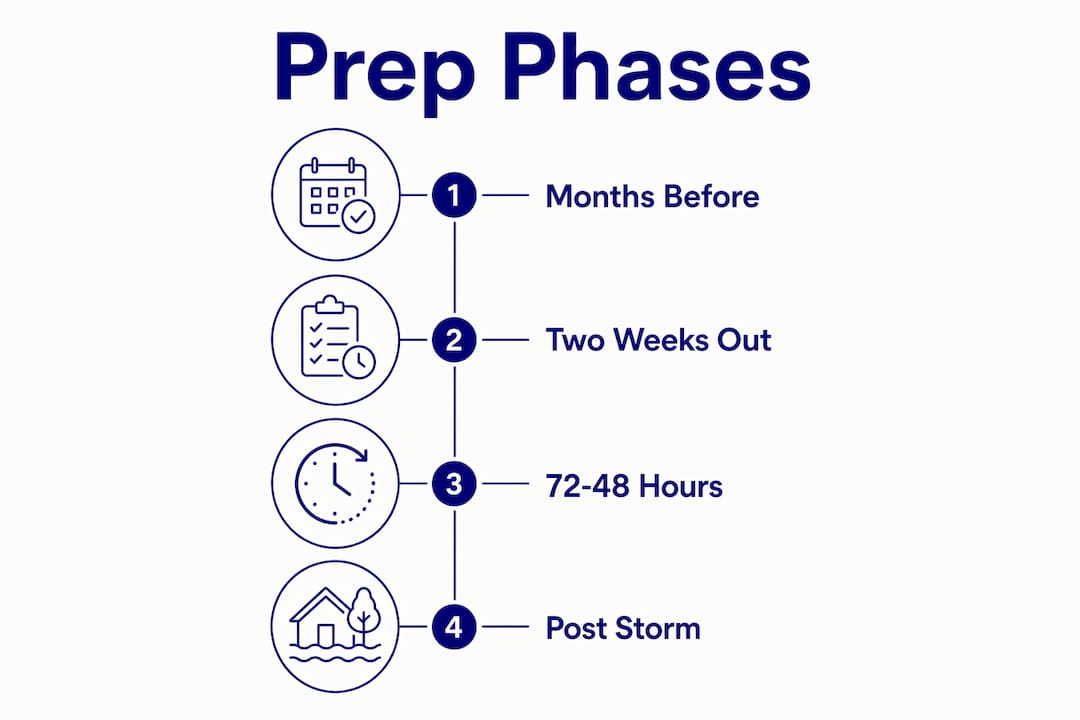
72–48 hours out: Deploy shutters, secure outdoor amenities, move boats, and confirm evacuation routes via Okaloosa County Emergency Management. Follow your estate preparation guide for interior steps: elevate valuables, shut off non-essential utilities, and document the property with timestamped photos.
Immediately post-storm: Do not re-enter until Okaloosa County issues re-entry clearance. City guidance is explicit: return can be restricted until municipal inspections and debris clearance are complete.
What does a professional estate manager actually do before, during, and after a storm?
A good estate manager does not wait for your call. Before a storm, they coordinate shutter contractors, test sump pumps and generators, confirm smart-home alert systems are active, and deliver a timestamped digital inspection report so you have documented pre-storm condition on record.
During the storm, remote monitoring continues. Smart-home sensors flag water intrusion, HVAC failures, or power loss in real time, giving your manager the data to dispatch contractors the moment re-entry is permitted.
Post-storm, the first visit covers a full interior and exterior assessment: water intrusion checks, roof and window inspection, debris documentation, and a prioritized repair list formatted for your insurance adjuster. That report is what separates a clean claim from a disputed one. Weekly home-watch services catch secondary damage, like slow leaks and mold onset, before they compound.
What insurance coverage should Destin estate owners verify?
Florida's coastal insurance market is complex, and barrier-island properties carry specific exposures most standard policies undervalue.
Verify these items with your broker before June 1:
- Wind coverage: Confirm your policy covers named storms and check the deductible structure. Many Florida policies carry a separate wind deductible, often expressed as a percentage of insured value rather than a flat dollar amount.
- Flood insurance: Standard homeowners policies do not cover flood damage. FEMA's National Flood Insurance Program (NFIP) or a private flood policy is separate and mandatory for surge-exposed properties.
- Contents and fine art riders: High-value furnishings, artwork, and electronics need scheduled coverage, not blanket personal property limits.
- Loss of use / rental income: If the property generates rental income, confirm coverage for lost revenue during a mandatory evacuation period.
- Mortgage lender notification: Some lenders require notification before a named storm; check your loan documents. Florida property owners financing major retrofits should also review mortgage considerations that affect escrow and insurance requirements.
Timing matters. Insurance guidance for the Destin area consistently notes that policy changes and new purchases can be restricted once a storm is named, so review coverage in May, not August.
What decisions should you make before a storm threatens?
Clarity before a storm hits is what prevents costly, panicked decisions at 2 AM. Work through this list in May and keep it current.
- Evacuate or stay: Destin sits in a high-risk evacuation zone. The default answer for barrier-island owners is evacuate. Confirm your zone assignment through Okaloosa County Emergency Management and subscribe to county parcel-level alerts.
- Keys and access: Your estate manager needs a physical key, a current alarm code, and written authorization to act on your behalf. Keep a copy with a trusted neighbor and one off-site.
- Guests: If the property is occupied by renters or guests during a storm watch, your manager needs a clear protocol for communicating evacuation requirements and coordinating departure. Review your absentee owner authorization plan before season starts.
- Boats and vehicles: Arrange haul-out or inland storage contracts in advance. Marina space disappears within hours of a named storm watch.
- Pets: If you have animals at the property, confirm your evacuation plan includes pet-friendly accommodations along your route.
Why does year-round coordination with neighbors and local officials matter?
Mayor Bobby Wagner's guidance is direct: prepare early, rely on official sources like the National Hurricane Center and local emergency management, and treat preparedness as ongoing, not seasonal. That framing matters for estate owners specifically.
Barrier-island neighborhoods are interdependent. A neighbor's unsecured patio furniture becomes a projectile. A flooded adjacent lot can compromise your drainage. Coordinating with neighbors on shared vendor contracts, generator fuel sources, and post-storm re-entry timing reduces everyone's exposure. The Okaloosa County Local Mitigation Strategy identifies community simulation exercises and coordinated response as key risk-reduction tools, not optional extras.
Year-round estate management, with weekly inspections and documented property condition, means you enter every season with a baseline record rather than scrambling to establish one when a storm is already in the Gulf.
Who do you contact, and when, during each phase of storm prep?
A communication plan is only useful if it is written down before you need it.
Season start (May–June): Contact your estate manager to confirm the annual storm-prep scope, update emergency authorizations, and verify vendor contracts.
Named storm watch (5–7 days out): Monitor NHC advisories. Alert your estate manager to begin pre-storm protocols. Notify your insurance broker.
48 hours out: Confirm shutter deployment is complete. Verify evacuation status with Okaloosa County. Notify your mortgage lender if required. Confirm your estate manager has documented the pre-storm property condition.
During the storm: Maintain contact with your estate manager via phone and smart-home monitoring dashboards. Do not attempt to return until official re-entry is authorized.
Post-storm (within 24 hours of re-entry clearance): Your estate manager should be on-site before you are, delivering a full inspection report and initiating any emergency contractor dispatches.
How do you protect outdoor amenities and landscaping at a Destin estate?
Luxury outdoor spaces, pools, summer kitchens, pergolas, and mature landscaping, require specific protocols that go beyond "bring in the chairs."
Pools: Lower water levels by 12–18 inches to prevent overflow and contamination. Do not drain completely; an empty pool shell can shift or crack under saturated soil pressure. Shut off pool equipment and secure the pump housing.
Outdoor kitchens and grills: Disconnect propane lines and store tanks horizontally in a sheltered location. Cover built-in appliances with waterproof covers rated for wind.
Pergolas, shade structures, and furniture: Retractable awnings must be fully retracted. Freestanding pergolas without permanent footings should be disassembled. Heavy teak or aluminum furniture can be secured with hurricane straps or moved to a garage.
Landscaping: Trim palms and large trees before season, not before a storm. Pre-storm trimming reduces sail effect and projectile risk. Remove dead branches and any potted plants that cannot be moved inside.
Lighting and irrigation: Shut off irrigation systems to prevent flooding during heavy rain. Secure or remove decorative lighting fixtures that are not rated for high-wind exposure.
What structural retrofits reduce hurricane damage at Destin luxury homes?
The Destin barrier-island risk profile makes structural hardening a sound investment, not a luxury upgrade.
Impact-rated windows and doors: The single highest-return retrofit for most Destin homes. Impact glass eliminates the need for shutters, maintains the building envelope under pressure, and reduces interior damage from wind-driven rain. Expect significant cost variation based on opening count and glass specification.
Roof-to-wall connectors and secondary water barriers: Florida's updated building codes require these in new construction, but older homes often lack them. A licensed contractor can add hurricane straps and a secondary roof membrane without a full re-roof.
Whole-home standby generators: A permanently installed, natural-gas or propane standby generator with an automatic transfer switch keeps HVAC, sump pumps, and security systems running through extended outages. For a luxury estate, this is standard infrastructure.
Garage doors: The largest and most failure-prone opening on most homes. Brace kits or replacement with wind-rated doors are cost-effective and often required by insurers for full wind coverage.
Sump pumps and backflow preventers: Storm surge creates secondary hazards including sewer overflows and contaminated standing water. A properly installed sump pump with a battery backup and a backflow preventer on sewer lines protects the interior from the damage that often starts not with wind but with water.
30apropertycollective keeps your Destin estate storm-ready year-round

Owning a luxury estate on the Emerald Coast means hurricane season is a recurring operational challenge, not a one-time event. 30apropertycollective handles the full cycle: pre-season structural checks, vendor coordination, shutter management, weekly inspections with digital reports, smart-home monitoring, and post-storm assessments formatted for insurance claims. The concierge services cover everything from emergency contractor dispatch to arrival-ready preparation after a storm clears.
The first engagement starts with a full property survey, a prioritized prep checklist, and a documented scope covering shutters, power, access, and any retrofit recommendations. From there, membership plans under Estate Management Services provide continuous coverage through every storm window.
Pro Tip: Draft a written emergency authorization letter before June 1 that names your estate manager and specifies the actions they are permitted to take without your real-time approval. Stage a physical key set and current access codes with that letter. This single document is what allows your estate team to act in the 48-hour window when you may be unreachable.
Engage before the season starts, not when a storm is already named. Contact 30apropertycollective now to schedule your pre-season estate assessment.
Key Takeaways
Destin's barrier-island position and peak-season surge risk make professional, year-round estate management the most reliable way to protect a luxury property through hurricane season.
| Point | Details |
|---|---|
| Season dates and peak risk | Hurricane season runs June 1–November 30; mid-August through September carries the highest probability of significant storms. |
| Surge exposure | Storm surge can reach roughly 15–16 feet in extreme events, making Destin one of Florida's most exposed barrier-island communities. |
| Operational threshold | Once sustained winds approach 50 mph, emergency services may suspend operations; all securing must be complete before that point. |
| Insurance timing | Policy changes and new purchases are often restricted once a storm is named; review wind, flood, and contents coverage every May. |
| 30apropertycollective | Provides weekly inspections, storm-prep and post-storm assessments, vendor coordination, and digital reports for insurance claims throughout the season. |