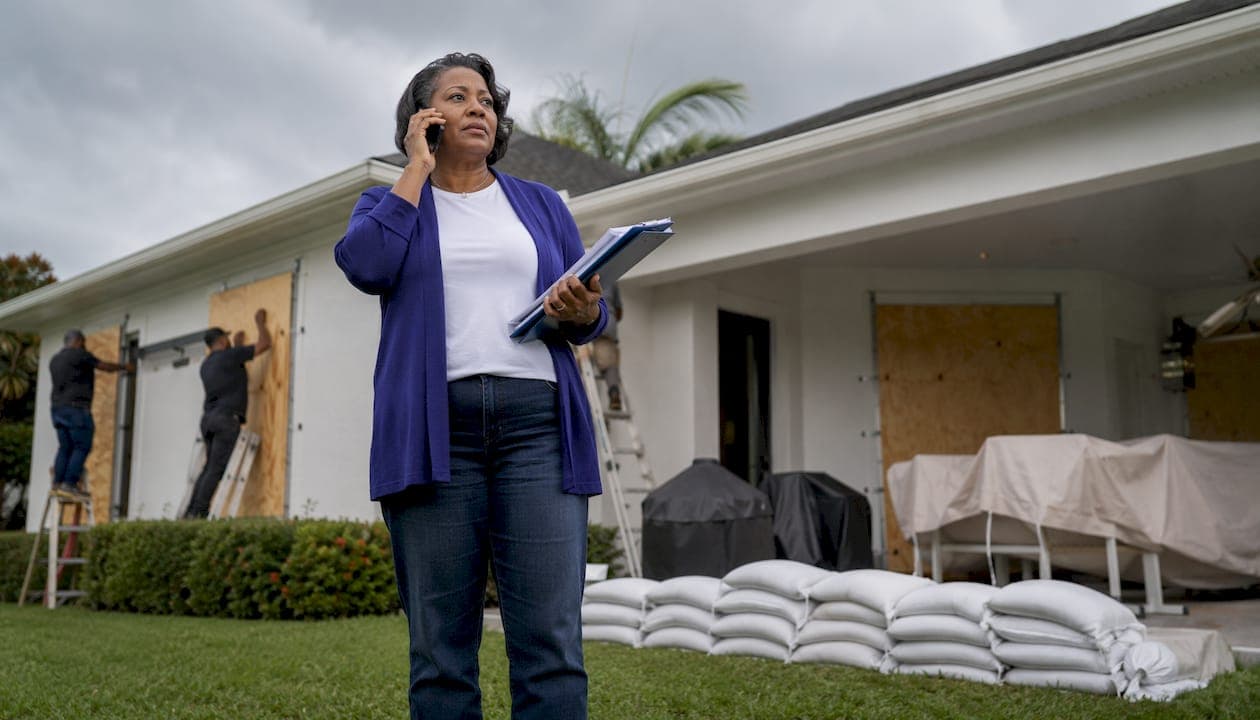
Securing the building envelope — roof attachments, windows, exterior doors, and the garage door — is the single highest-priority action before any storm makes landfall. Add documentation and a pre-authorized evacuation plan, and you've covered the three areas that determine whether a luxury estate comes through a hurricane intact or becomes a months-long insurance battle.
Here's what to assign immediately:
- Secure all openings: Install impact shutters or rated plywood on every window and exterior door
- Reinforce the garage door: The most common single point of failure in residential hurricane damage
- Document the estate: High-resolution photos and video of every room, exterior, and mechanical system
- Authorize vendors: Pre-sign contractor access authorizations and confirm lockbox codes
- Confirm insurance: Verify separate wind and flood coverage with your carrier
- Coordinate evacuation: Confirm who gives the departure order and where staff goes
The Florida Division of Emergency Management and the National Weather Service both publish property-specific guidance. 30apropertycollective coordinates all of this on behalf of Emerald Coast estate owners so nothing falls through the cracks.
Table of Contents
- What's your 72-hour and 7-day storm checklist?
- How do you harden the five critical areas of your building envelope?
- How should you document your estate and protect your assets?
- What's your evacuation plan for owners, staff, and vendors?
- When should you invest in upgrades versus short-term prep?
- When does a professional assessment make sense?
- 30apropertycollective handles Emerald Coast storm prep so you don't have to
- Key Takeaways
- What estate managers actually do before a storm hits
- Useful sources and further reading
What's your 72-hour and 7-day storm checklist?
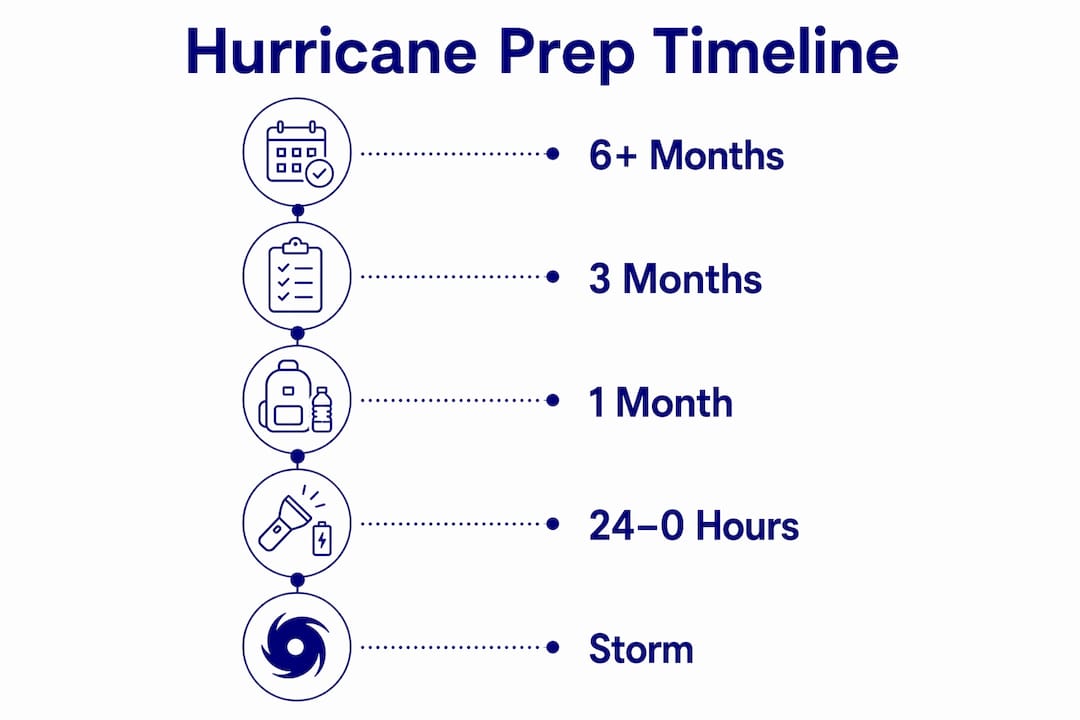
7+ days out
- Schedule a certified contractor to inspect the roof, garage door, and all fenestration
- Order impact glazing, rated shutters, or 5/8-inch plywood if not already on hand
- Pull your insurance declarations page and confirm wind versus flood coverage
- Verify generator fuel levels and auto-start function; test sump pumps
- Confirm vendor authorization documents are signed and lockbox codes are current
72–48 hours before landfall
- Move or secure all outdoor furnishings, planters, sculptures, and equipment
- Stage shutters or plywood at each opening; assign installation to lead technician
- Fuel vehicles and any backup watercraft; arrange secure storage for boats
- Begin interior protection: elevate valuables off ground floors, wrap electronics
- Confirm staff departure logistics and shelter-in-place assignments
24–0 hours
- Close and lock all shutters; board remaining windows
- Disconnect outdoor electrical connections as directed by your utility provider
- Implement staff evacuation per the pre-approved plan; confirm all personnel are clear
- Notify authorized vendors of access window and confirm alarm/monitoring status
Pro Tip: Book licensed contractors in early May, before the June 1 Atlantic hurricane season start. Contractor availability collapses within 48 hours of a named storm — owners who wait pay emergency rates and often can't get anyone at all.
Pro Tip: Planning retrofits months ahead costs significantly less than emergency scheduling. A garage-door brace installed in April is a fraction of the cost of the same job quoted the week before landfall.
How do you harden the five critical areas of your building envelope?
The Florida Division of Emergency Management identifies five areas where wind-driven water intrusion and pressure failure begin. Give your contractor these specs before any inspection.
| Building Area | Retrofit / Action | Minimum Spec to Request |
|---|---|---|
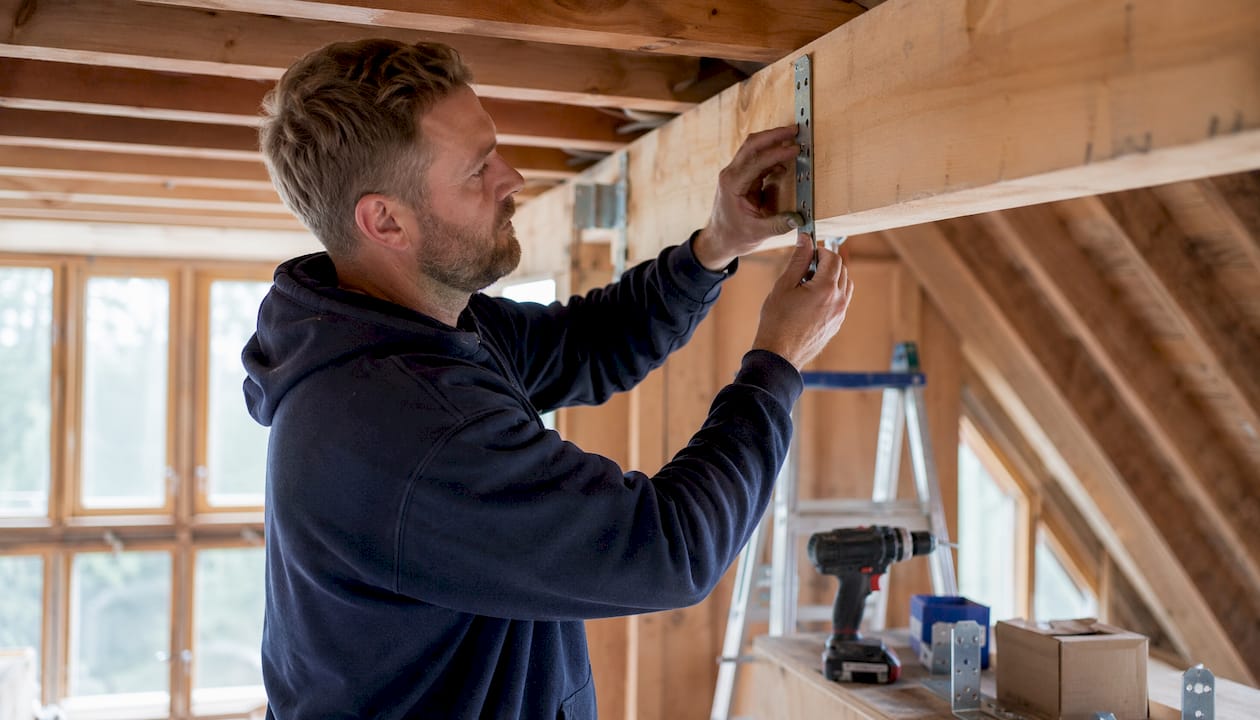
| Roof attachments | Install galvanized hurricane straps at every rafter-to-wall connection | Code-compliant galvanized straps; verify at each truss |
| Windows | Impact-rated glazing or temporary cover | Impact glass (rated for local design pressure) or 5/8" plywood, properly fastened |
| Exterior doors | Reinforced construction with multi-point locking | 1-inch deadbolt minimum; estate-grade multi-point lock for oversized or double doors |
| Garage door | Bracing kit or impact-rated replacement | Manufacturer-rated bracing system; horizontal bracing bars for each panel |
| Wall openings | Seal vents, cable, HVAC, and electrical penetrations | High-quality urethane-based caulk; rated foam for larger gaps |
Garage doors deserve special attention. When a garage door fails, pressurized air enters the structure and can lift the roof from the inside. NOAA flags this as the most impactful single retrofit for most homes. A bracing kit runs a few hundred dollars installed; a new roof does not.
For exterior doors, FEMA technical guidance is direct: factory-installed bolts and standard consumer hardware routinely fail under hurricane loads. Estate-grade retrofit kits with multi-point locking systems engineered for high-wind loads are the correct specification for oversized or double-entry doors.
Pro Tip: Ask your contractor to note the specific product name, rating, and installation date for every envelope component in the post-inspection report. That documentation is what your insurer needs if you file a claim.
Spec callout: Temporary window protection requires a minimum of 5/8-inch plywood, properly fastened to the framing — not the siding. Thinner material or improper fastening defeats the purpose entirely.
How should you document your estate and protect your assets?
High-resolution photos and video of every room, the exterior, and all mechanical systems are the single most effective thing you can do to accelerate an insurance claim. Do this before the storm, not after.
- Photograph every room from multiple angles, including ceilings and floors
- Video all exterior elevations, the roof (from ground level or drone), and the garage
- Document high-value items: art, jewelry, electronics, custom fixtures, and appliances
- Capture serial numbers and model information for major systems
- Back up everything to a cloud storage service and a separate physical drive stored off-site
Insurance checklist: Standard homeowner policies frequently exclude rising-water flood damage. Confirm with your carrier that you carry both wind coverage and a separate flood insurance policy — ideally through the National Flood Insurance Program or a private flood carrier. Know your deductible for each.
Systems to verify before departure: generator fuel and auto-start, sump pump with battery backup, HVAC and electrical panel elevation above expected flood levels, and smart-home monitoring status so you can watch the property remotely.
Pro Tip: Label each photo file with the room name and date, then organize by category (exterior, interior, valuables, mechanical). A well-organized folder cuts claims processing time considerably and removes ambiguity about pre-storm condition.
What's your evacuation plan for owners, staff, and vendors?
CDC guidance is unambiguous: staying to protect property is not worth risking a life, even in a well-built luxury home. The operational answer is to have every decision pre-made before the storm forms.
Decision authority: Designate in writing who issues the evacuation order — the owner, the estate manager, or both acting jointly. Staff should never be left guessing. A one-page standing order kept in the property binder resolves this.
Staff checklist before departure:
- Secure cash, keys, and critical documents in the designated safe or off-site location
- Shut down non-essential systems; confirm alarm and monitoring are active
- Note utility shutoff locations and confirm they are accessible
- Photograph the property's condition at departure (timestamped)
Vendor authorization template: Prepare a one-page document for each pre-approved contractor that specifies the scope of permitted work, the access window (dates and hours), a primary contact number, and a liability acknowledgment. Pair it with a lockbox code or key-release protocol. This lets trusted contractors begin pre-storm work or post-storm assessment without requiring the owner to be on-site.
The National Weather Service issues hurricane watches at roughly 48 hours before expected conditions and warnings at 36 hours. Those windows are your hard deadlines for staff departure.
When should you invest in upgrades versus short-term prep?
| Timeline | Action | Notes |
|---|---|---|
| 6+ months out | Roof-strap retrofits, impact-glazing installation, garage door replacement | Permits required; contractor scheduling is easier and cheaper |
| 4–8 weeks out | Shutter installation, door hardware upgrades, generator servicing | Lead time for custom shutters; allows permit processing |
| 1–2 weeks out | Pre-storm inspection, plywood procurement, sump pump testing | Last window for contractor availability at normal rates |
| 72–48 hours | Shutter deployment, outdoor furniture storage, fuel top-off | Physical prep only; no new structural work at this stage |
| Post-storm | Damage assessment, documentation, contractor triage | Prioritize safety before re-entry |
Homes built to Florida Building Code standards from 2002 or later generally perform better when the envelope is maintained. For older estates, targeted retrofits on weak envelope points deliver more protection per dollar than general yard cleanup. Talk to your insurance carrier about how documented retrofits affect your wind-coverage deductible — many carriers reduce it for verified improvements.
When does a professional assessment make sense?
Every time, for structural elements. Generic checklists miss estate-specific vulnerabilities like end-gable framing weaknesses or non-standard fenestration ratings. A professional assessment covers:
- Roof attachment points and strap condition at each truss
- Garage door bracing adequacy and panel integrity
- Fenestration ratings versus local design-pressure requirements
- Envelope sealing at all penetrations (HVAC, electrical, cable)
- Drainage, sump systems, and flood-risk elevation
Contractor vetting checklist:
- Florida state contractor license (verify at the DBPR license lookup)
- Documented hurricane retrofit experience on comparable estates
- Proof of general liability and workers' compensation insurance
- References from similar high-value residential projects
- Written report format that includes product names, ratings, and photos
DIY is acceptable for moving outdoor furniture, stocking supplies, and photographing the interior. Roof connections, impact-glazing installation, and structural door reinforcement always require a licensed contractor. The post-inspection report should include dated photos, specific product ratings, and the contractor's license number.
Pro Tip: Require a written pre-storm and post-storm inspection report with photographic documentation. That paper trail is what separates a fast insurance settlement from a disputed one.
30apropertycollective handles Emerald Coast storm prep so you don't have to
Owning a luxury estate on the Emerald Coast means hurricane season is a recurring operational reality, not a once-a-decade event. 30apropertycollective was built for exactly this: concierge-level storm preparation and recovery managed by people who know these properties intimately.

The estate management services include pre-storm on-site inspections with digital reports, certified contractor coordination, vendor authorization management, post-storm damage assessment, and full recovery coordination. Weekly inspections throughout the year mean vulnerabilities are caught in April, not the week before landfall. Every inspection is documented in the client portal with timestamped photos — exactly the evidence your insurer needs.
For owners who want a trusted, hands-off approach to concierge storm preparation, 30apropertycollective coordinates the entire sequence: contractor scheduling, pre-storm documentation, evacuation authorization, and post-storm re-entry assessment. Request your estate-level storm-prep assessment at 30apropertycollective.com/contract-sign.
Key Takeaways
Securing the building envelope and pre-authorizing your vendors before a storm forms are the two decisions that determine how quickly your estate recovers.
| Point | Details |
|---|---|
| Garage door first | Reinforce or replace the garage door before any other retrofit — it is the most common structural failure point. |
| Document before the storm | High-resolution photos and video of every room and system are your primary insurance evidence. |
| Verify wind and flood separately | Standard homeowner policies often exclude rising-water flooding; confirm both coverages with your carrier. |
| Pre-authorize vendors and evacuation | A signed vendor-access template and a written evacuation order eliminate dangerous last-minute decisions. |
| 30apropertycollective | Provides weekly inspections, pre/post-storm assessments, and full contractor coordination for Emerald Coast estates. |
What estate managers actually do before a storm hits
The sequence that protects a luxury estate isn't a checklist you run through once — it's a coordinated operation with a clear timeline and accountable roles. Before a named storm reaches the Gulf, a prepared estate manager has already walked the property, flagged any envelope concerns to a licensed contractor, confirmed the owner's evacuation preferences, and staged the documentation workflow. The contractor visit happens weeks out, not days. The vendor authorization paperwork is already signed. By the time a watch is issued, the physical prep is nearly complete and the only remaining tasks are deployment: shutters go up, outdoor items come in, systems get verified, and the property is handed off to monitoring.
The difference between an estate that comes through a Category 3 with cosmetic damage and one that requires a full roof replacement often comes down to whether the garage door was braced and the envelope was sealed before the storm. Those aren't dramatic interventions. They're scheduled maintenance items that an engaged estate manager treats as non-negotiable every spring. If you'd like a customized storm-prep plan for your property, 30apropertycollective can walk through the specifics with you.
Useful sources and further reading
- National Weather Service — Hurricane Preparedness: Official watch and warning timelines, evacuation zone guidance, and a pre-season checklist
- Florida Division of Emergency Management: Building-envelope specs, retrofit guidance, and Florida-specific planning resources
- CDC — Preparing for Hurricanes: Emergency supply kit guidance, evacuation timing, and safety protocols
- Ready.gov — Hurricanes: Federal emergency planning framework, family communication plans, and insurance document checklists
- NOAA — Strengthen Your Home: Retrofit prioritization, garage-door guidance, and cost-effectiveness of advance planning
- FEMA Hurricane Damage Mitigation Technical Guidance: Engineering-grade specifications for doors, windows, and structural connections
- 30apropertycollective — Services: Full overview of estate management, storm-prep, and concierge services for Emerald Coast homeowners