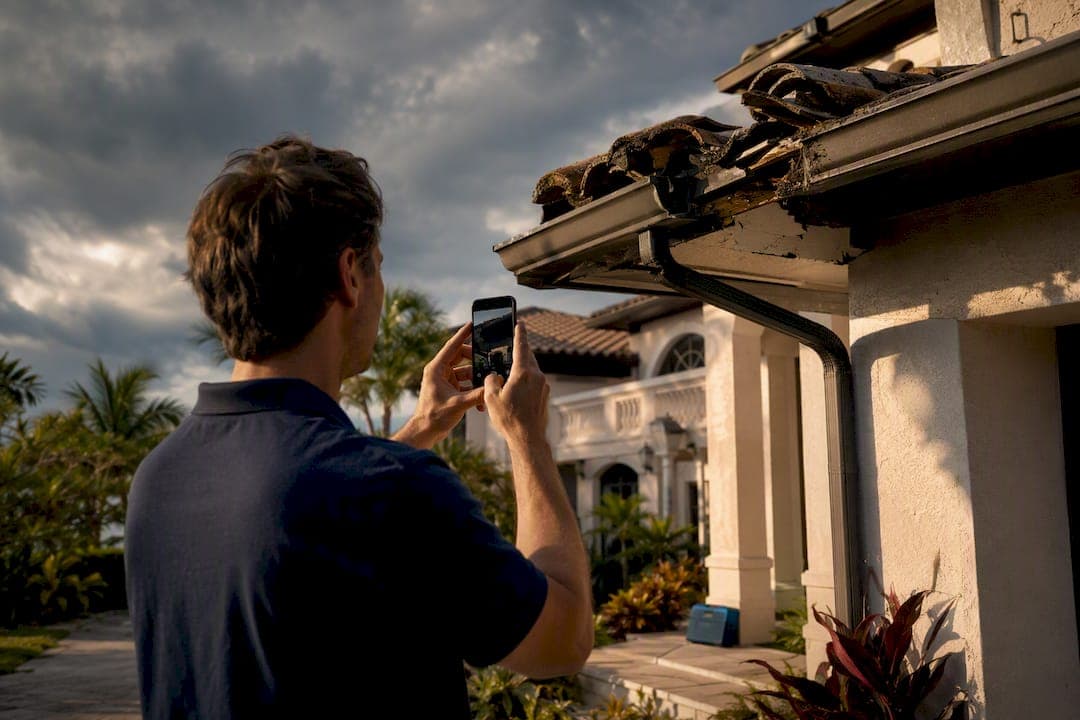
If your home was damaged in a hurricane, call your insurer now, secure the property from further loss, and start documenting everything. Those three moves, done in the first day or two, open your claim and protect your ability to fight for full payment later. Everything else, from adjuster visits to appeals, builds on how well you handle this first stretch.
TL;DR:
- Promptly securing the home with temporary repairs and documenting all damages with detailed photos and videos strengthens your claim and reduces disputes.
- Filing your claim quickly with an accurate, factual report and obtaining all necessary contact information and timelines avoids delays and builds a solid case.
- Understanding whether damage is wind-related or flood-related determines your coverage, as these are handled under separate policies with different deductibles and limits.
- Keeping a meticulous record of interactions, receipts, and estimates throughout the process is vital, especially when facing claim disputes or delays.
- Engaging professional services like public adjusters or proceeding with formal complaints can expedite resolution if insurers go unresponsive or underpay your claim.
Table of Contents
- Post Hurricane Insurance Claim: Your First 24 to 72 Hours
- Documenting Damage: Building a Claim-Ready Home Inventory
- Filing the Claim: What To Say and What To Expect
- Working With Adjusters: What Each One Actually Does
- Wind vs. Flood: Why Your Deductible and Coverage Depend on the Cause
- If Your Claim Is Denied or Underpaid: The Dispute Roadmap
- Recordkeeping: The Habit That Wins Disputes
- Understanding Policy Limits and Caps on Hurricane Damage
- Common Exclusions That Catch Hurricane Claims Off Guard
- How To Estimate Repair Costs Accurately
- What To Do When an Insurer Goes Quiet
- Publisher Perspective: Why a Documented Baseline Changes Everything
- How 30apropertycollective Supports You After the Storm Hits
- Sources
- FAQ
Post Hurricane Insurance Claim: Your First 24 to 72 Hours
The window right after a storm is when a post hurricane insurance claim either gets built on solid ground or starts on shaky footing. Insurers, state regulators, and consumer groups all point to the same short sequence.
- Check for safety hazards first. Downed power lines, gas leaks, and structural instability kill more people after storms than the storms themselves. Do not re-enter a home with visible foundation cracks or a compromised roof until it has been checked.
- Call your insurance agent or company immediately. Get a claim number before you do anything else. Most insurers now also accept mobile app or online reports, and Florida law requires them to acknowledge your claim within 14 days of filing, according to state claims-handling rules covered by Gonzalez Cartwright.
- Secure the property with temporary repairs. Tarp the roof, board broken windows, and pump standing water. Most policies require you to prevent further damage, and skipping this step can hurt your payout.
- Notify your mortgage lender if you have one. Large claim checks are often issued jointly to you and the lender, so lenders expect early notice.
- Photograph and video everything before you touch it. Wide shots of each room, close-ups of damage, and short video walkthroughs with narration all help later.
Pro Tip: Text yourself a one-line note after every call, listing the date, who you spoke with, and what they told you. Six weeks from now, that habit will save you hours of guessing.
Documenting Damage: Building a Claim-Ready Home Inventory
A usable home inventory is not a mental list. It is a room-by-room record with enough detail that an adjuster or, if needed, an appraiser cannot dispute what you owned or its condition.
- List each damaged item with its approximate purchase date, original cost, and serial number if it has one.
- Photograph receipts, warranty cards, and appliance manuals when you can find them.
- Shoot wide-angle photos of every room before cleanup, then close-ups of specific damage, and back everything up to cloud storage the same day.
- Keep every contractor estimate, even ones you do not use, since insurers often ask for at least two bids.
- Save bank and credit card statements showing purchases of major furnishings or renovations.
Homeowners who scheduled a documented post storm home inspection within 48 to 72 hours of a storm have a real advantage here: a dated, photographed baseline that separates hurricane damage from anything that existed beforehand. A claim-ready home inventory template can turn a chaotic pile of photos into something an insurer can actually process quickly.
Filing the Claim: What To Say and What To Expect
Keep your initial report factual and brief. Give your policy number, a short description of the damage (roof, water intrusion, fencing), and your best contact number. Do not speculate about cause or estimate your own repair costs on that first call. Adjusters, not homeowners, determine cause of loss, and guessing wrong can complicate things later.
Ask for and write down four things before you hang up:
- Your claim number
- The name and direct contact for your assigned adjuster
- An estimated timeline for the inspection
- Whether you need to submit a signed proof-of-loss form, and by when
What the timelines actually look like: In Florida, insurers must acknowledge a claim within 14 days and issue a coverage determination within 90 days of filing. If payment or a written denial isn't issued within 60 days, interest can start accruing on the claim, according to Florida claims-handling rules. Large or catastrophic claims commonly take many months to a couple of years from filing to final resolution, depending on complexity and volume. (https://www.iii.org/article/settling-insurance-claims-after-a-disaster).
Request every important update in writing, even if you already got it verbally. A text or email confirming "your adjuster inspection is scheduled for [date]" is worth far more in a dispute than your memory of a phone call.
Working With Adjusters: What Each One Actually Does
Three types of adjusters show up in hurricane claims, and knowing which one is in front of you changes how you should prepare.
- Company adjusters work directly for your insurer and are the most common first point of contact. Their job is accurate assessment, but they represent the insurer's interests, not yours.
- Independent adjusters are contracted by insurers during high-volume disasters when staff adjusters are overwhelmed. They function similarly to company adjusters but may be less familiar with your specific policy.
- Public adjusters work for you, the homeowner, usually for a percentage of the settlement. They tend to make the most sense for large, complex, or disputed claims, though fees and state caps vary, according to Triple-I.
Before any inspection, walk the property yourself and flag every issue with painter's tape or sticky notes so nothing gets missed. Bring your photo log and contractor estimates to the visit rather than leaving them for a follow-up email.
Pro Tip: If your lender holds part of the claim check, call the loan servicer's insurance loss department early. Ask exactly what documentation they need to release repair funds, since this step alone often causes the longest delays.
Wind vs. Flood: Why Your Deductible and Coverage Depend on the Cause
Hurricane damage insurance is not one policy. Wind-driven damage, including roof loss and rain that enters through wind-created openings, is typically covered under a standard homeowners policy. Storm surge and rising floodwater are excluded from that same policy and fall under separate flood coverage such as NFIP.
- If your roof failed and rain soaked your living room, that is a homeowners claim.
- If storm surge pushed water through your foundation, that is a flood claim, filed separately with your NFIP or private flood insurer.
- Many coastal homes need both claims filed simultaneously, especially after a storm that brought both wind and surge.
Hurricane deductibles are usually a percentage of your dwelling coverage limit, not a flat dollar figure, which means the out-of-pocket amount varies based on your policy limits, a detail explained further in this hurricane deductible breakdown for Florida homeowners. Replacement cost coverage pays to rebuild at today's prices; actual cash value subtracts depreciation, which can mean a meaningfully smaller check for an older roof.
If Your Claim Is Denied or Underpaid: The Dispute Roadmap
A denial or lowball offer is not the end of the process. Request a written explanation citing the specific policy language the insurer relied on, along with a full copy of the adjuster's estimate.
- Compare the insurer's estimate line by line against your own contractor bids and photo evidence.
- Invoke the appraisal clause in your policy if you have one. Each side picks an appraiser, the two pick a neutral umpire, and the panel settles the dollar amount, often faster and cheaper than litigation.
- Bring in a public adjuster or attorney for large, complex disputes. Both typically work on contingency or a percentage fee rather than an hourly rate.
- File a complaint with your state department of insurance if the insurer is acting in bad faith or violating claims-handling timelines. The NAIC's post-disaster claims guidance outlines what regulators expect from insurers and gives homeowners a benchmark to point to.
Mediation, often free or low-cost through your state insurance department, is worth trying before hiring a lawyer. Many disputes resolve there without ever reaching a courtroom.
Recordkeeping: The Habit That Wins Disputes
Every homeowner who has fought through a drawn-out hurricane claim eventually learns the same lesson: whoever kept better records wins the argument. Insurers process thousands of claims after a major storm, and phone calls get lost, adjusters change, and verbal promises fade. Your notes are what settles disagreements six months later when nobody remembers the original conversation.
Keep one running document, digital or paper, that tracks every interaction chronologically. Log the date, the person's full name, their direct phone number or extension, and a one-sentence summary of what was said or promised. Note your claim number and adjuster ID on every page so nothing gets separated from the file.
Save every receipt for temporary repairs, hotel stays, and replacement essentials. Additional living expenses (ALE) coverage often reimburses these costs, and insurers may issue an early emergency advance without full documentation, according to Consumer Reports. Treat that early check as a partial payment, not a final number. Keep gathering documentation even after money starts arriving, since insurers sometimes revise estimates once full inspections are complete.
Store digital copies of everything in at least two places, a cloud folder and a physical backup, because a second storm or a failed hard drive should never be the reason you lose your case.
Understanding Policy Limits and Caps on Hurricane Damage
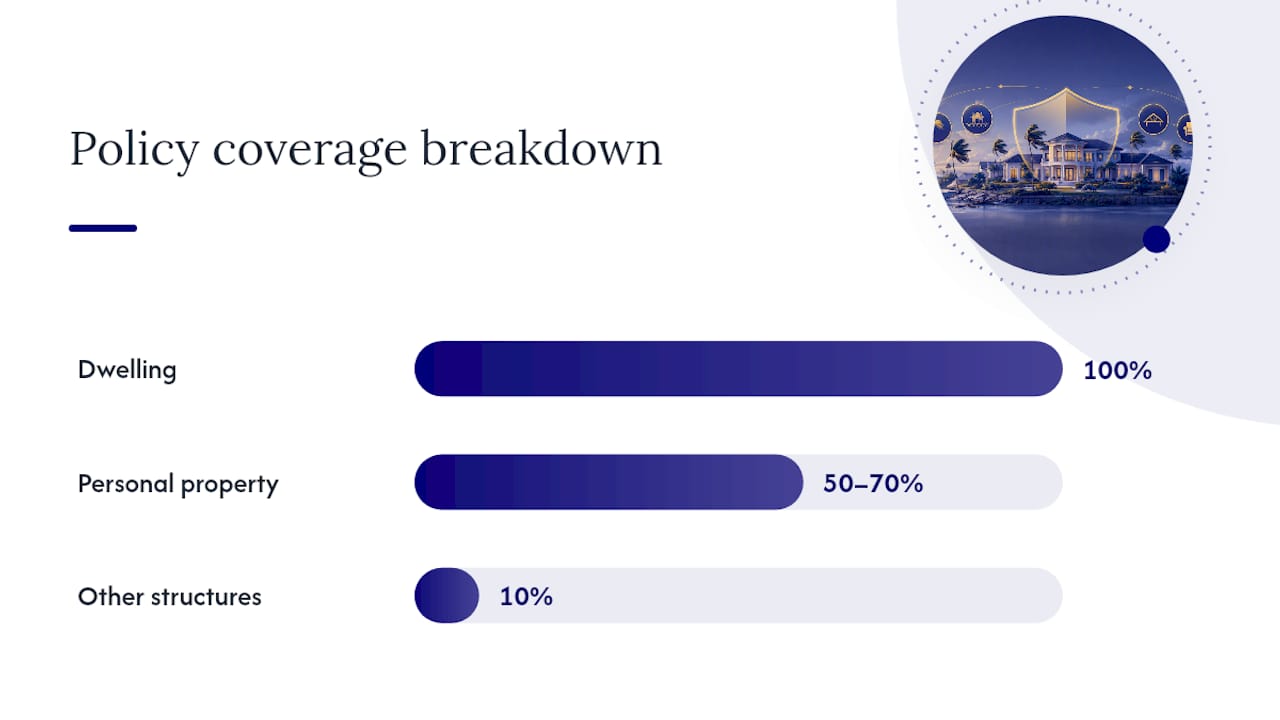
Your dwelling coverage limit is the ceiling on what your insurer will pay to rebuild your home's structure, and it rarely adjusts automatically with construction cost inflation. Check your declarations page for the actual number rather than assuming it matches your home's current market value, since those two figures are often far apart.
Personal property coverage typically caps at a percentage of your dwelling limit, often 50% to 70%, and many policies impose separate sub-limits on categories like jewelry, art, or business equipment kept at home. High-value estates frequently need scheduled endorsements to fully cover items that would otherwise be capped at a few thousand dollars.
Other structures, detached garages, pool houses, seawalls, and docks, usually fall under a separate limit, commonly around 10% of the dwelling coverage. Loss of use or ALE coverage has its own cap too, often expressed as a percentage of dwelling coverage or a defined dollar amount and time period.
Ordinance or law coverage matters more than most homeowners realize. If your home is damaged badly enough that local building codes require a full rebuild to current standards, a policy without adequate ordinance coverage can leave a substantial gap between what you're paid and what compliant reconstruction actually costs. Review these limits with your agent before hurricane season, not after a storm has already hit, since raising a limit after a named storm is declared is rarely possible.
Common Exclusions That Catch Hurricane Claims Off Guard
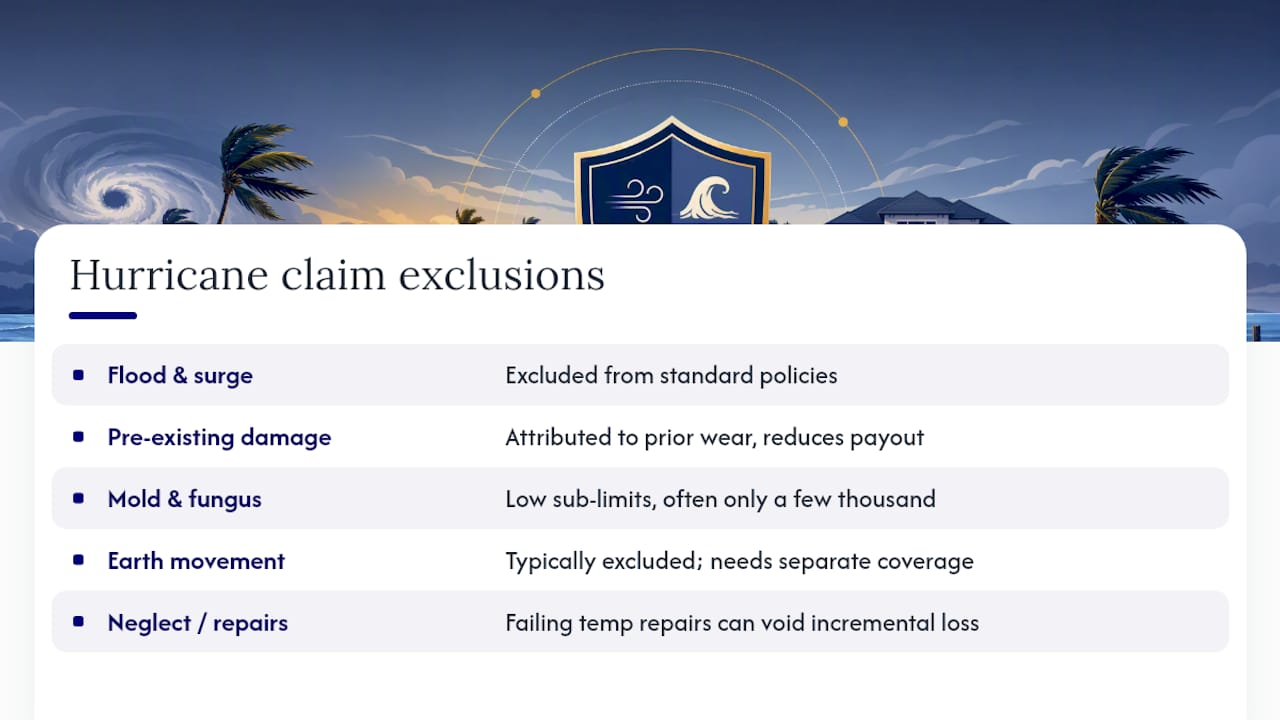
Most denied or reduced hurricane claims trace back to an exclusion the homeowner never read closely. Flood and storm surge sit at the top of that list, since standard homeowners policies exclude them entirely regardless of how directly the hurricane caused the flooding.
Pre-existing damage is another frequent flashpoint. If your roof already had wear, prior leaks, or deferred maintenance, insurers may attribute part of the damage to that condition rather than the storm, which is exactly why a dated pre-storm inspection carries so much weight in a dispute.
Mold and fungus coverage is often capped at a low sub-limit, sometimes just a few thousand dollars, even when the mold grew directly from storm-related water intrusion that took days to dry out. Earth movement exclusions can also apply if a storm triggers a landslide or sinkhole, since those perils typically require separate coverage.
Neglect clauses matter too. If you fail to make reasonable temporary repairs after the storm and damage worsens as a result, insurers can deny the incremental loss. Screened enclosures, pool cages, and fencing frequently carry named-storm sub-limits far below their replacement cost, a detail many owners only discover after filing. Reading your policy's exclusions section before hurricane season, alongside proactive pre-storm preparation, closes most of these surprises before they cost you money.
How To Estimate Repair Costs Accurately
An accurate repair estimate is the single biggest lever you control in a hurricane damage insurance dispute. Insurers use estimating software like Xactimate to generate their numbers, and contractors rarely use identical line items, which is exactly why discrepancies happen even among honest, competent estimators.
Get at least two independent contractor bids, and make sure each one itemizes labor, materials, and any code-upgrade costs separately rather than bundling them into a lump sum. A vague one-page estimate carries far less weight in a dispute than a detailed line-item breakdown that mirrors the insurer's own format.
Match your estimate's scope to the actual damage, not what would be nice to have. Insurers push back hard on upgrades bundled into storm repairs, like replacing an entire kitchen when only cabinets near a leak were affected. Keep those separate as optional work if you want them.
Factor in current material and labor costs, not last year's prices. Post-hurricane demand spikes lumber, roofing, and labor costs regionally, sometimes for months, and an estimate based on outdated pricing will underfund your actual rebuild. If your estimate and the insurer's differ by a wide margin, that gap itself is often the trigger for invoking an appraisal clause rather than accepting a lowball number outright.
What To Do When an Insurer Goes Quiet
Unresponsive insurers are common after major hurricanes simply because of claim volume, but state law still gives you leverage. In Florida, if 14 days pass with no acknowledgment or 90 days pass with no coverage decision, the insurer is out of compliance with state claims-handling rules, per Gonzalez Cartwright.
Start by escalating through official channels rather than repeat calls to the same adjuster line. Send a written request, email or certified letter, referencing your claim number and asking for a status update by a specific date. Copy your agent, since agents can sometimes push a stalled claim through faster than a direct call to a call center.
If that produces nothing, file a formal complaint with your state department of insurance. Most states, including Florida, have online complaint portals built specifically for post-disaster backlogs, and a regulatory inquiry often moves a stalled file faster than another homeowner phone call ever will. Disasterassistance is a useful federal backstop if your losses exceed what private insurance ultimately covers.
Consider a public adjuster or attorney once delays stretch past 90 to 120 days with no resolution, particularly on large claims. Keep documenting every call and non-response in the same log you started on day one, because a pattern of delay is itself evidence when a complaint or legal claim eventually gets filed.
Publisher Perspective: Why a Documented Baseline Changes Everything
Most disputes over hurricane damage boil down to one question: was this preexisting or storm-caused? Homeowners who schedule regular property inspections walk into that argument with a dated, photographed answer already in hand, rather than scrambling to prove it after the fact. That single advantage is why some owners choose managed estate oversight before hurricane season even starts, not after.
— Zackary
How 30apropertycollective Supports You After the Storm Hits
Filing a strong claim takes documentation, coordination, and time, three things that are hardest to manage when you're also displaced or dealing with contractors. Professional services can handle the legwork a homeowner or a busy contractor bid comparison would otherwise eat up: post-storm inspections with photo and video baselines, vendor oversight to get temporary repairs done fast, and consolidated documentation your insurer or adjuster can review without chasing you for missing pieces.

For coastal estates, that means a documented pre-storm condition report may be on file before a hurricane forms, and a post-storm inspection can happen within the critical 48 to 72 hour window without you needing to be on the property. If your home suffered damage severe enough that repair isn't realistic, our partner's guide on selling a water-damaged house for cash covers that path as well. For everyone else, concierge services coordinate contractors and vendors while you focus on your claim, and you can start an estate management agreement today to have this coverage in place before the next storm forms.
Sources
Verify timelines and coverage rules directly: the NAIC Post-Disaster Claims Guide, Floodsmart, and consumer explainers from Triple-I and Consumer Reports.
This article is general information, not a substitute for advice from a qualified financial advisor. Consult a qualified financial professional about your own circumstances before acting on anything here.
- Post-Disaster Claims Guide | NAIC
- Settling insurance claims after a disaster | Triple-I
- How to file a homeowners insurance claim after an emergency weather event | Consumer Reports
FAQ
How Long After a Hurricane Can You File a Claim?
Most policies allow one to three years to file, but you should report damage within days of the storm since insurers, including Florida's, must acknowledge claims within 14 days once filed, and delays can complicate proving cause of loss.
What Should You Avoid Saying During a Home Insurance Claim?
Avoid guessing at the cause of damage, estimating your own repair costs, or admitting to deferred maintenance; stick to factual descriptions and let the adjuster determine causation.
Does Insurance Go Up After a Natural Disaster?
Rates often rise regionally after major hurricanes as insurers reprice risk across an entire market, though an individual rate increase tied directly to a single claim varies by insurer and state regulation.
How Much Does Flood Insurance Pay Out?
NFIP payouts depend on your policy's coverage limits for the building and contents, and payment is based on the actual damage documented during the claim, filed separately from any homeowners wind claim through FloodSmart.gov.
Should I Hire a Public Adjuster for My Hurricane Claim?
Public adjusters tend to help most with large or disputed claims where the potential recovery outweighs their fee, while smaller, straightforward claims often resolve fine with your own documentation and a solid contractor estimate.