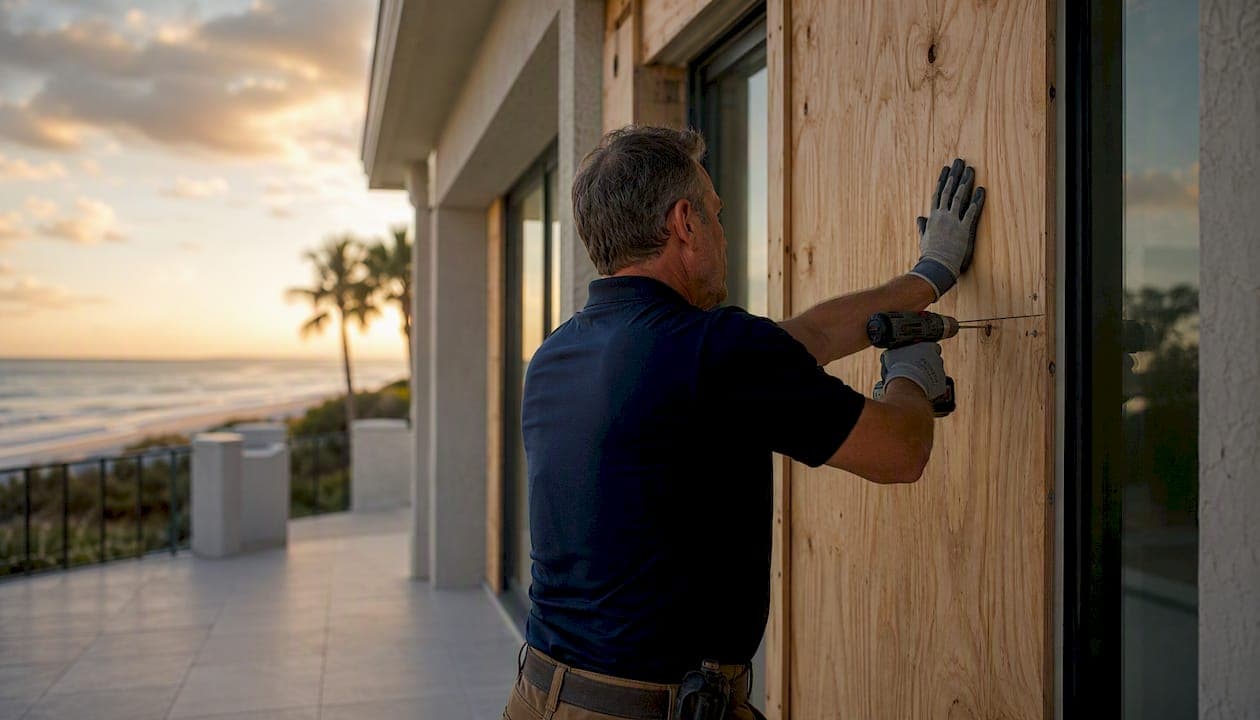
If you own a luxury estate on Florida's Emerald Coast, the single most important move you can make right now is retaining a dedicated hurricane-prep and response service before the season opens June 1. NOAA recommends completing insurance checkups and documentation well before the season starts, and flood policies carry a 30-day waiting period that catches unprepared owners every year. The Florida Division of Emergency Management advises building emergency supplies to cover multiple days and coordinating evacuation plans early. 30apropertycollective handles all of it: pre-storm boarding and shuttering, generator and fuel management, weekly timestamped inspections, vendor coordination, owner communications, and post-storm damage documentation for your insurer.
Key Takeaways
Engaging a dedicated estate hurricane-prep service before June 1 is the single most effective way to reduce your deductible exposure, accelerate claims, and protect a high-value Emerald Coast property.
| Point | Details |
|---|---|
| Engage by mid-May | Major hardening and generator installs require 4–6 weeks; materials sell out once a storm enters the forecast cone. |
| Know your deductible trigger | Florida hurricane deductibles vary by insurer and county; confirm your policy's trigger language (watch, warning, or landfall). |
| Document before the storm | Timestamped room-by-room photos, policy declarations, and the OIR-B1-1802 form speed claim settlement and reduce disputes. |
| Verify remote monitoring capability | Confirm your estate manager uses battery-backed network gear and cellular failover to maintain visibility during outages. |
| 30apropertycollective | Covers all three phases, pre-storm, storm-time, and post-storm, with weekly digital reports and contractor oversight on the Emerald Coast. |
Table of Contents
- What does the hurricane deductible mean for Florida homeowners?
- How your deductible affects claims and estate management costs
- How to coordinate with your insurer before a storm hits
- Do deductible rules vary by county or insurer in Florida?
- What a professional estate team actually does across all three phases
- What the conventional wisdom on storm prep gets wrong
- 30apropertycollective: your Emerald Coast estate hurricane partner
- Authoritative resources for estate hurricane planning
- Sources
What does the hurricane deductible mean for Florida homeowners?
Florida's hurricane deductible is a separate, percentage-based cost that applies specifically to hurricane-caused damage on your homeowner's policy. Florida law requires insurers to offer this structure for wind damage from named storms, and it activates the moment the National Hurricane Center issues a hurricane watch or warning for your area.
Florida insurers must apply premium discounts for features documented on the wind mitigation form OIR-B1-1802. Scheduling a wind mitigation inspection early and keeping that form current is one of the fastest ways to reduce both your premium and your effective deductible exposure.
How your deductible affects claims and estate management costs
A high percentage deductible shifts significant financial risk to you, which makes pre-storm documentation and post-storm evidence collection critical. Pre-storm photo and video uploads of possessions, policy pages, and exterior condition speed claim settlement and reduce disputes. An estate manager who delivers timestamped digital reports before and after a storm gives your adjuster exactly what they need to process your claim quickly.
Major hardening projects and generator installs generally require several weeks of planning and contractor time. Owners who wait until a storm is named face sold-out materials and long lead times, which means paying out-of-pocket for emergency repairs that a prepared estate would have avoided entirely.
How to coordinate with your insurer before a storm hits
Pull your policy declarations page and confirm your hurricane deductible percentage, your coverage limits, and any exclusions for specific structure types. Provide your estate manager with a copy so they can document conditions that directly support your coverage. Wind mitigation documentation materially affects insurer discounts and helps claims settle faster. Ask your insurer whether your policy covers temporary mitigation costs like tarps and emergency boarding, since many policies do, and keep all contractor receipts organized for reimbursement.
Do deductible rules vary by county or insurer in Florida?
Yes. While Florida statute sets the framework, individual insurers set their own percentage tiers and trigger definitions. Coastal counties, including Okaloosa and Walton where much of the Emerald Coast sits, often see higher percentage deductibles and stricter underwriting because of elevated wind-zone exposure. Some insurers apply the hurricane deductible only when a named storm makes landfall in Florida; others trigger it on a watch or warning. Read your policy's trigger language carefully, and confirm with your insurer whether your county's wind zone classification affects your rate. Local Destin and Emerald Coast prep considerations differ meaningfully from inland Florida, and your estate manager should know both.
What a professional estate team actually does across all three phases
A well-run estate-management team cuts repair costs, contractor wait times, and owner stress by working the problem across three distinct phases, not just the 48 hours before landfall.
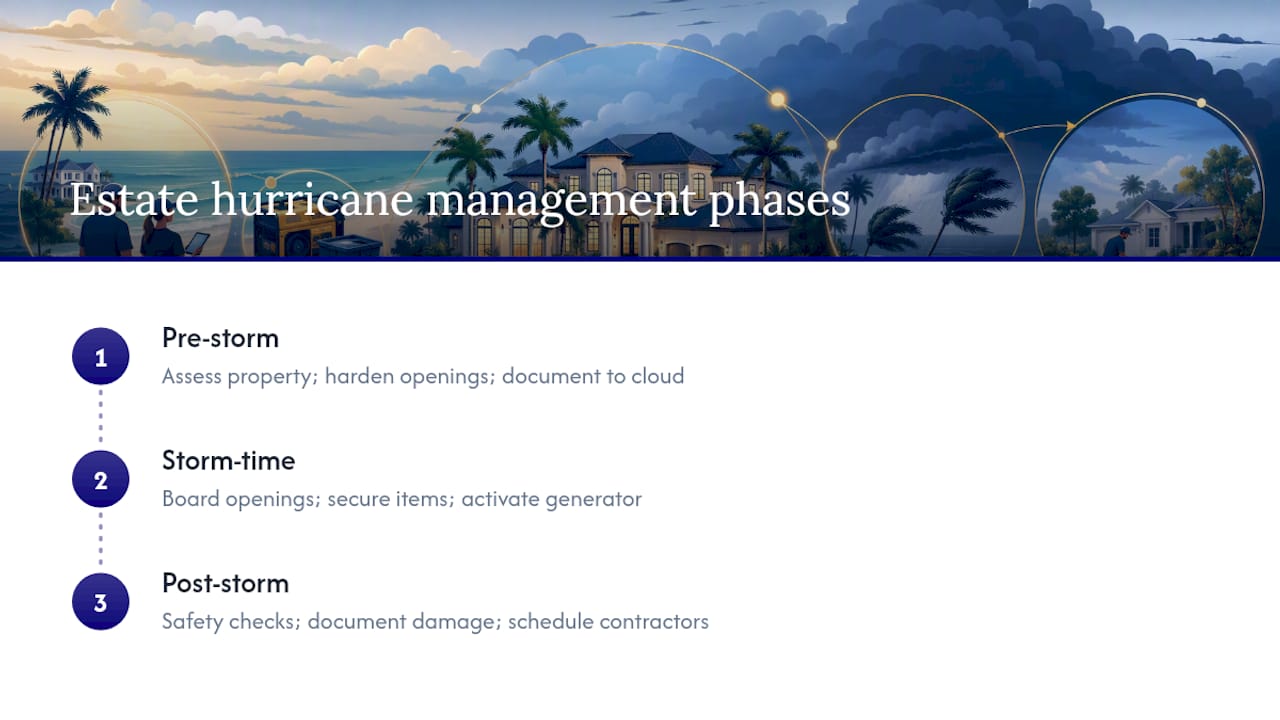
Pre-storm: The team conducts a property assessment and prioritizes hardening: impact protection, garage door bracing, and generator fuel scheduling. Room-by-room photo and video documentation, including serial numbers for high-value items, goes to cloud storage. Smart-home and network resilience checks confirm that cameras, alarms, and remote access will survive an outage. Vendor scheduling windows for shutter installs and generator service must be locked in weeks ahead, not days.
Storm-time: The team boards exposed openings, secures outdoor furniture and equipment, activates or oversees generator fuel delivery, and maintains a communication cadence with the owner. Remote monitoring runs on battery-backed network gear with cellular failover.
Pro Tip: Keep your modem, router, and NVR on a small UPS with a cellular failover device. This combination significantly improves the chance that cameras and alarms stay functional through grid outages, giving your estate manager real-time visibility when it matters most.
Post-storm: Safety checks come first, then a documented damage walkthrough with timestamped photos and video for your insurer. Temporary mitigation, tarps, emergency boarding, and staged re-entry approval follow. The team manages contractor scheduling and receipt collection so your claim file is complete before the adjuster visits.
What the conventional wisdom on storm prep gets wrong
Most storm-prep advice treats the hurricane deductible as an insurance problem and the physical prep as a separate homeowner problem. For a luxury estate, they are the same problem. Your deductible exposure is directly proportional to the damage your property sustains, and the damage your property sustains is directly proportional to how well it was hardened and documented before the storm.
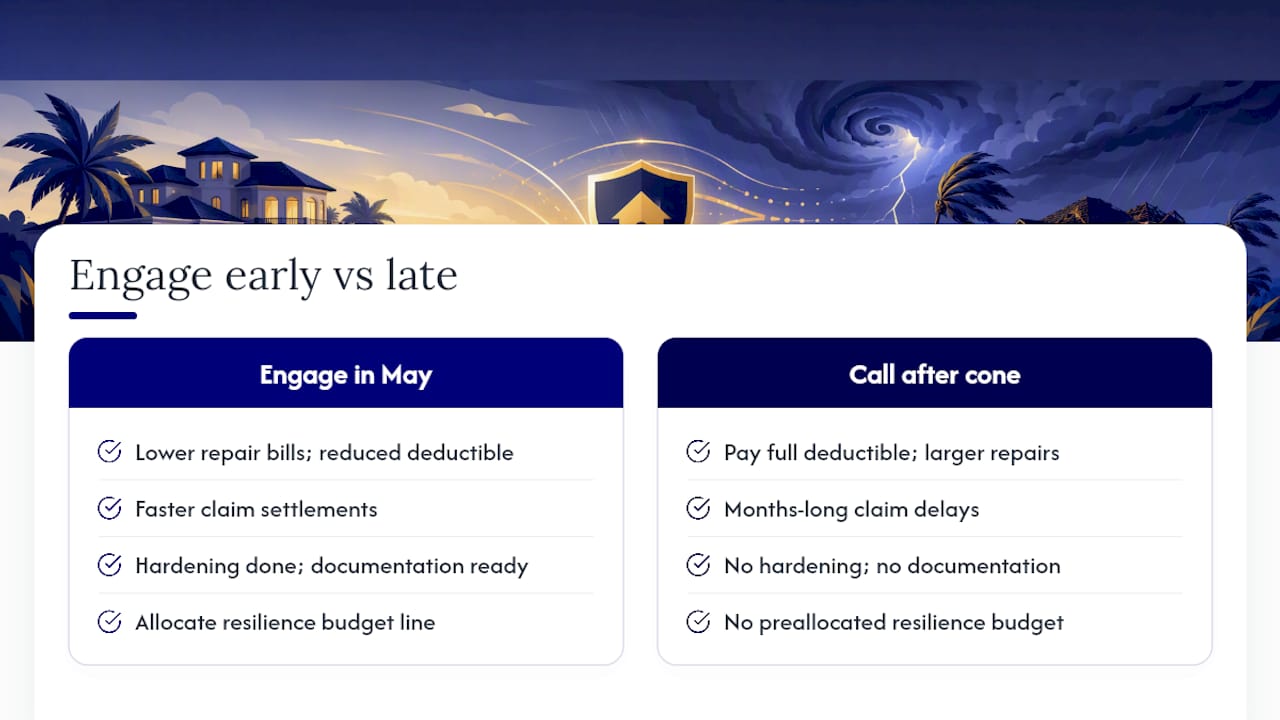
Owners who engage an estate manager in May, not September, consistently see two advantages: lower repair bills because hardening work was completed properly, and faster claim settlements because the documentation was already in place. The owners who call after a storm has entered the cone are the ones paying full deductible and waiting months for contractors.
The other thing most guides miss: post-storm resilience deserves its own budget line.
30apropertycollective: your Emerald Coast estate hurricane partner
For Emerald Coast homeowners who want the pre-storm hardening, storm-time monitoring, and post-storm documentation handled by a team that already knows your property, 30apropertycollective delivers that without the overhead of a full-time estate staff.

Three membership tiers, Essential, Signature, and Estate, cover weekly inspections with timestamped digital reports, vendor and contractor oversight, generator and fuel management, smart-home monitoring, and full arrival and departure preparation. Bespoke proposals and one-time emergency engagements are also available for owners who need immediate coverage before a named storm. To get started, request a concierge consultation or sign your service agreement directly. Have your property access details, current service providers, and recent photos ready for the intake call. A site walkthrough and pre-storm checklist delivery follow within a few business days.
Authoritative resources for estate hurricane planning
| Resource | What it covers | How an estate manager uses it |
|---|---|---|
| NOAA Hurricane Prep | Season timing, insurance checkups, documentation guidance | Sets the engagement calendar; confirms flood policy waiting periods |
| Florida Division of Emergency Management | Seven-day kit guidance, evacuation zones, local emergency contacts | Evacuation coordination and owner communication planning |
| Ready | Federal resilience checklists, disaster assistance pathways | Post-storm FEMA application support and documentation workflows |
| Greene & Associates Prep Checklist | Wind mitigation form OIR-B1-1802, insurer discount documentation | Insurer coordination and pre-storm documentation for claims support |
| LogiBuilt Smart-Home Prep Guide | UPS, NVR, cellular failover for remote monitoring | Verifying network resilience before storm season opens |
Sources
- Prepare before hurricane season | NOAA
- Preparing for hurricane season | Florida Division of Emergency Management
- Florida Hurricane Home Prep Checklist 2026 | BuildPriced
- Florida Hurricane Home Prep Checklist for Homeowners (2026) | Greene & Associates
- Hurricane-Ready Home Tech: A Tampa Smart-Home Prep Guide | LogiBuilt