
The right vacation home grocery list isn't a shopping list at all. It's a two-tier provisioning system built for how estate-managed properties actually operate: a starter kit covering the first 48 hours, and full-stay provisioning covering everything after. Both should be governed by a living Provisioning Profile your concierge or estate manager keeps on file and updates before every arrival.
That single structural choice, rather than any specific item on the list, is what eliminates the friction owners feel walking into a home that's "stocked" but not actually ready.
- Starter kit: coffee, milk, breakfast basics, water, a first-night meal
- Full-stay provisioning: pantry staples, proteins, produce, bar and beverage program, wellness items
- Provisioning Profile: dietary rules, brand preferences, quantities, delivery windows, substitution rules
30A Property Collective builds this exact framework into its concierge services for homeowners along Florida's Emerald Coast, pairing grocery and pantry stocking with the weekly inspections that keep an estate arrival-ready year-round.
Key Takeaways
A vacation home grocery list works best as a two-tier system, starter kit plus full-stay provisioning, run through a living Provisioning Profile that the concierge team updates before every arrival.
| Point | Details |
|---|---|
| Use two provisioning tiers | Pair a 48-hour starter kit with full-stay provisioning based on guest count and stay length. |
| Lock specialty items 72 hours out | Confirm hard-to-source wine, produce, or proteins three days before arrival to avoid substitutions. |
| Stagger perishable deliveries | Split pantry, beverage, and fresh-item deliveries by shelf life instead of one bulk drop. |
| Inspect and present on receipt | Check seals and ripeness, strip packaging, and shelve by culinary logic before guests arrive. |
| Work with a managed provisioning partner | 30A Property Collective's concierge services run this entire system as part of ongoing estate management along the Emerald Coast. |
Table of Contents
- Starter Kit Vs. Full-Stay Provisioning: Which Do You Need?
- What Goes on a Vacation Home Grocery List?
- When Should Groceries Be Delivered Before Arrival?
- How Should Groceries Be Stocked and Presented?
- What Should Go in a Concierge Provisioning Brief?
- How Is Provisioning Verified at Arrival?
- How Do You Provision a Vacation Home Sustainably?
- What Emergency Supplies Should Every Vacation Home Keep Stocked?
- What Household Items Belong on the List Beyond Food?
- How 30A Property Collective Handles Provisioning for Emerald Coast Owners
- Frequently Asked Questions
- Sources
Starter Kit Vs. Full-Stay Provisioning: Which Do You Need?
Scope depends on three variables: how the owner is arriving, how long the stay runs, and who's coming. A weekend owner visit calls for a lean starter kit. A six-week family stay with grandparents and toddlers needs full-stay provisioning plus a wellness and kids' category most checklists skip entirely.
- Starter kit only — short owner visits (2 to 3 nights), solo trips, or check-and-go stays where a private chef or restaurant covers most meals.
- Full-stay provisioning — stays of a week or longer, family gatherings, or any visit where the home needs to function as a self-sufficient kitchen from hour one.
- Hybrid provisioning — starter kit on arrival day, followed by a scheduled restock 48 to 72 hours in once the guest count, dietary needs, or activity plan (beach days versus dinner parties) becomes clear.
The trigger for upgrading scope is almost always guest count. A profile built for two adults breaks down fast when four kids and a nanny show up unannounced, which is exactly why the Provisioning Profile needs a "flex guest" field built in from the start.
What Goes on a Vacation Home Grocery List?
A working grocery list for a beach house or estate property splits into six categories. Villa provisioning frameworks built for VIP stays organize lists this same way, by time of day and guest profile, because it maps directly to how a kitchen actually gets used.
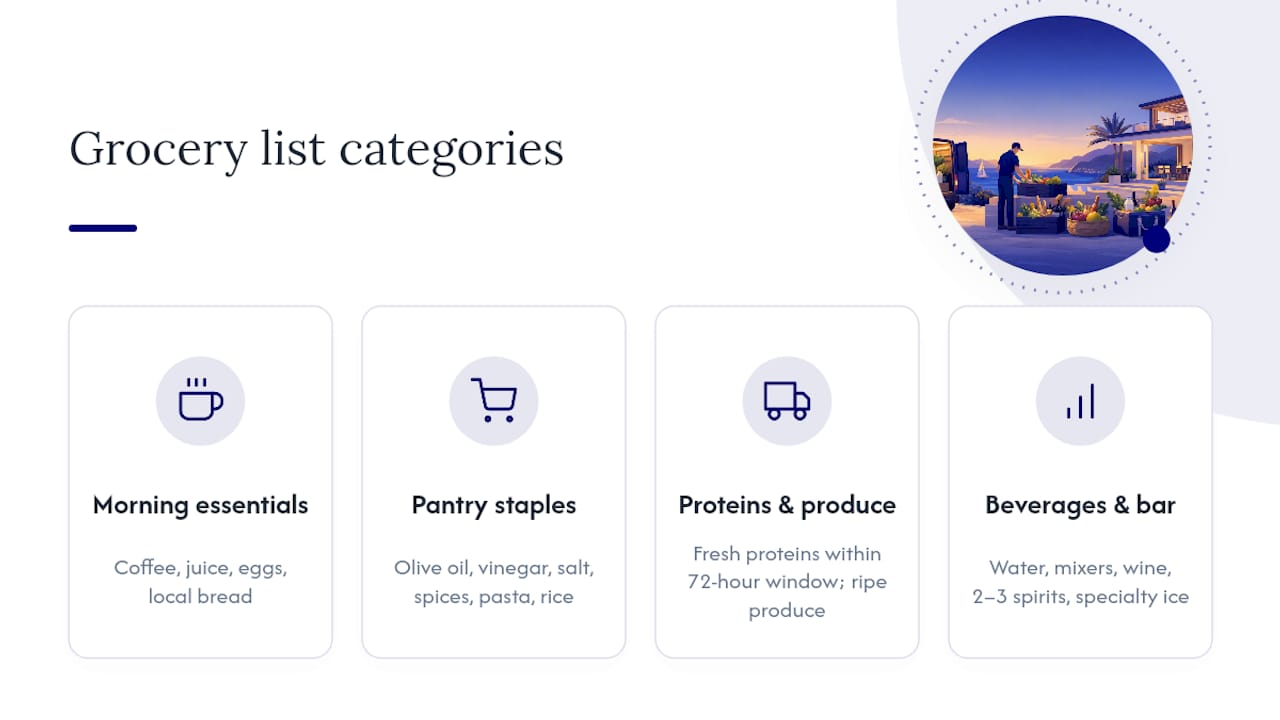
Morning essentials. Whole bean and pod coffee options, a decaf backup, oat and dairy milk, orange juice, eggs, and a bread or pastry selection sourced locally where possible.
Pantry staples. Extra virgin olive oil, a neutral cooking oil, red wine and balsamic vinegar, kosher salt, a basic spice roll (pepper, garlic powder, paprika, Italian seasoning), pasta, rice, canned beans, and condiments matched to the household's known preferences.
Proteins and produce. Source fresh proteins as close to arrival as the 72-hour window allows, never earlier. Seafood and ground meats degrade fastest, so hold those for the final delivery. Produce should arrive at the ripeness stage the guest will actually eat it at, not the ripeness stage that survives shipping.
Beverages and bar. Stock both still and sparkling water, standard cocktail mixers (tonic, soda, simple syrup), a house wine selection covering red, white, and rosé, and two or three go-to spirits based on the owner's known preferences. Specialty ice, crushed or spherical, needs separate sourcing since most home freezers can't produce it at volume.
Kids and wellness. Age-appropriate snacks, diapers and wipes if infants are on the guest roster, electrolyte packets, and any recovery items (magnesium, ibuprofen, aloe) that anticipate sun exposure and long travel days.
First-night meal. This is the detail that separates an average arrival from a great one. Every full-stay provisioning plan should include a ready-to-heat or ready-to-assemble dinner so nobody is unpacking suitcases and hunting for a restaurant at 9 p.m. If a private chef is coordinating the stay, this meal should be confirmed with them directly, including allergy notes, rather than left to the grocery order.
Pro Tip: Build the first-night meal around one-pan or platter-style dishes (charcuterie, a pre-marinated protein for the grill, a composed salad). It reads as effortless and it survives a delayed flight far better than anything with a tight cook time.
When Should Groceries Be Delivered Before Arrival?
Timing determines whether the kitchen looks stocked or looks scrambled. Pre-arrival provisioning guides recommend finalizing specialty item selections at least 72 hours out, which gives sourcing teams time to track down a specific wine, a particular olive oil, or an out-of-season fruit without settling for a substitution.
- 72 hours out: confirm the Provisioning Profile, lock specialty and hard-to-source items, place the produce and protein pre-order.
- 24 to 48 hours out: deliver pantry staples, beverages, and bar stock, since these hold their quality without refrigeration pressure.
- Day of arrival: deliver the starter kit items, fresh seafood, and anything that needs to hit the fridge within hours of being unpacked.
- First 48 hours: check consumption against the profile and place the first restock order before anyone runs out of coffee.
Per-person planning keeps quantities honest: figure two bottles of water per adult per day, one breakfast "unit" (eggs, toast, fruit) per person per morning, and a bar par level of one bottle of wine per two adults for the first three nights. Staggering deliveries this way, rather than one bulk drop, cuts waste on short stays and keeps every perishable near peak freshness on arrival.
How Should Groceries Be Stocked and Presented?
Every item gets inspected on receipt, not on delivery to the door. Check seals, produce ripeness, and expiration dates before anything goes into a cabinet, the same standard pre-arrival villa teams apply so guests never have to shop or double-check freshness themselves.
- Ice down beverages and check refrigerator and freezer temperatures so drinks are cold on first touch, not two hours later.
- Strip outer cardboard and shipping packaging before shelving; nothing in a guest-facing pantry should look like it just came off a delivery truck.
- Shelve by culinary logic (baking items together, oils and vinegars together, snacks at guest-accessible height), not by delivery order.
- Label and rotate stock by expiration date so nothing spoils quietly in the back of a cabinet during a longer stay.
Pro Tip: A pantry that looks curated, not delivered, is the single biggest visual signal of a well-run estate. It's a five-minute task per shelf and it's the detail owners notice first.
What Should Go in a Concierge Provisioning Brief?
A Provisioning Profile only works if it's specific enough that a concierge team member who has never visited the property can execute it correctly on the first try. Structured provisioning briefs organized by category and occasion consistently outperform freeform notes, because they remove the guesswork that causes miscommunications between owners and provisioning teams.
The profile should include:
- Arrival window and guest roster — exact dates, adult and child counts, any pets.
- Dietary rules — allergies, restrictions, and preferences, marked strict versus flexible.
- Brand must-haves — specific coffee roasts, wine labels, or snack brands the household won't substitute.
- Delivery and access instructions — gate codes, preferred delivery windows, and who receives the order on-site.
Special instructions belong in a separate notes field: presentation preferences, chef coordination contacts, and a clear substitution rule (owner-approved swap versus concierge discretion). Include a follow-up check, ideally a same-day text confirmation, so the estate manager knows the order landed correctly before the guest ever opens the fridge.
How Is Provisioning Verified at Arrival?
The first two hours after delivery matter more than the order itself. A walk-through should confirm presentation, check fridge and freezer temperatures, and take a quick pantry snapshot against the Provisioning Profile, the same standard pre-arrival villa checklists apply before guests land.
- Photograph the stocked kitchen and pantry for the arrival report.
- Flag anything missing or below quality standard immediately, not after guest complaints.
- Log the provisioning status alongside the property's weekly inspection notes so it becomes part of the estate's ongoing risk record, not a one-off task.
Provisioning isn't separate from estate management. It's one more system, alongside smart home checks and storm readiness, that either holds up under scrutiny or doesn't.
How Do You Provision a Vacation Home Sustainably?
Sustainable provisioning isn't a separate checklist bolted onto the grocery order. It's a set of sourcing and packaging decisions made at the same time as everything else.
Local sourcing does double duty here. Buying produce, seafood, and baked goods from Gulf Coast vendors cuts transportation impact and gives the home a sense of place a national grocery chain order never will. A pantry stocked with Florida citrus, Gulf shrimp, or a local honey brand reads as intentional in a way imported staples don't.
Packaging is the other lever. Bulk-buying pantry staples in larger, resealable containers instead of single-serve packs cuts landfill waste significantly over the course of a season, and it happens to look better on an open shelf. Reusable glass storage containers for staples like rice, pasta, and coffee do the same job twice: less waste, better presentation.
On the beverage side, request refillable water service or large-format filtered water instead of cases of single-use plastic bottles where the property has the infrastructure to support it. Compostable or biodegradable cleaning products, unscented where possible so they don't clash with a home's signature scent, round out the sustainability profile without adding real cost to the provisioning budget.
None of this requires an owner mandate. Most estate management teams can default to the sustainable option unless a guest preference says otherwise, and note the choice in the Provisioning Profile so it's consistent across every future stay.
What Emergency Supplies Should Every Vacation Home Keep Stocked?
Every provisioning order along the Gulf and Atlantic coasts should include a standing emergency layer, separate from the weekly grocery rotation. This isn't optional in a hurricane-prone region. It's baseline readiness.
Bottled water is the non-negotiable floor: a minimum three-day supply per expected guest, stored in a cool, accessible spot rather than buried behind everyday groceries. Non-perishable proteins (canned tuna, nut butter, shelf-stable milk) and simple carbohydrates (crackers, granola, dried fruit) round out a basic emergency shelf that needs no refrigeration and no cooking.
A battery-powered or hand-crank radio, a flashlight with spare batteries, and a manual can opener belong in the same storage zone as the emergency food, not scattered around the house. First-aid basics (bandages, antiseptic, any guest-specific medication noted in the Provisioning Profile) round out the kit.
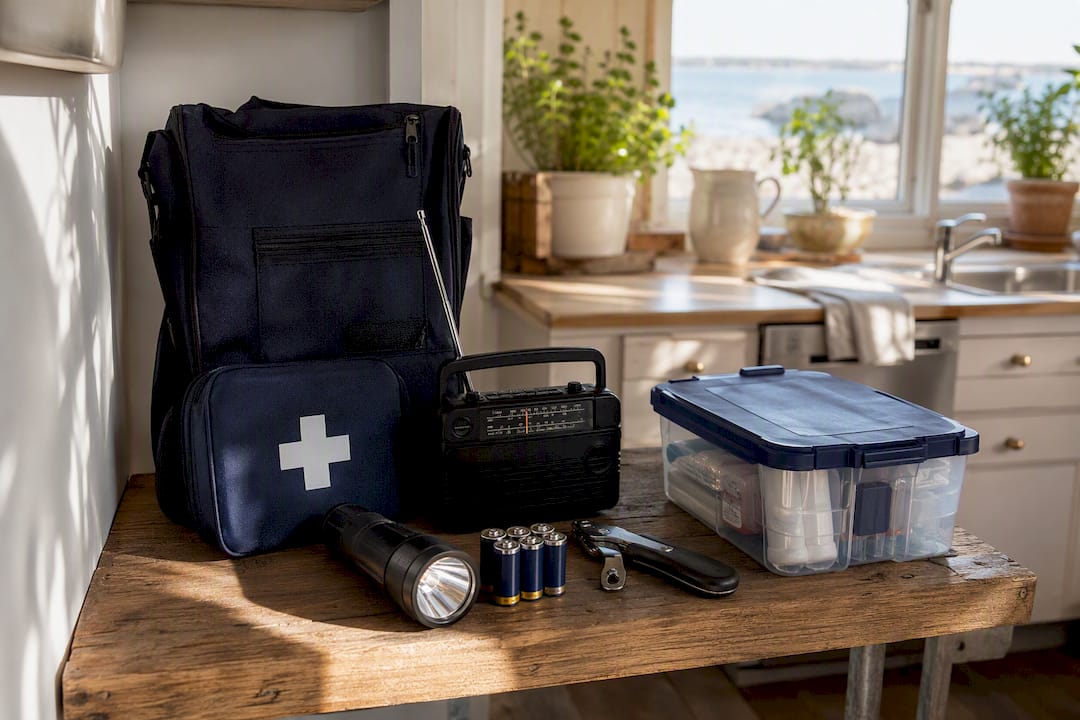
The estate manager's job is rotation, not just stocking. Emergency food and water should be checked on a schedule tied to the property's broader storm-readiness protocol, with expired items swapped out well before hurricane season peaks. A stocked emergency shelf that nobody has checked since last year isn't preparedness. It's a liability with good intentions.
What Household Items Belong on the List Beyond Food?
A grocery list that stops at food misses half the job. Guests and owners notice cleaning supplies and toiletries just as fast as they notice the pantry, sometimes faster, because a missing hand soap or an empty paper towel roll shows up in the first ten minutes.
Cleaning consumables should cover the basics an estate team can't assume will already be under the sink: dish soap, sponges, all-purpose cleaner, glass cleaner, and laundry detergent matched to the home's machines. Trash bags in the right size for every bin in the house sound obvious until they're the one thing missing on arrival day.
Toiletries deserve the same brand-preference logic as pantry staples. Bath and hand soap, shampoo and conditioner, and toilet paper stocked at a quantity that matches guest count and stay length, not a generic "a few rolls" estimate. Sunscreen deserves a special note for coastal properties: guests run out of it constantly, and having a backup on hand saves a mid-vacation pharmacy run.
Paper goods (napkins, paper towels) and basic kitchen consumables (aluminum foil, plastic wrap, dish towels) round out the list. None of this is glamorous, and none of it should be an afterthought. The Provisioning Profile should track these consumables with the same rigor as the wine selection, because a home that's stocked with vintage Bordeaux but out of toilet paper has failed at the one job that actually matters.
Why a Living Provisioning Profile Changes Everything
A static grocery list gets stale the first time a guest's dietary needs change. A living Provisioning Profile, updated after every stay rather than rewritten from scratch, is what actually prevents the awkward call asking whether the owner still drinks the same scotch.
One property we're familiar with cut its pre-arrival coordination time by more than half simply by keeping brand preferences and substitution rules on file instead of re-confirming them by phone every visit. Confirm specialty items 72 hours out, every time, without exception.
How 30A Property Collective Handles Provisioning for Emerald Coast Owners
Everything in this checklist, the tiered starter kit and full-stay approach, the 72-hour sourcing window, the receipt inspections and chef-ready shelving, is the exact system 30A Property Collective runs for homeowners along Florida's Emerald Coast. This isn't a service you bolt onto property management as an afterthought. It's built into the same weekly inspection rhythm that keeps the rest of the estate running.

A provisioning engagement starts with a Provisioning Profile built around your household: dietary rules, brand preferences, guest patterns, and how far in advance you typically confirm travel. From there, the concierge team handles sourcing, staggered delivery, receipt inspection, and presentation, and reports back through the same documentation used for weekly property inspections, so grocery stocking is never a mystery task happening off to the side. Discretion is standard, not an upsell, and the service runs on the same recurring membership structure as the rest of 30A Property Collective's estate management work. If you're ready to put a Provisioning Profile in place before your next arrival, you can start an engagement directly.
Frequently Asked Questions
What's the difference between a starter kit and full-stay provisioning?
A starter kit covers the first 48 hours: coffee, breakfast basics, water, and a first-night meal. Full-stay provisioning fills in the pantry, proteins, produce, beverages, and bar stock needed for the entire visit.
How far in advance should groceries be ordered for a vacation home?
Finalize specialty items at least 72 hours before arrival, then let pantry and beverage deliveries follow 24 to 48 hours out, with fresh seafood and starter kit items arriving the day of.
Should groceries be delivered in one bulk order or staggered?
Stagger them. A single bulk drop wastes perishables on shorter stays and leaves fresh items sitting too long before use, especially seafood and produce.
What should a concierge grocery brief include?
Arrival dates, guest roster, dietary rules marked strict or flexible, brand must-haves, delivery instructions, and a clear substitution rule so the provisioning team never has to guess.
Does a vacation home grocery list need to cover non-food items?
Yes. Cleaning supplies, toiletries, and paper goods belong in the same profile as food items, tracked with the same attention to brand preference and quantity.
Sources
For related operational detail, 30A Property Collective's blog covers concierge grocery shopping workflows, seasonal coastal maintenance, and hurricane preparation checklists that connect directly to provisioning timing.
- The Art of the Seamless Arrival: A Definitive Guide to Pre-Arrival Provisioning
- Villa Provisioning and Grocery Stocking for VIP Stays: What to Request - Jatina Group
- Pre-Arrival Checklist: How We Prepare Your Villa Before You Land