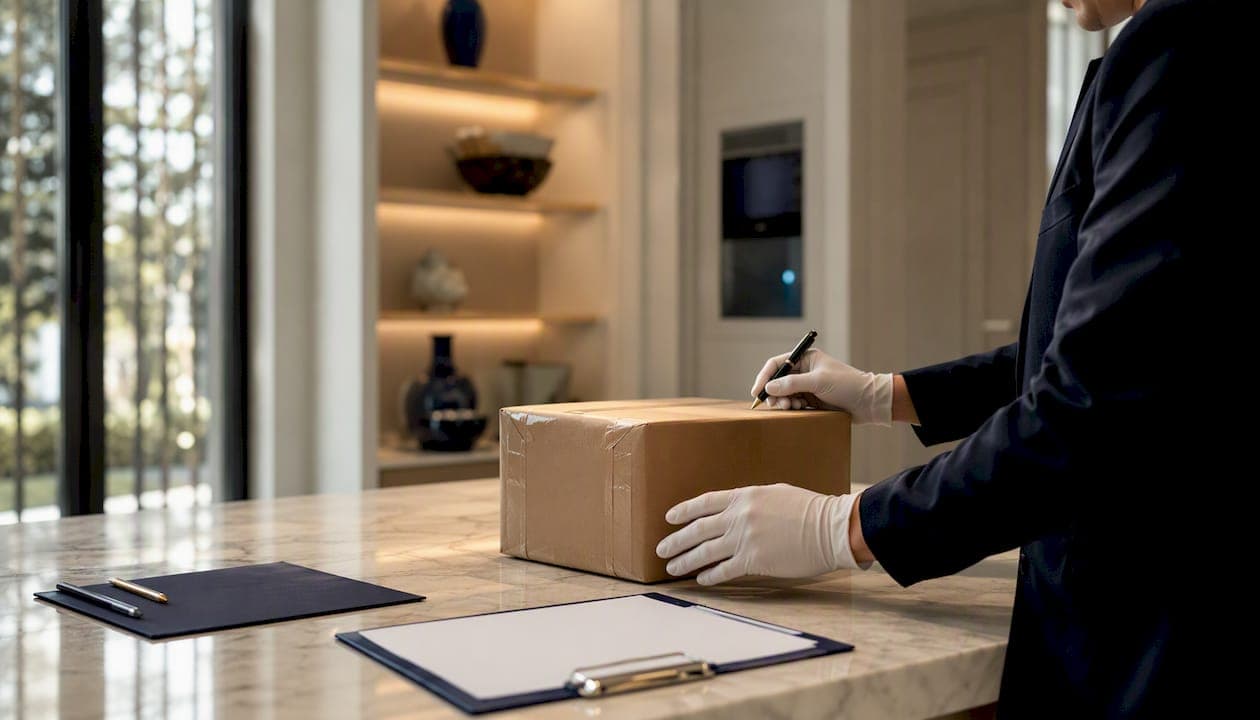
Professional estate management is the most reliable defense against package theft at a high-value coastal property. Not a video doorbell. Not a smart locker bolted to your porch. A trained, accountable person who receives, logs, stores, and delivers every parcel under a documented chain-of-custody.
If your property sits on the Emerald Coast and sits empty for weeks at a time, here is where to start:
- Enroll in or confirm an estate management membership that explicitly includes mail and package handling (Essential, Signature, or Estate tier).
- Establish documented delivery protocols before the first parcel arrives: authorized carriers, secure intake location, and owner notification preferences.
- Activate weekly inspections with digital property reports so every delivery is timestamped, photographed, and logged.
30A Property Collective builds all three into its Emerald Coast service model, combining proactive property care with concierge-grade package handling.
Key Takeaways
Professional estate management is the most reliable form of package theft prevention at a luxury coastal property because it combines documented chain-of-custody, weekly inspections, and concierge delivery into a single accountable service.
| Point | Details |
|---|---|
| Estate management beats gadgets | Human oversight with documented chain-of-custody prevents theft; cameras only record it after the fact. |
| Chain-of-custody is non-negotiable | Every intake needs a timestamped photo, attendant name, storage location, and owner notification. |
| Vet providers on four signals | Named senior contact, background-checked staff, NDAs, and written incident response protocols. |
| Membership tiers scale to your needs | Essential, Signature, and Estate tiers match handling depth to delivery volume and concierge requirements. |
| 30apropertycollective covers the Emerald Coast | Weekly inspections, digital property reports, and concierge package handling are built into every membership tier. |
Table of Contents
- What estate-level package security actually covers
- How a package moves through estate-level handling
- How to vet an estate manager for package security
- Technology that strengthens package security without compromising privacy
- Pricing and service models for estate package handling
- An Emerald Coast example: how estate management stopped a loss
- Checklist: preparing your estate for professional package handling
- Why proactive estate management outperforms reactive gadgets
- 30apropertycollective handles package security on the Emerald Coast
- Sources
What estate-level package security actually covers
Package theft prevention at the estate level goes well beyond accepting a parcel at the door. A professional estate manager provides a full service layer that treats every delivery as a documented asset transfer.
- Secure receipt: An authorized staff member accepts each parcel, verifies the carrier, and signs for it. No package sits unattended on a visible porch.
- Chain-of-custody documentation: Every intake generates a timestamped photo, attendant name, storage location, and tracking reference logged in the digital property report.
- On-site secure storage: Climate-appropriate lockboxes or a dedicated package room hold items until the owner arrives or requests delivery. Perishables and high-value items are routed immediately.
- Vendor and courier coordination: Pre-authorized carriers operate within controlled access windows. Couriers hand off to a named concierge or household staff member, never to an unattended drop zone. Documented vendor oversight prevents materials and deliveries from being left exposed.
- Policy and confidentiality: Staff and vendors sign NDAs. Insurance and liability handling are written into the service agreement. Escalation protocols are defined before an incident occurs.
A professional mail check includes organizing deliveries, discarding junk mail to prevent visible buildup, and notifying owners of signature-required or refrigeration-sensitive items. That last point matters more than most owners realize: a pile of boxes visible from the street is an advertisement that no one is home.
Pro Tip: Ask your estate manager to include "delivery status" as a standing field in every weekly inspection report, even during weeks with no deliveries. A consistent blank field is easier to audit than a field that only appears when something arrives.
How a package moves through estate-level handling
The workflow below is what a well-run estate management engagement looks like from carrier arrival to owner confirmation.
- Carrier arrival and acceptance. The estate manager or designated staff member meets the carrier, verifies the delivery against the expected manifest or tracking notification, and accepts the parcel. Unscheduled or unrecognized deliveries are held pending owner confirmation.
- Intake documentation. The attendant photographs the parcel (exterior condition, label visible), records the carrier name, tracking number, intake time, and their own name in the digital property report.
- Triage and routing. Perishables go to climate-controlled storage immediately. High-value or signature-required items are flagged for expedited owner notification. Standard parcels move to the secure storage area.
- Secure storage and access audit. Items are held in a lockbox or monitored package room. Access is logged. No one retrieves a parcel without an entry in the audit record.
- Delivery to owner or concierge handoff. On arrival, the owner receives a concierge handoff with the full intake record. For remote owners, a scheduled delivery or courier transfer is arranged with written confirmation.
Digital report fields the homeowner will see: parcel photo, carrier name, tracking number, intake timestamp, storage location, handling notes, and attendant name. That record is what makes insurance claims and incident resolution tractable, as chain-of-custody documentation materially improves recovery outcomes.
How to vet an estate manager for package security
The difference between a home watch provider and a true estate manager is accountability infrastructure. Home watch is inspection-focused; estate management adds vendor coordination, documented reporting, and asset-protection processes. When you are interviewing providers, that distinction is the first filter.
Must-have credentials and capabilities:
- Weekly inspections with written, timestamped reports
- A named senior contact who owns the package-handling process
- Background-checked staff and signed NDAs for all personnel with property access
- Documented chain-of-custody for every intake
- Insurance coverage that explicitly includes handling of owner property
- Vendor oversight processes with access logs
Questions to ask in the interview:
- What is your SLA for notifying me of a delivery that requires my attention?
- Walk me through your chain-of-custody process from carrier arrival to my confirmation.
- How do you handle a parcel that arrives when no staff member is on-site?
- What happens if a package is damaged or missing under your watch?
Red flags: No photo or timestamped reporting. No written chain-of-custody policy. Rotating anonymous staff with no named senior contact. Refusal to sign NDAs. An "uninsured acceptance" clause buried in the service agreement.
UHNW clients expect a named senior contact, NDAs, encrypted communications, and anticipatory service. If a provider cannot demonstrate all four, they are not operating at the estate level regardless of what their marketing says.
Pro Tip: Request an anonymized incident report from a prior engagement. A provider who has handled a misdelivery or damaged parcel and can show you the documented resolution process is worth far more than one who claims it has never happened.
Technology that strengthens package security without compromising privacy
Hardware and software earn their place in estate package security when they extend human oversight, not replace it. Hybrid models combining tamper-resistant hardware with scheduled human audits and access logs are the standard recommendation for reliable parcel security. On a private estate, that means keeping the tech discrete and the data controlled.
Core integrations that matter:
- Encrypted digital property reports with restricted client-facing share links
- Timestamped photo capture at intake and storage handoff
- Access-control logs covering the package intake zone and secure storage area
- Camera coverage of delivery and storage areas (footage retained, not streamed publicly)
Optional hardware worth considering:
- A dedicated lockbox or private package room (not a public smart locker)
- Courier access schedules that limit delivery windows to staffed hours
- Smart home management integrations that tie camera alerts to the estate manager's mobile workflow
How the data should flow:
| Layer | Function | Output |
|---|---|---|
| Mobile intake app | Photo capture, logging, carrier ID | Timestamped intake record |
| Centralized property platform | Storage, audit trail, access log | Searchable chain-of-custody |
| Client-facing report | Restricted share link, owner notification | Delivery confirmation |
Technology provides the audit trail. Human oversight enforces the policy, organizes parcels, and resolves exceptions. Neither works reliably without the other.
Pricing and service models for estate package handling
Package handling is almost always bundled into a monthly membership rather than priced per parcel. The three common tiers, Essential, Signature, and Estate, differ in inspection frequency, concierge depth, and the volume of handling included.
- Essential: Weekly inspections and basic mail and package collection. Suitable for owners with moderate delivery volume and straightforward storage needs.
- Signature: Adds concierge coordination, expedited owner notification, and more frequent reporting. Appropriate when delivery volume is higher or items require special handling.
- Estate: Full concierge package management, after-hours handling, climate-controlled storage coordination, and dedicated senior contact time. Designed for owners with high-value or high-frequency deliveries.
Factors that drive cost upward: after-hours acceptance, climate-controlled storage, emergency retrieval, and per-package concierge delivery fees for items requiring special transport.
Timeline to expect: onboarding typically takes one to two weeks to establish protocols, authorize carriers, and configure reporting. SLA response times for delivery actions range from minutes (Estate tier, staffed hours) to a few hours (Essential tier, next inspection window).
When budgeting, ask for line items covering secure storage, chain-of-custody handling, emergency retrieval, and any per-package fees for high-value items. Florida estate management at the professional level treats these as defined service components, not vague add-ons.
An Emerald Coast example: how estate management stopped a loss
A seasonal homeowner on 30A left a high-value electronics delivery scheduled during a six-week absence. Under the previous arrangement, packages accumulated on the covered entry, visible from the street and from neighboring rental properties. One delivery, a signature-required item rerouted by the carrier after a missed attempt, sat in a carrier facility for eleven days before the owner discovered it.
After enrolling in estate management, the same owner's deliveries were received by a named staff member, photographed at intake, and stored in a secure interior location. The owner received a digital report notification within the same day. When a second high-value item arrived during a storm preparation window, the estate manager coordinated directly with the carrier to reschedule delivery to a staffed window, preventing both exposure and weather damage.
The Emerald Coast's seasonal occupancy pattern amplifies this risk. Properties sit vacant for extended stretches during off-peak months, and proactive maintenance routines that catch delivery issues early are the same routines that prevent moisture intrusion, pest entry, and storm damage. Package security is not a separate concern. It is part of the same operational discipline.
Checklist: preparing your estate for professional package handling
Complete these steps before your estate manager assumes responsibility for deliveries.
Owner actions:
- Designate delivery preferences: preferred carriers, delivery windows, and any items requiring special handling.
- Share your authorized carrier list and any standing delivery instructions with your estate manager.
- Provide insurance and valuation thresholds for high-value items so the manager knows when to escalate.
- Record emergency contact instructions and indicate your preferred notification method.
Physical preparation:
- Identify and prepare a discrete, secure intake location away from street visibility.
- Confirm camera coverage of the intake zone and storage area.
- Provide clear courier access instructions (gate codes, entry procedures, staffed hours).
Information handoff:
- Share household staff contacts and schedules before onboarding.
- Communicate any sensitive-item handling preferences (fragile, confidential, refrigerated).
- Confirm your reporting cadence preference: same-day notification, weekly digest, or both.
Why proactive estate management outperforms reactive gadgets
The consumer anti-theft market sells the idea that a camera and a smart locker solve the package theft problem. They do not. They record what happened after it happened. Estate management prevents the exposure in the first place.
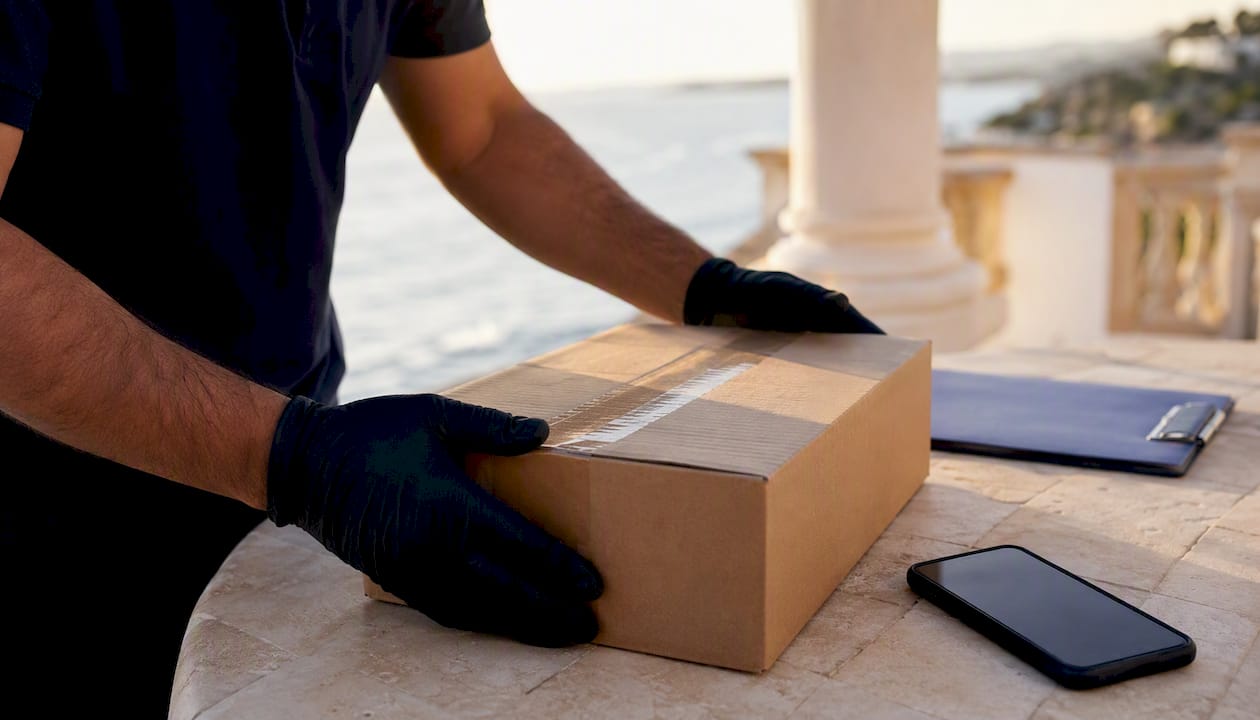
Weekly inspections, documented vendor oversight, and a named staff member who physically receives every delivery transfer the liability from the homeowner to a professional with insurance, an NDA, and a written chain-of-custody. That is a fundamentally different risk profile than a camera that sends you an alert after a parcel disappears.
The deeper point is that package security at a luxury estate is an asset-protection function, not a convenience feature. The same operational discipline that catches a slow roof leak during a weekly inspection, or flags an unauthorized contractor on-site, is what catches a misrouted delivery before it becomes a claim. Those routines are not separate services. They are the same service.
30apropertycollective handles package security on the Emerald Coast
For Emerald Coast homeowners who spend weeks or months away, 30apropertycollective's estate management membership is the most direct way to close the gap between a delivery arriving and an owner knowing about it.

The service covers mail and package collection, secure on-site storage, concierge delivery coordination, and weekly digital property reports with timestamped photo documentation. Membership tiers (Essential, Signature, Estate) scale to your delivery volume and concierge needs. Local familiarity with Emerald Coast seasonal patterns, carrier relationships, and storm preparation windows means the handling protocols adapt to the property's actual risk calendar, not a generic template.
To start, review the concierge service options or sign your membership agreement to put a documented package-handling protocol in place before your next absence.
Sources
- Home Watch Vero Beach | Oceanside Home Watch
- Home Watch vs. Estate Management vs. Property Management: What Florida Homeowners Need to Know
- National Package Management Company: 2026 Guide - Postal Solutions