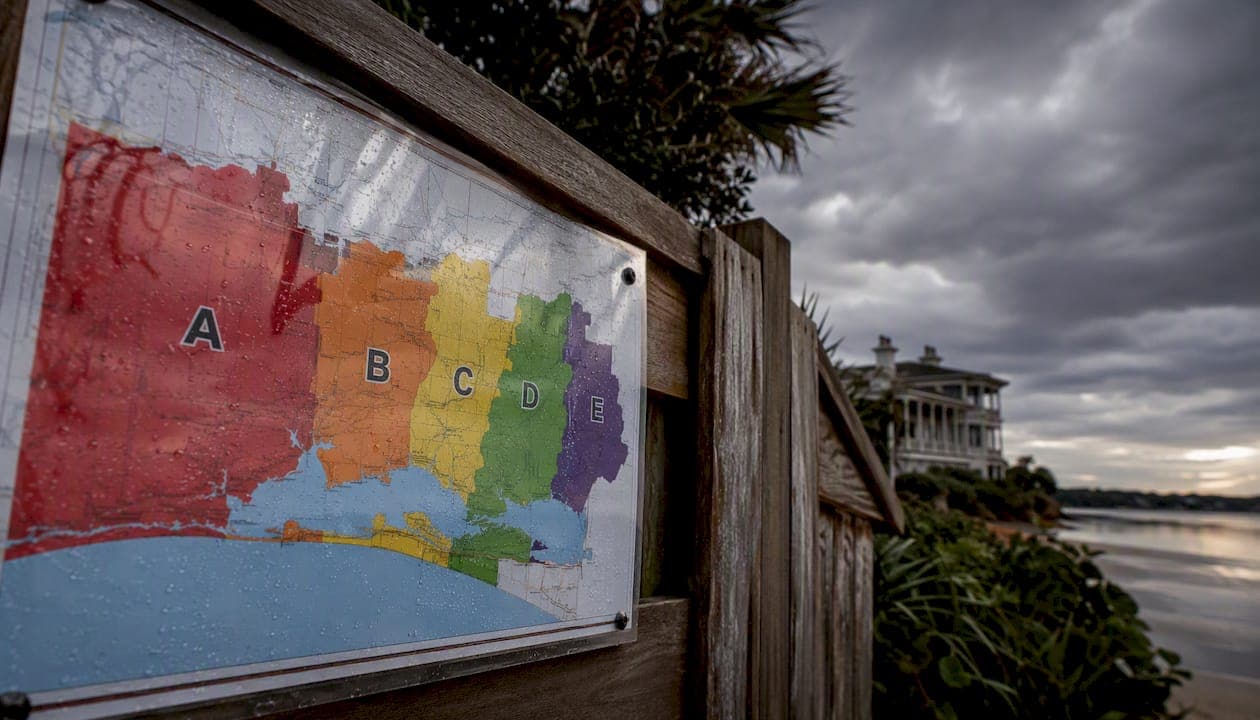
Your Walton County evacuation zone is one address search away: use the Walton County evacuation map (ArcGIS viewer) or the Perimeter Platform live map to see your exact zone letter right now. Both tools pull from the same county data and take about thirty seconds.
Check these three sources today:
- Walton County GIS viewer — type in your address, get your zone instantly
- Perimeter Platform — the live map used during active storms, showing routes and shelters too
- Walton County Emergency Management — official disaster FAQs and alert sign-ups
Zones A through E rank your property by storm surge risk, not by hurricane category or wind speed. Zone A faces water first. But a "no zone" label on your street doesn't mean your house is storm proof. Wind, rain, and downed trees don't check a map before they hit.
Key Takeaways
Storm surge, not wind category, decides your Walton County evacuation zone, and checking it before hurricane season starts is what actually keeps you ahead of clearance-time delays.
| Point | Details |
|---|---|
| Check your zone now | Use the county's ArcGIS viewer or Perimeter Platform and search your address directly. |
| Zones measure surge, not wind | Zone letters A through E rank storm-surge risk, unrelated to hurricane category. |
| No zone isn't no risk | Wind, rain, and flash flooding can hit any property regardless of zone status. |
| Clearance time drives your timeline | Leave when ordered, since clearance estimates assume everyone in that zone moves at once. |
| Estate owners need extra prep | 30apropertycollective's pre and post-storm inspections cover the property gaps county guidance can't. |
Table of Contents
- What Walton County Evacuation Zones A Through E Actually Mean
- How to Look Up Your Walton County Evacuation Zone
- What an Evacuation Order Means for Your Timeline
- Shelters, Special-Needs Registration, and Pets
- 'Know Your Home': What to Check if You're Outside a Zone
- A Pre-Storm Checklist for Estate and Property Owners
- Getting Back Home: Walton County's Re-Entry Process
- Frequently Asked Questions
- Sources
What Walton County Evacuation Zones A Through E Actually Mean
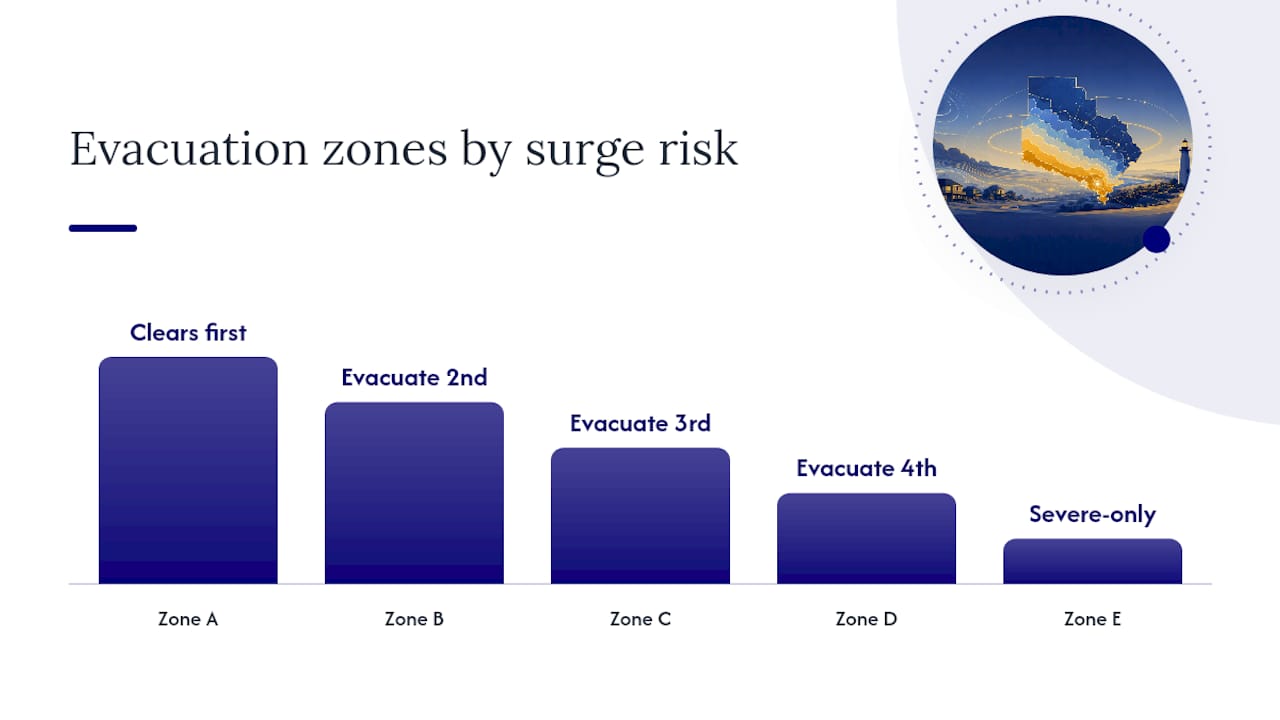
Walton County assigns every coastal and low-lying property to one of five evacuation zones, labeled A through E. The letter reflects how much water a hurricane's storm surge could push onto your land, not how strong the wind will be when it arrives. Zone A sits closest to the surge line and clears first. Zone E covers areas that evacuate only during the most severe storms.
This trips up a lot of newcomers to the Emerald Coast. A house three miles inland can still sit in Zone B if it backs up to a bay or low creek. Meanwhile a home on a bluff near the Gulf might carry no zone designation at all, because elevation keeps it above projected surge heights.
A few things worth clearing up:
- Zone status has nothing to do with the Saffir-Simpson wind scale
- Being zone-free doesn't mean flood-proof or wind-proof
- Zones can shift priority order depending on a storm's track and forecast surge height
The Walton County All-Hazards Guide and the state's Know Your Zone, Know Your Home program both publish and update these boundaries every hurricane season.
How to Look Up Your Walton County Evacuation Zone
Finding your zone takes less time than reading this section. Here's the process:
- Open the Walton County GIS viewer on your phone or computer
- Type your street address into the search bar
- Note the zone letter that appears on your parcel
Watch for the flood overlay shading and the route lines marked in bold. Those routes are the ones the county expects you to use, not necessarily the fastest way to the interstate on a normal Tuesday.
Pro Tip: Screenshot your zone result and save it to your phone's home screen before hurricane season starts. Cell towers get overloaded fast once a storm is bearing down, and a saved screenshot works with zero signal.
What an Evacuation Order Means for Your Timeline
Walton County pushes evacuation orders through press releases, social media, county alert systems, and local news, and the guidance is consistent: monitor these channels along with the National Weather Service once a storm enters the Gulf. Orders can change fast, and the county has been clear that evacuation status stays fluid right up until landfall.
Clearance time is the number that actually matters for your packing schedule. It's the estimated span between when an order goes out and when everyone in that zone can physically get clear of the danger area or reach shelter. That number isn't instant. Two-lane roads off the barrier islands back up fast once thousands of households move at once.
Once an order covers your zone:
- Shut off utilities exactly as county instructions specify, not before
- Secure loose outdoor items and confirm shutters or panels are in place
- Take your evacuation route as posted, even if your usual route feels faster
- Bring your saved zone screenshot, ID, medications, and a printed contact list
Waiting until the roads are already jammed erases whatever head start your clearance time gave you.
Shelters, Special-Needs Registration, and Pets
Public shelter locations get posted on the county's disaster pages and lit up live on the Perimeter Platform map once an incident is declared. If you or a family member needs medical support during an evacuation, registering ahead of time with Walton County's special-needs program matters more than almost anything else on this list, since space and transport get arranged in advance, not on the fly.
Pet owners need a plan too. Not every shelter takes animals, so confirm pet-friendly status before you drive there.
- Carrier, leash, food, and vaccination records for each animal
- Confirmed pet-friendly shelter, not an assumption
- Special-needs registration completed before storm season, not during it
Pro Tip: Call ahead to confirm shelter pet policies even if a location was pet-friendly last season. Capacity and rules can change storm to storm.
'Know Your Home': What to Check if You're Outside a Zone
No zone on the map doesn't settle the question of whether to stay. That decision comes down to your actual property, and Walton County's own messaging, "run from the water and hide from the wind," captures why both matter.
Work through this before deciding to shelter in place:
- Check when your home was built. Homes built after 2002 generally meet stronger wind-resistance codes, though inspection still matters.
- Look at elevation relative to nearby bays, dune lines, or low-lying creeks, not just distance from the beach.
- Flag mobile or manufactured housing immediately. These structures face wind risk that has nothing to do with surge zones.
- Consider access. A home outside a zone but on a single-road barrier island can still get cut off.
Evacuation zones measure one hazard: storm surge. Wind, tornadoes spun off a hurricane's outer bands, and flash flooding from rainfall can reach any property regardless of its letter.
A Pre-Storm Checklist for Estate and Property Owners
Owners managing higher-value or seasonal properties carry extra weight here: a vacant house doesn't call you when a window fails.
- Photograph and log major systems (HVAC, generators, pool equipment, smart-home panels) before the season starts
- Schedule vendor and contractor pre-storm checks now, not the week a storm forms
- Secure or store outdoor furniture, art, and dock equipment ahead of any watch
- Run a wind mitigation inspection if you haven't had one recently
Pro Tip: Upload photos of every major system to a digital property report before June 1. Insurance adjusters and repair crews move faster with dated, timestamped proof of pre-storm condition.
For a fuller walkthrough, this hurricane prep checklist covers the rest of the seasonal to-do list.
Getting Back Home: Walton County's Re-Entry Process
Re-entry timing and any permit or checkpoint requirements come directly from Walton County officials after each event, not on a fixed schedule. Before you go inside:
- Check for structural damage, exposed wiring, or gas odors before entering
- Photograph exterior damage before any cleanup starts
- Contact the county's Community Information Center for non-life-threatening questions; call 911 for anything urgent
- Confirm current re-entry status through Walton County Emergency Management before driving back
Why estate management matters for high-value properties here
County guidance tells you when to leave and where surge risk sits. It doesn't check your generator, secure your dock furniture, or photograph storm damage the morning after. Estate managers close that gap with weekly inspections and vendor relationships already in place, so a pre-booked contractor shows up before the neighbor's does. That head start is often the difference between a repair and a total loss.
Let 30apropertycollective Handle the Property Side
Evacuation planning covers your family. It doesn't cover the roof, the pool equipment, or the antique dining table left behind. 30apropertycollective builds pre-storm assessments, vendor coordination, and post-storm inspections directly into its membership plans, so your property gets checked before you evacuate and again the moment it's safe to return.

Coverage runs through recurring Essential, Signature, and Estate plans, or a one-time engagement if you just need storm-season support this year. Either way, someone is watching your property who isn't you, and isn't guessing. The Concierge Services page outlines pre-storm coordination in detail, and if you're ready to set up a prep plan before the next system forms, you can start the process here.
Frequently Asked Questions
What do Walton County's evacuation zones A through E mean? They rank properties by storm surge risk, with Zone A facing the highest surge threat and Zone E the lowest. Wind category and hurricane strength don't factor into the letter assignment.
How do I find my exact evacuation zone in Walton County? Enter your address into the Walton County GIS viewer or check the Perimeter Platform map, which also shows live routes and shelters during an active storm.
Does living outside a designated zone mean I'm safe from hurricanes? No. Zones only measure storm surge exposure. Wind damage, flash flooding, and tornadoes spun off a hurricane's bands can affect homes with no zone designation at all.
How will I know if Walton County orders an evacuation? The county issues orders through press releases, social media, official alerts, and local news, and residents should also monitor the National Weather Service directly since storm tracks shift fast.
When can I return home after an evacuation? Re-entry timing and any permit requirements are set by Walton County officials after each event, so check the county's disaster page for current status before heading back.
Sources
- Disaster FAQs | Walton County, FL - Home Page
- Walton County evacuation map (ArcGIS viewer)
- The Northwest Florida Hurricane Evacuation Study — NOAA HES technical report