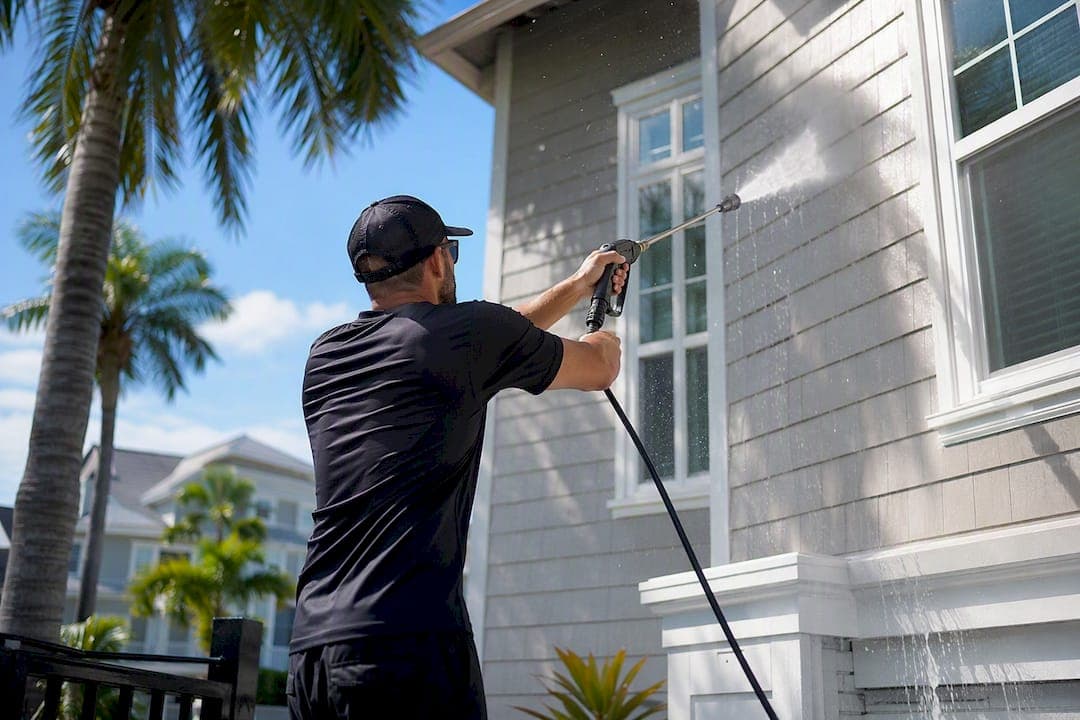
Most homes need a pressure wash once a year, but that number shifts fast if you live somewhere humid, coastal, or shaded. Homes near the water, under heavy tree cover, or in high pollen zones often need attention every six to twelve months instead. Siding type matters too, and so does anything you can actually see: mildew streaks, green algae, or a driveway that's gone from gray to gray green. The calendar is a starting point. Your eyes are the better judge.
TL;DR:
- Humid, coastal, or shaded areas often require pressure washing every six to twelve months, especially if algae, mildew, or staining are visible.
- Different surfaces need tailored cleaning schedules: concrete every six to twelve months, vinyl siding annually, and wood or painted exteriors only when buildup appears.
- Late spring and early fall are optimal times for cleaning, avoiding extreme temperatures and waiting until surfaces are fully dry afterward.
- Soft washing is recommended for siding and roofs to prevent damage, while pressure washing suits concrete and masonry but can harm softer materials.
- Regular inspections and spot treatments can extend the time between deep cleans and prevent costly repairs or health issues related to mold buildup.
Table of Contents
- What Changes Your Pressure Washing Schedule
- How Often to Wash Each Surface Around Your House
- When Is the Best Time of Year to Pressure Wash?
- Soft Wash or Pressure Wash: Which One Do You Need?
- Should You DIY or Hire a Pressure Washing Pro?
- Simple Habits That Stretch the Time Between Deep Cleans
- Why Condition-Based Care Beats a Calendar
- Let 30apropertycollective Handle the Schedule for You
- Sources
What Changes Your Pressure Washing Schedule
An annual wash works fine for a house in a dry climate with full sun exposure and no big trees nearby. Everything else on that list pushes you toward a shorter interval.
Humidity is the biggest driver. Warm, damp air feeds algae and mold, and homes in humid or coastal regions often need cleaning every six to twelve months instead of stretching to a full year. Trees do something similar in a different way: shade keeps siding damp longer after rain, and falling pollen coats everything in a fine yellow green film every spring. Coastal salt spray adds a corrosive element that plain rainwater doesn't.
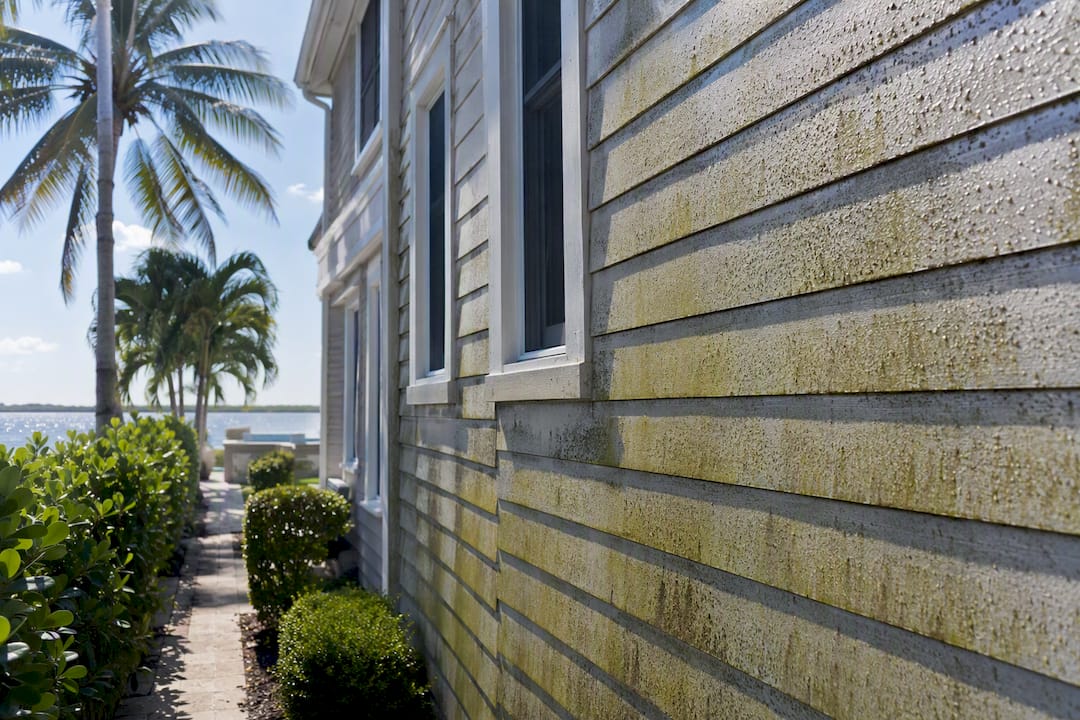
Material matters as much as location. Vinyl and metal siding shrug off pressure and grime fairly well. Painted wood and brick are more porous, which means they hold onto stains and biological growth longer, but they're also easier to damage with too much pressure.
Traffic changes things for hard surfaces. A driveway that sees daily car traffic, oil drips, and foot traffic will show stains faster than a rarely used side path.
- Humid or coastal climate: wash every 6 to 12 months
- Heavy tree cover or shade: inspect twice a year, wash as needed
- High pollen season: plan a wash in late spring regardless of calendar timing
- Visible dark streaks or green film: don't wait for the "scheduled" date
Pro Tip: Walk your property once a season and look specifically at north-facing walls and anything under a tree canopy. Those spots green up months before the rest of the house shows any sign of dirt.
How Often to Wash Each Surface Around Your House
Frequency isn't one number for the whole property. Each surface wears differently, and cleaning them on the same schedule usually means over cleaning one and neglecting another.
- Concrete driveways and walkways. Wash every 6 to 12 months. Oil stains, tire marks, and organic buildup make concrete slippery and harder to remove the longer it sits.
- Vinyl, metal, and composite siding. Once a year is typically enough, and a soft wash approach is preferred over high pressure to avoid forcing water behind panels.
- Wood siding and painted exteriors. Clean only when you see actual buildup, and always with a soft wash. High pressure strips paint and can gouge softer wood.
- Decks and wood surfaces. Time cleaning to your resealing schedule rather than a fixed date. A deck due for resealing needs a wash first, with full drying time before any product goes on.
- Roofs. Soft wash every one to three years depending on algae pressure and your local climate, following shingle manufacturer guidance on pressure and chemicals.
Industry guidance from the National Power Washing Authority lines up with this surface by surface approach: house exteriors and driveways on an annual baseline, decks on the same cycle, and roofs stretched out to one to three years unless exposure pushes that shorter. The consistent theme across contractor guidance is that surface type and exposure decide the interval, not a single house wide rule.
When Is the Best Time of Year to Pressure Wash?
Late spring and early fall are the two windows most contractors recommend, and for good reason. Late spring lets you wash away the season's pollen coating right after trees finish shedding it. Early fall clears out summer grime and prepares surfaces before winter moisture sets in.
Weather matters more than the calendar date. Dry days in the 40 to 75°F range give the best results, since sunlight helps surfaces dry fully afterward. Skip freezing temperatures, since water can seep into cracks and refreeze, and skip extremely hot days, since cleaning solutions dry too fast to work properly.
- Late spring: wash after pollen drop, before summer heat peaks
- Early fall: wash before winter rain and humidity settle in
- Avoid: freezing days, rain forecasts, and extreme heat
- Plan sealing or painting for a few days after washing, once surfaces are fully dry
Soft Wash or Pressure Wash: Which One Do You Need?
Soft washing uses low pressure combined with a cleaning solution that kills algae and mold at the root. Pressure washing relies on high water pressure alone, with no chemical treatment needed for tougher surfaces like concrete.
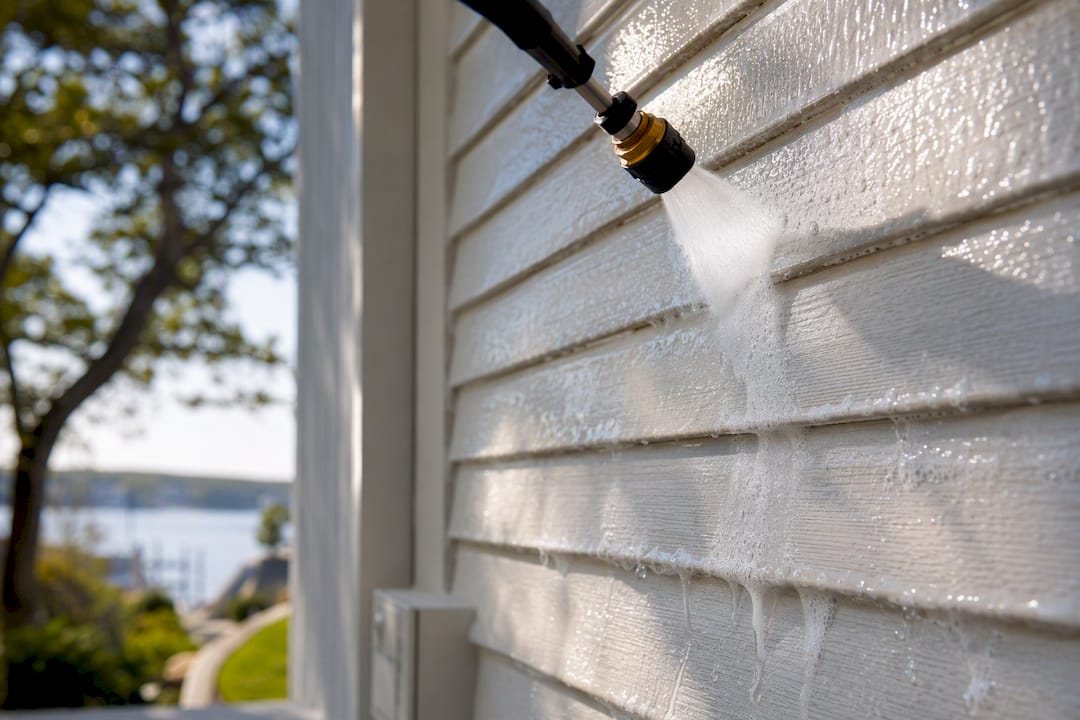
Siding, roofs, and painted wood need soft washing. High pressure on these surfaces can strip paint, crack shingles, or blast water behind siding panels where it causes rot you won't see for months. Concrete, brick, and stone can handle real pressure and often need it to shift ground in stains and oil.
Soft wash methods are safer for siding and roofs, while pressure washing suits concrete and masonry but risks real damage on delicate materials. A useful rule: soft wash everything above ground level, pressure wash everything you walk on.
Pro Tip: If a contractor shows up planning to pressure wash your entire house top to bottom with one setting, that's a red flag. The upper siding and the driveway need two different approaches entirely.
Should You DIY or Hire a Pressure Washing Pro?
Renting equipment for a flat concrete driveway or patio is a reasonable DIY project if you have the right nozzle and basic eye and hearing protection. Rental units typically run cheaper than hiring out, though professional jobs average a few hundred dollars for a standard house depending on size and scope.
Multi-story homes, roofs, and anything requiring soft wash chemicals belong with a professional. Siding manufacturers often specify pressure limits in warranty terms, and getting it wrong can void coverage you'd otherwise have.
- DIY works for: single-story driveways, patios, and flat walkways
- Hire a pro for: roofs, second-story siding, soft wash jobs, warranty-sensitive materials
- Red flag to hire immediately: heavy black streaking, visible rot, or siding that's already lifting
Simple Habits That Stretch the Time Between Deep Cleans
A few minutes of attention each month beats a full remediation job later. Dark streaks and green patches are cheaper to treat early than to scrub out after months of growth.
- Check gutters and downspouts monthly for clogs that send water running down siding.
- Inspect caulking and sealant joints twice a year for gaps that trap moisture.
- Trim back trees and shrubs that keep exterior walls in constant shade.
- Spot treat new mildew or algae the week you notice it rather than waiting for the next scheduled wash.
- Always let surfaces dry fully, generally a day or two depending on weather, before sealing or painting.
Pro Tip: Keep a simple log of when each surface was last washed and what you saw. Patterns show up fast, and you'll start predicting problem spots before they show up on the wall.
Reducing mold and algae buildup isn't just cosmetic, either. The Asthma and Allergy Foundation of America notes that mold is a common allergy trigger, so keeping exterior growth in check has a health upside beyond curb appeal.
Why Condition-Based Care Beats a Calendar
A fixed annual date is a decent default, but it misses the point. The properties that stay in the best shape are the ones where someone is actually looking, catching a streak of algae in month four instead of month eleven.
That's the philosophy behind estate management done right: weekly eyes on a property catch small problems before they become remediation jobs. A seasonal maintenance checklist that pairs inspection with action, not just a wash scheduled by the calendar, is what actually protects a home's exterior long term. If you own a property along the coast, that vigilance matters even more given how fast salt air accelerates wear.
— Zackary
Let 30apropertycollective Handle the Schedule for You
30apropertycollective is the alternative to guessing at a calendar date or chasing down a contractor every time siding starts to streak. Weekly inspections mean growth gets flagged the week it appears, not the month it becomes a bigger job, and vendor coordination for exterior cleaning happens as part of a standing maintenance plan rather than a phone call you have to make yourself.

Estate management plans through 30apropertycollective fold pressure washing, soft washing, and seasonal exterior upkeep into the same proactive oversight that covers storm prep and arrival readiness. You get one point of contact instead of juggling separate contractors for the driveway, the roof, and the siding. If your Emerald Coast property could use that kind of hands-off oversight, review the service tiers or start a contract to get your maintenance plan built around your home's actual condition, not a generic calendar.
Sources
- How often to pressure wash your house | BHG
- How Often Should You Schedule Powerwashing? | National Power Washing Authority
- Mold and allergy | Asthma and Allergy Foundation of America (AAFA)
- Soft wash vs pressure washing | Hedlund Painting