
Schedule a professional inspection at least once a year, and start a maintenance log today. That single habit catches most problems before they become expensive or dangerous. Manufacturer guidance and industry technicians agree on the baseline: one full-service visit annually covers lubrication, brake checks, leveling accuracy, and an emergency-lowering test. Between visits, your job is simple observation, not repair.
- Log every service date, technician name, and issue you notice, even small ones.
- Test the emergency phone or intercom monthly.
- Book your annual inspection on the calendar now, before you forget.
Pro Tip: Set your annual elevator service for the same month every year, tied to another recurring task like changing HVAC filters. You'll never lose track of it.*
Key Takeaways
A reliable home elevator depends on an annual professional inspection, monthly homeowner checks, and a maintained service log that separates routine care from certified technician work.
| Point | Details |
|---|---|
| Set an annual baseline | Book a professional inspection yearly; move to semiannual for heavy use or coastal climates. |
| Do monthly self-checks | Test the emergency phone and inspect the pit for water or debris every month. |
| Know your limits | Never touch brakes, cables, or control wiring; leave that to licensed technicians. |
| Budget realistically | Expect $300 to $800 annually, plus $150 to $450 per single service call. |
| Keep a paper trail | Log every service date, technician name, and issue for warranty and resale value. |
Table of Contents
- How Often Should You Schedule Home Elevator Maintenance?
- What Can You Check Yourself Between Professional Visits?
- What Do Technicians Actually Check During a Service Visit?
- What Are the Most Common Elevator Problems to Watch For?
- What Does Home Elevator Maintenance Actually Cost?
- What Should You Do If the Elevator Stops or Loses Power?
- How Long Do Home Elevators Last Before Replacement?
- Who Is Responsible for What: Homeowner vs. Technician
- Simple Habits That Extend Your Elevator's Service Life
- How Estate Management Supports Elevator Maintenance
- What I've Learned Coordinating Home Systems for Estate Owners
- Frequently Asked Questions
- Sources
How Often Should You Schedule Home Elevator Maintenance?
An annual professional inspection is the standard baseline for most residential elevators, and it's what manufacturers and service technicians recommend across brands like Inclinator and Residential Elevators. A typical visit generally takes between one and two hours and covers the key mechanical and electrical systems that keep the cab moving safely.
That baseline shifts, though, depending on how the elevator gets used. Move to semiannual service if any of these apply to your property:
- The elevator runs multiple times daily (large families, multi-generational households).
- Your home sits in a coastal or high-humidity climate, where salt air accelerates corrosion.
- The equipment is more than 15 years old.
- The property sits vacant for long stretches, since idle mechanical parts can seize or dry out.
- You've had recent construction or renovation work near the elevator shaft.
A sample yearly rhythm looks like this:
- Daily/weekly — visual checks by the homeowner (unusual noise, door alignment, control response).
- Monthly — homeowner tests the emergency phone and inspects the pit for water or debris.
- Quarterly — a technician or trained caretaker performs a basic functional check on higher-use systems.
- Annually — a licensed technician completes a full inspection, load test, and safety-device certification.
Coastal Florida properties in particular benefit from tighter cycles. Humidity and salt exposure wear on hydraulic seals and electrical contacts faster than in drier climates, which is a big reason estate managers along the Emerald Coast build elevator checks into broader seasonal maintenance routines.
What Can You Check Yourself Between Professional Visits?
You don't need tools or training to catch most early warning signs. What you need is a routine and a willingness to pay attention.
Daily or weekly, glance for these:
- Door movement: smooth open and close, no hesitation or grinding.
- Cab lighting: all bulbs working, no flickering.
- Control panel: buttons respond immediately, no delay or double-press needed.
- Unusual sounds: clicking, grinding, or humming that wasn't there before.
- Cabin cleanliness: no debris on the floor track or door sill.
Monthly, go a little deeper:
- Test the emergency phone or intercom and confirm someone actually answers or the callback system works.
- Look into the hoistway pit (if accessible and safe) for standing water, debris, or pests.
- Check door edge sensors by waving a hand through the door path to confirm it stops and reopens.
- Note the date and outcome of each test in your log.
Some things are strictly off limits for homeowners, no matter how handy you are. Never touch brake adjustments, rope or cable tension, hydraulic fluid levels, or control system wiring. These require certified technician training and, in most jurisdictions, a license. Attempting this work yourself can void your warranty and create a genuine safety hazard.
If your unit has a battery backup or manual lowering feature, only test it if the manufacturer's manual explicitly says homeowners can. Some systems require a technician to reset the system after any manual lowering test, so check the manual first.
Pro Tip: If the elevator makes a new sound, stops responding smoothly, or the door hesitates even slightly, stop using it and call your technician instead of waiting for the next scheduled visit. A five-minute diagnostic call is cheaper than a stuck cab.
What Do Technicians Actually Check During a Service Visit?
A standard annual visit is more thorough than most homeowners expect, and it's worth knowing what you're paying for. Typical tasks include lubrication of moving parts, door operator adjustment, brake inspection, and testing of every safety device, including the emergency-lowering system and backup battery.
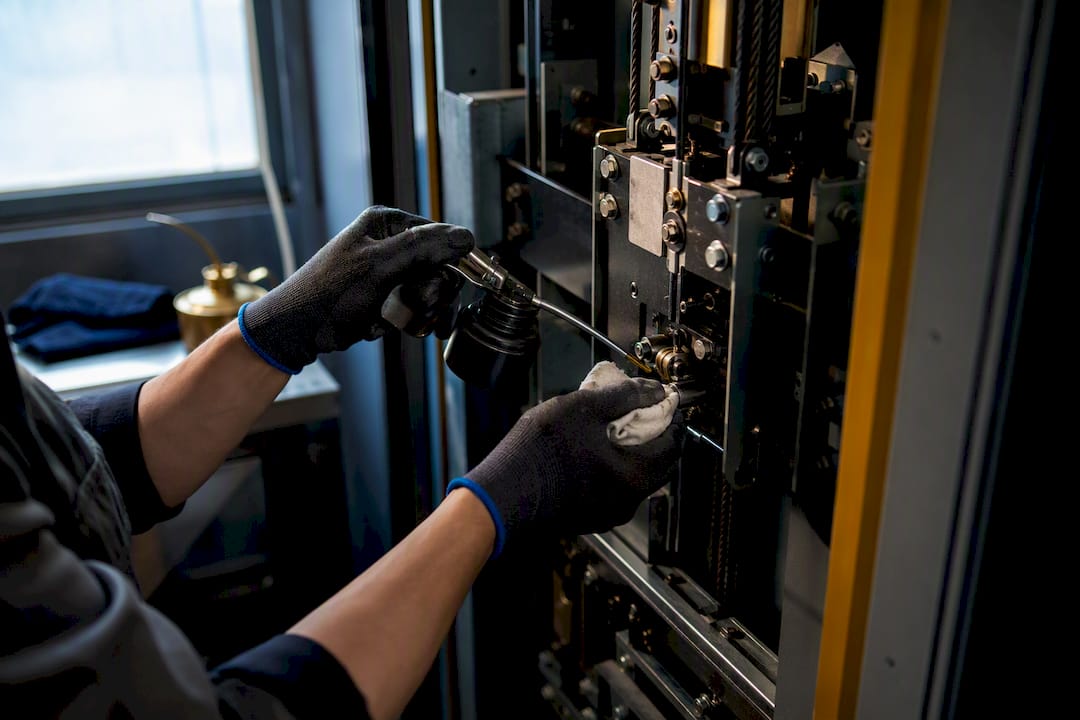
Technicians also run controller diagnostics to pull error logs, which flag intermittent issues you'd never catch on a visual check. Most visits conclude with a load test that confirms the elevator handles its rated capacity without excessive strain, plus a pit inspection to check for moisture, debris, or structural wear.
A full visit generally takes a couple of hours, possibly longer if diagnostics reveal additional issues that need immediate attention. Monthly and quarterly checklists split routine tasks between homeowners and technicians, with the annual visit reserved for certified safety-device testing and load verification.
Ask your service provider for a written report that includes:
- Work performed, item by item.
- Any parts replaced, with part numbers if possible.
- Recommended follow-up work and timeline.
- Technician name and license number.
Some tasks, particularly brake calibration and safety-device certification, legally require a licensed elevator mechanic in most states. That requirement exists because these components directly prevent free-fall or entrapment, and local code enforcement typically ties inspection frequency to these same safety systems.
| Point | Details |
|---|---|
| Report should name the technician | Always request the licensed technician's name and license number on the report. |
| Load test confirms capacity | Annual load testing verifies the elevator handles its rated weight without strain. |
| Error logs catch hidden issues | Controller diagnostics flag intermittent faults invisible during a simple visual check. |
What Are the Most Common Elevator Problems to Watch For?
Most home elevator failures give warning signs weeks before they become a real problem. Recognizing the symptom early is the difference between a routine repair and an emergency call.
- Door hesitation or failure to close. Often a sensor misalignment or track debris. Stop use and call your technician if it doesn't resolve after clearing visible debris.
- Leveling drift. The cab stops slightly above or below floor level. This usually points to hydraulic fluid loss or a sensor calibration issue and needs a technician visit soon, not urgently.
- Grinding or clicking noises. Frequently a lubrication issue, but can indicate worn cable or motor bearing wear. Log the time it started and call for an inspection.
- Slow response to control input. Points to control board or wiring issues. Not usually an emergency, but worth scheduling promptly.
- Visible oil leaks near the machine room or hydraulic cylinder. Stop using the elevator and call a technician immediately. Leaking hydraulic fluid can indicate seal failure.
- Electrical faults (flickering lights, tripped breakers). Call a technician right away. Electrical issues near safety systems are never a "wait and see" situation.
Early detection matters because small mechanical issues compound quickly. A leveling drift ignored for months can wear down the same components that keep the cab from stopping unevenly between floors, which is exactly the kind of imprecision that contributes to fall risk for older adults and anyone with mobility challenges. Functioning safety devices and a quick technician response are your best protection against that outcome.
What Does Home Elevator Maintenance Actually Cost?
Costs vary by region, elevator model, and how much work a visit requires, but the ranges are fairly predictable across the industry.
| Service Type | Typical Cost Range | What's Included |
|---|---|---|
| Single service call | $150–$450 | Diagnostic visit, minor adjustment, or targeted repair |
| Annual maintenance contract | $300–$800 | Full lubrication, safety testing, and load test |
| Emergency/after-hours call | Premium above standard rate | Immediate response outside business hours |
Before signing a service contract or accepting a repair quote, ask:
- What exactly is covered under the annual fee, and what counts as an extra charge?
- Is there a guaranteed response time for emergency calls?
- Does the contract cover parts, or only labor?
- Is the technician licensed and insured, and can they provide proof?
Checking a provider's standing with organizations like the Better Business Bureau before you sign anything gives you a reputation signal beyond the sales pitch. A guaranteed-response plan costs more upfront but can save thousands if your elevator fails on a holiday weekend with houseguests in the home.
What Should You Do If the Elevator Stops or Loses Power?
Staying calm is the first and most important step, whether you're stuck between floors or the power just cut out mid-ride.
- Press the alarm button or use the emergency phone to reach the monitoring service or your technician.
- Stay in the cab. Do not attempt to force the doors open or climb out.
- Wait for instructions from the emergency operator or technician before doing anything else.
- Once free, document the time, what happened, and any unusual sounds beforehand for your maintenance log.
Power failure behaves differently depending on your elevator type. Hydraulic units typically lower to the nearest floor using battery backup, while traction and pneumatic systems may need manual intervention from a technician. Confirm with your installer which behavior applies to your unit, and test the battery backup system on the schedule your manual specifies.
If someone else is trapped, never try to force the doors from outside. Use the intercom or call the emergency number posted in the cab. Call 911 only if there's a medical emergency; otherwise, your elevator service provider's emergency line is the faster and more appropriate first call. Functioning emergency systems substantially reduce the risk tied to falls and entrapment injuries, which is exactly why testing that phone monthly matters more than it seems.
How Long Do Home Elevators Last Before Replacement?
Structural and mechanical components typically last 20 to 30 years or more with consistent maintenance. Controllers and electronics tend to need replacement sooner, often in the 15 to 20 year range, since technology and parts availability shift faster than mechanical hardware. Hydraulic cylinders can run 25 years or longer when properly serviced.

Watch for these replacement signals: repeated failures despite service, obsolete controls that no longer have parts support, repair bills that keep climbing, safety recalls on major components, or persistent leveling problems that adjustments won't fix.
Not every aging system needs full replacement. Control modernization, LED lighting upgrades, and new door operators can extend service life at a fraction of full-replacement cost. Budget conversations should compare the cost of modernizing key components against a full system swap, factoring in how many years of service life each option realistically buys you.
Who Is Responsible for What: Homeowner vs. Technician
The split is straightforward once you know where the line sits. You handle observation and light care. A licensed technician handles anything mechanical, electrical, or safety-critical.
Your responsibilities:
- Routine visual checks and cleanliness (thresholds, tracks, cab interior).
- Testing the emergency phone monthly.
- Keeping the posted load-capacity sign visible and respected.
- Maintaining a written maintenance log with dates and observations.
Technician responsibilities:
- Safety device calibration and certification.
- Brake inspection and adjustment.
- Rope or cable replacement.
- Control system diagnostics and code-mandated inspections.
Keep every service report, warranty document, and serial number in one folder. Local permits and inspection requirements often reference this paperwork, and a complete file makes resale conversations far smoother.
Simple Habits That Extend Your Elevator's Service Life
A handful of consistent habits do more for longevity than any single repair.
- Keep the pit dry and free of debris; standing water accelerates corrosion on hydraulic and mechanical parts.
- Control humidity in the machine room, especially in coastal or high-humidity climates.
- Respect the posted weight capacity every time, not just when carrying something obviously heavy.
- Clean thresholds and door tracks using only manufacturer-approved products.
- Reduce unnecessary cycles in vacation properties where the elevator sits idle for long stretches between visits.
Pro Tip: Save your technician's direct contact information somewhere the whole household can find it, not just in your own phone. A visiting family member or house sitter needs to reach them just as fast as you would.
Maintaining a consistent vendor relationship pays off, too. Sticking with the same authorized service company means they know your equipment's history and can spot subtle changes faster than a new technician starting from scratch.
How Estate Management Supports Elevator Maintenance
Coordinating elevator service is one small piece of a much bigger property puzzle, and it's exactly the kind of task that falls through the cracks in seasonal or vacation homes. An estate manager schedules the recurring annual inspection, stores every service report in one place, and coordinates emergency response so a stuck elevator doesn't turn into a weekend-long ordeal.
- Weekly property inspections catch early warning signs, like unusual pit moisture, between scheduled elevator service visits.
- Vendor oversight means the same licensed technician handles your equipment every year, building institutional knowledge of your system's quirks.
- Arrival-readiness checks confirm the elevator, along with every other home system, is functioning before you or guests arrive.
- Pre and post-storm assessments catch hydraulic or electrical issues caused by power surges or flooding before they become expensive.
A managed estate service delivers digital reports you can hand to a buyer, contractor, or insurance adjuster on demand, turning years of maintenance history into a documented asset instead of a shoebox of receipts.
30apropertycollective's Concierge services build this kind of vendor coordination directly into weekly property care, so elevator maintenance never gets separated from the rest of your home's upkeep.
What I've Learned Coordinating Home Systems for Estate Owners
The homeowners who never have an elevator emergency are the ones who treat the annual service like a fixed calendar event, not a task they'll get to eventually. I've seen the opposite too often: a strange noise gets noticed, dismissed, and three months later it's a $2,000 repair instead of a $150 adjustment.
The other pattern worth watching is post-construction neglect. Any nearby renovation work, even unrelated plumbing or electrical jobs, can shift dust and debris into a hoistway pit without anyone noticing until the elevator starts acting up.
If you take one thing from this, set your annual service date now and start the log today. Everything else follows from that single habit.
Frequently Asked Questions
How often should a home elevator be serviced? Most residential elevators need at least one professional inspection per year. Increase to semiannual service if you use the elevator heavily, live in a coastal or humid climate, or own equipment older than 15 years.
What does home elevator maintenance include? A standard visit covers lubrication, door operator checks, brake inspection, leveling accuracy, controller diagnostics, and a battery or emergency-lowering test, finishing with a load test.
Can homeowners do any elevator maintenance themselves? Yes. Homeowners can safely handle visual checks, monthly emergency phone tests, and basic cleanliness around door tracks and thresholds. Brake work, cable replacement, and control diagnostics require a licensed technician.
How much does home elevator maintenance cost per year? Annual maintenance contracts typically run $300 to $800, while single service calls range from $150 to $450. Emergency or after-hours calls cost more than standard scheduled visits.
How long do home elevators last? Structural and mechanical systems often last 20 to 30 years or more with consistent care. Controllers and electronics usually need updating sooner, around 15 to 20 years, due to parts availability and technology changes.
What should I do if my home elevator gets stuck? Stay calm, use the alarm button or emergency phone to contact your technician or monitoring service, and remain in the cab until help arrives. Never attempt to force the doors open.
Sources
The guidance above draws on manufacturer and technician resources, safety data, and industry standards documentation, including:
- Residential Elevator Maintenance: A Homeowner's Complete Guide · BaileyFinch Facility Services
- How Often Should a Home Elevator Be Serviced? · Cambridge Elevating (blog)
- Home Elevator Maintenance: What Every Homeowner Needs to Know · Mowrey Elevator Company Inc.
Always confirm local inspection requirements with your area's authority having jurisdiction, and follow your specific manufacturer's manual for model details on Inclinator, Residential Elevators, or other brands. Save your technician's contact information and manufacturer manual together, and consider bookmarking 30apropertycollective's concierge page if you'd rather have someone else manage the scheduling entirely.