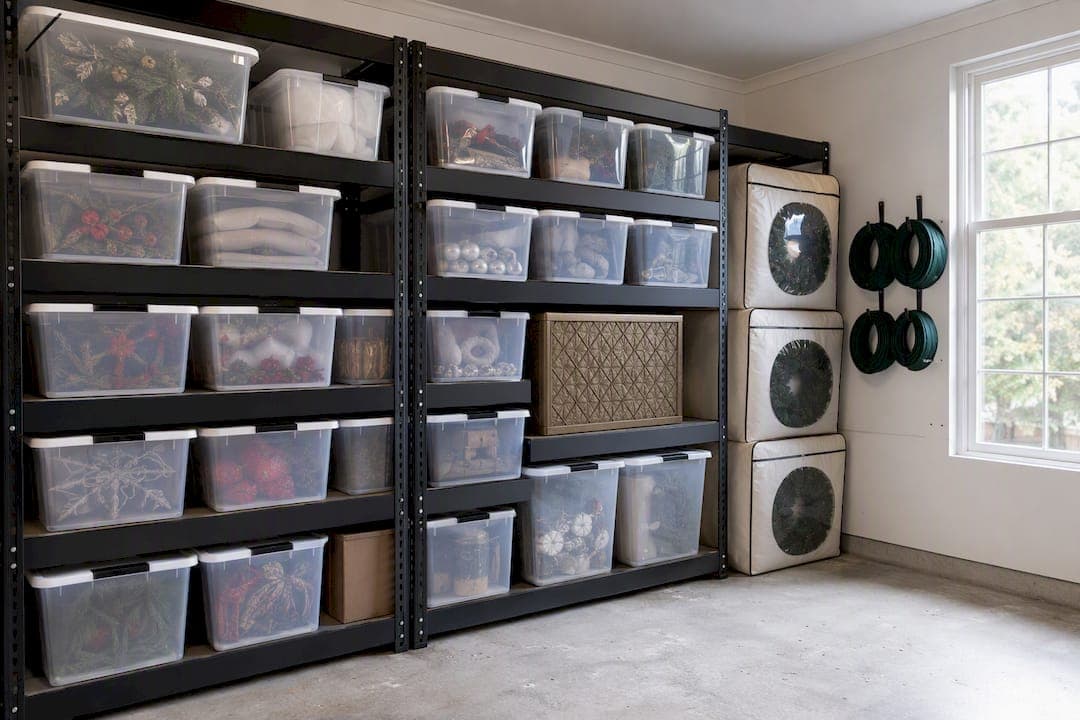
The best holiday decor storage system comes down to four moves: purge what you didn't use this year, switch to uniform labeled containers, protect anything fragile with real dividers, and store everything somewhere dry and easy to reach. Skip any one of those steps and you'll be back to digging through mismatched boxes next November.
Start today with a quick purge, then get your hands on:
- Clear stackable bins in one or two sizes
- An ornament box with adjustable dividers
- A few cord reels or spools for lights
If you own heirloom ornaments or anything irreplaceable, photograph each piece before it goes into a bin. That single habit matters whether you're storing three boxes in a hall closet or managing a multi-property collection with a full holiday inventory.
Table of Contents
- How to Organize Holiday Decorations in One Afternoon
- What Containers Actually Protect Your Decorations
- Packing Ornaments, Lights, Wreaths, and Trees So They Survive
- Where to Store Decorations Without Ruining Them
- Labeling and Inventory Systems That Save You Time
- Storing Heirlooms and High-Value Collections the Right Way
- DIY Holiday Decor Storage Solutions and Budget-Friendly Tips
- Clean and Repair Decorations Before They Go Into Storage
- Keeping Pests Out of Your Holiday Storage Area
- Vacuum Storage Bags for Soft Holiday Decor
- Storing Delicate Fabrics and Ribbon Without Damage
- Let 30A Property Collective Handle the Details
- What Actually Matters in Holiday Decor Storage
- Why Most Storage Advice Stops Short of What Actually Matters
- Sources
How to Organize Holiday Decorations in One Afternoon
Getting your holiday decor storage under control doesn't require a weekend. It requires an order of operations. Do the steps out of sequence and you'll end up repacking things twice.
- Purge first. Anything broken beyond repair, anything you didn't unbox this year, and anything you've replaced with something better gets donated or tossed. Be honest about the "maybe next year" pile. Decluttering before you pack is a core principle behind KonMari's approach to holiday organization, and it works because storing less means retrieving less.
- Sort by holiday, then by subcategory. Christmas ornaments, Christmas lights, wreaths, and Halloween or Fall decor each get their own zone before anything touches a box.
- Pack in reverse-setup order. The items you'll want first when decorating (tree skirt, lights, tree topper) go on top or in the most accessible bin. Heavier, bulkier items like garland spools go on the bottom.
- Store in a dedicated, dry spot. More on location choices follows later in the article.
Following this exact sequence, sorted by holiday and packed in reverse order with clear labels, is the kind of workflow that can cut next season's setup time roughly in half.
Before you start, gather: uniform bins, an ornament divider box, tissue paper or bubble wrap, cord reels, packing tape, and a label maker or marker.
Pro Tip: Pack a small "first open" bin with the tree skirt, extension cords, and a fresh set of batteries. It saves you from tearing into six boxes just to get the first strand of lights running.
What Containers Actually Protect Your Decorations
Container choice is where most storage systems succeed or fail. Professional organizers consistently point to one shift: moving away from mismatched cardboard boxes and grocery totes toward uniform, clear, stackable containers sorted by holiday and sub-type. Clear sides mean you can identify contents without opening every lid, and matching dimensions mean your stacks don't wobble or collapse in a garage corner.
Look for these features when you shop:
- Locking or latching lids that snap on all four sides, not just two, so nothing pops open mid-stack
- Gasketed seals if the bin will live in a garage or shed, since a rubber gasket blocks moisture and dust far better than a snap lid alone
- Adjustable ornament dividers rather than loose tissue paper wrapping, which lets you customize compartment size for oversized bulbs and tiny keepsakes in the same box
- Reinforced handles and, for tree bags, wheels, since a fully-loaded artificial tree bag can weigh 40 pounds or more
For wreaths and trees specifically, skip the original retail box. Industry guidance favors hard-sided wreath boxes and heavy-duty reinforced polyester tree bags over cardboard, which softens with humidity and gives pests an easy way in.
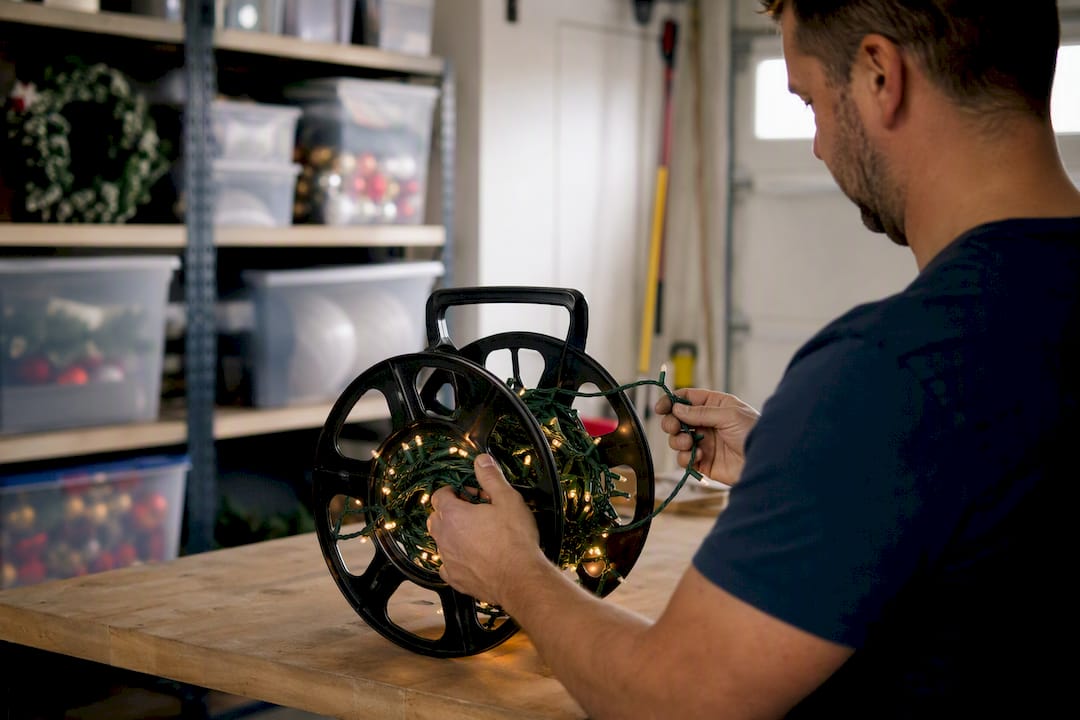
For lights, cord reels or spool organizers beat the loop-and-stuff method every time, and they let you label each strand by the location it lit up last year.
Packing Ornaments, Lights, Wreaths, and Trees So They Survive
Fragile items need individual attention, not a shared blanket of tissue paper. Wrap each ornament separately, nestle it into its own divider slot, and never use newspaper. The ink transfers to porcelain and painted glass, which is a detail organizing experts flag specifically because it ruins finishes silently over a full year in storage.
For lights, test every strand before it goes into the box. A bulb that's already flickering in December won't magically fix itself by next winter. Repair or replace failing bulbs now, wind each strand onto its own reel, and tape a small label to each one noting where it hung.
- Wreaths do best hanging on a hook or nested in a round wreath box, never flattened under a stack of heavier bins
- Artificial trees should be completely dry before bagging to prevent mildew, and disassembled into sections if your model allows it
- Inflatables and yard displays need to be fully deflated and dried, then rolled rather than folded to avoid seam stress
Pro Tip: Snapping a quick photo of your tree fully decorated before taking it down can provide a helpful setup guide for next year.
Where to Store Decorations Without Ruining Them
Attics run hot, and heat warps candles, melts ribbon, and dries out artificial greenery. Basements bring the opposite problem: moisture that invites mold on fabric tree skirts and cardboard boxes. Garages swing between both extremes and tend to have the most pest traffic of the three.
- Off the floor and away from exterior walls is non-negotiable; a $20 wire shelf or a couple of pallets solves this instantly
- Silica gel packets or basic desiccant tubs inside bins with fabric items cut down on musty smells and moisture damage
- Breathable garment bags, not plastic, for tree skirts and fabric stockings
- If your only options are an un-insulated garage or a damp basement corner, weathertight sealed bins or a small climate-controlled storage unit are worth the upgrade, especially for anything with electronics or delicate fabric
Homes genuinely short on space can lean on under-bed boxes and vertical wall storage instead of forcing everything into one closet, an approach detailed in Extra Space Storage's guide to small-home holiday organization.
Labeling and Inventory Systems That Save You Time
A label should answer four questions in one glance: which holiday, which category, whether it's fragile or outdoor, and which bin number it is. A simple template works for every box: Holiday, Category, Fragile/Outdoor, Bin #. Something like "Christmas, Ornaments, Fragile, Bin 3" beats "Xmas stuff" every time.
Color coding speeds this up further. Pick one system, colored tape, colored bin lids, or color-coded stickers, and stay consistent across every box so grabbing the right one becomes a visual reflex instead of a reading task.
- Assign each holiday its own color and stick to it year over year
- Build a simple spreadsheet or a photo index of what's in each bin
- Tape a printed copy of that list inside your storage closet or garage door
- Pack a labeled "setup essentials" bin near the front with extension cords, hooks, and a fresh light tester
This kind of sort-label-inventory workflow is what separates a storage system that lasts from one you rebuild every January. Organizers who design lasting systems, like the approach from SimplifyKit's garage storage guide, stress the same thing: the labels only work if you commit to updating them when contents change.
Storing Heirlooms and High-Value Collections the Right Way
If your collection includes inherited ornaments, custom glasswork, or pieces with real sentimental or dollar value, standard bins aren't quite enough. Estate-level care looks a little different.
- Use weathertight bins with silicone gaskets and locking clasps, not snap lids, for anything irreplaceable
- Photograph and log high-value pieces every year, and keep that record both digitally and on paper in a separate, secure location
- For multi-property owners, a vendor-managed packing service or weekly inspection routine catches problems, a cracked bin, a moisture leak, before they become losses
- Contractor and vendor oversight matters here too, since anyone accessing storage areas for repairs or seasonal setup should be vetted and tracked
30A Property Collective builds exactly this kind of oversight into its Estate Management and Concierge Services for Emerald Coast homeowners, treating holiday decor as part of the property's overall condition, not an afterthought. If you're logging heirlooms for insurance purposes anyway, a home inventory built for insurance claims gives that record real teeth if you ever need to file one.
DIY Holiday Decor Storage Solutions and Budget-Friendly Tips
You don't need a full container-store haul to build a working system. Repurposed boxes work fine as long as you standardize the size within each stack, mismatched shapes are what cause tipping and wasted shelf space, not cardboard itself.
A few low-cost swaps that hold up well:
- Cut pool noodles lengthwise and slide them over wire hooks or hangers to protect delicate glass ornaments hung on a rod
- Repurpose egg cartons for small ornaments, mini bulbs, or loose jewelry-style decorations
- Use empty wrapping paper tubes, cut down to size, as light strand cores instead of buying reels
- Turn a wine box with built-in dividers into an instant ornament organizer
- Wrap ribbon and garland around a paper towel tube to prevent tangling, no purchase required
The trick with DIY holiday decor storage is consistency more than materials. A free cardboard box labeled clearly and stacked uniformly with three others beats an expensive bin system that's disorganized. If you're building on a budget, prioritize spending on the items that actually need structure, dividers for ornaments and reels for lights, and let the outer container be whatever you already have on hand. Save receipts and reuse shipping boxes from other purchases throughout the year rather than buying new bins all at once. Spreading the cost over a few months, picking up two or three bins each paycheck, gets you to a full uniform set without the sting of one big purchase in January.
Clean and Repair Decorations Before They Go Into Storage
Packing dirty or damaged decorations away guarantees you'll unpack dirty or damaged decorations next year, sometimes worse, since dust and grime left in storage for a full year can set into fabric and finishes.
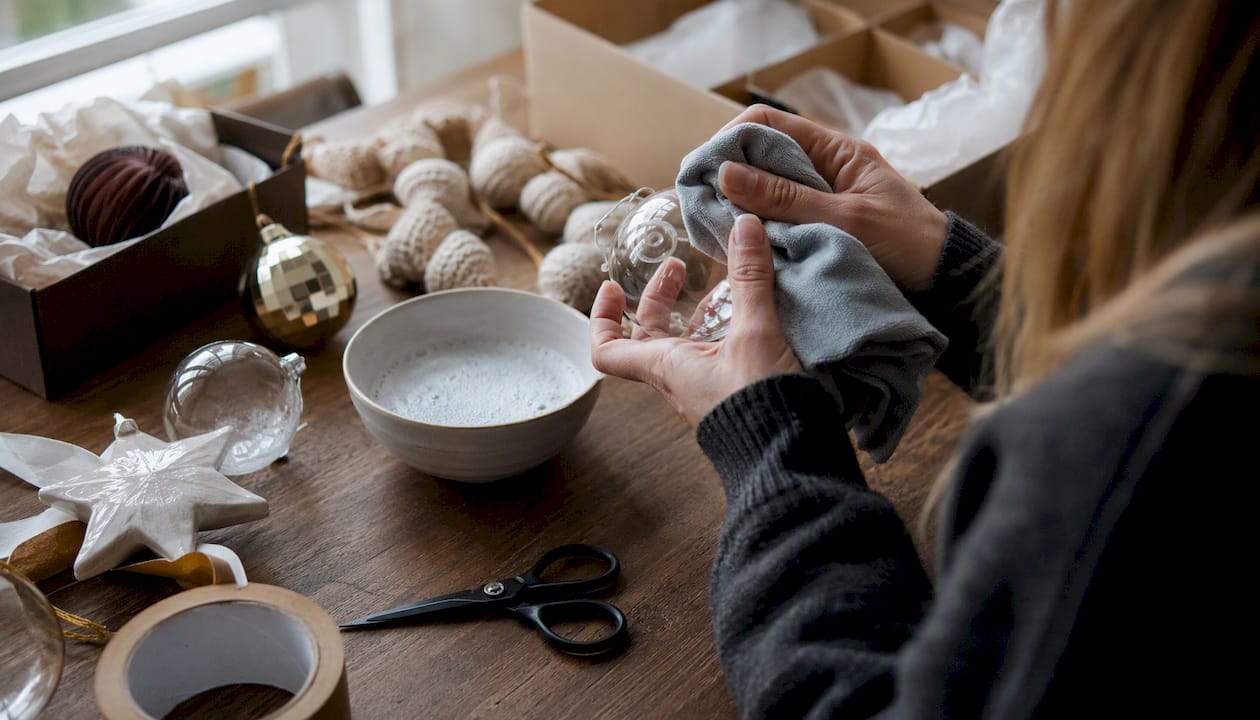
Wipe down artificial greenery and ornaments with a soft, dry cloth to remove dust before boxing anything. For fabric items like tree skirts and stockings, a gentle wash or spot clean now means you're not scrambling to get stains out during the busiest week of December next year.
Inspect for damage while everything is still out and accessible:
- Check ornament hooks and hangers for rust or bending
- Look for cracked glass bulbs or chipped paint on figurines
- Test every strand of lights, not just the ones you remember flickering
- Check wreath wiring and garland stems for loose or broken sections
Small repairs take minutes now and save you from discovering a broken piece with guests arriving in an hour next season. Re-glue loose ornament parts, tighten wire on wreaths, and replace burnt-out bulbs immediately rather than shoving the whole strand back in the box "to deal with later." That box rarely gets reopened until it's needed again.
If something is beyond repair, this is also your natural purge moment. Fold that decision into the same session rather than treating maintenance and decluttering as separate chores.
Keeping Pests Out of Your Holiday Storage Area
Storage areas sit undisturbed for eleven months, which makes them prime real estate for rodents, spiders, and insects looking for quiet, dark space. Cardboard boxes are particularly vulnerable since pests can chew through them easily and even nest inside insulation or paper packing material.
A few habits keep your storage area unappealing to unwanted visitors:
- Switch from cardboard to plastic bins wherever possible, since pests can't chew through hard plastic the way they can through cardboard
- Keep bins elevated off the floor on shelving or pallets, which removes easy ground-level access points
- Add cedar blocks or sachets near fabric items, since cedar naturally repels moths and other fabric-damaging insects
- Do a visual sweep of your storage area before you bring boxes back in each fall, checking corners and behind shelving for nests or droppings
- Seal any gaps around garage doors, vents, or foundation cracks near your storage space
If you're storing anything in a garage or shed, avoid stacking bins directly against exterior walls, since that's typically where pests find entry points. A gap of even a few inches gives you room to spot problems before they spread into your decorations.
Vacuum Storage Bags for Soft Holiday Decor
Vacuum storage bags work well for one specific category: soft, compressible items like fabric tree skirts, stockings, throw pillows with holiday covers, and fabric garland. Sealing air out shrinks these items down to a fraction of their normal size, which is a real advantage if you're working with limited closet or shelf space.
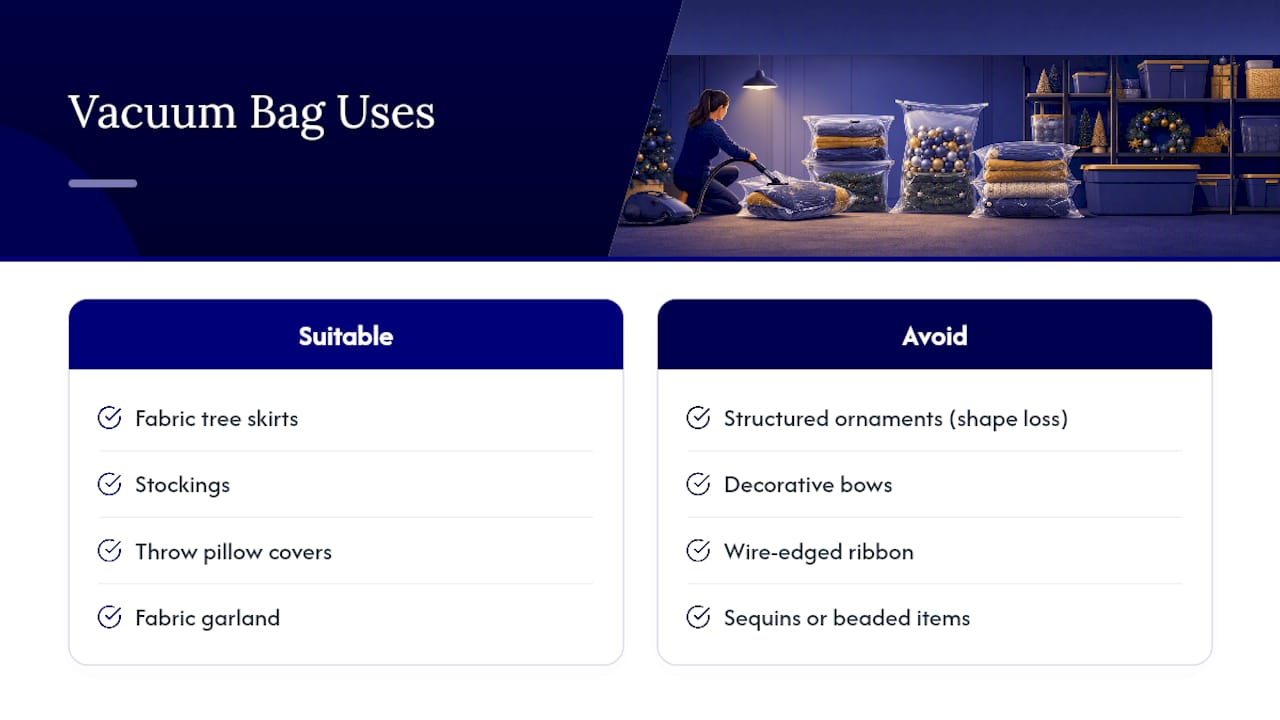
They're not the right choice for everything, though. Skip vacuum bags for anything with structure you need to preserve, decorative bows, ribbon with wire edges, or anything with embellishments like sequins or beading, since the compression can crush shape and dislodge decorations permanently. Fluffy items like tinsel garland or faux fur trim also tend to lose their loft after a season under vacuum pressure and never fully bounce back.
For the items that do work well in vacuum bags, seal, then store the compressed bag inside a rigid bin rather than leaving it loose on a shelf. This protects the plastic seal from punctures, which is the most common failure point people run into. If the seal fails mid-storage, you lose the space-saving benefit and the fabric can pick up moisture or dust for the rest of the year.
Storing Delicate Fabrics and Ribbon Without Damage
Fabric stockings, tree skirts, and ribbon need different handling than ornaments because moisture and pressure are their biggest threats, not impact.
Wash or spot-clean fabric items before storage, then make sure they're completely dry. Even slight dampness sealed into a bin for months can turn into mildew or a musty smell that's hard to fully remove later. Fold fabric items loosely rather than tightly to avoid setting permanent crease lines, and use acid-free tissue paper between folds for anything with embroidery or delicate trim.
For ribbon specifically, wrap it around a cardboard tube instead of folding or balling it up. This keeps it from creasing and makes it instantly reusable next year without an ironing session. Store ribbon spools upright in a shallow bin so they don't get crushed under heavier decorations.
Breathable cotton garment bags work better than sealed plastic for fabric pieces you're not vacuum-sealing, since plastic can trap residual moisture against the fabric even when it looks dry. Keep these bags away from direct contact with bin walls if you're in a humid climate, a small gap of airflow around fabric items makes a real difference over a full year in storage.
Let 30A Property Collective Handle the Details
Not every homeowner wants to spend a weekend wrestling bins into a garage rafter system, and for owners managing a second home or a property they're not living in year-round, DIY storage isn't always practical.
30apropertycollective's Concierge Services cover exactly this gap: seasonal decorating, careful packing, and storage oversight as part of a broader estate management plan for Emerald Coast properties. Instead of guessing whether your storage area held up over the summer, weekly inspections catch moisture issues, pest activity, or a shifted bin before it becomes a damaged heirloom. For homeowners who'd rather have a dedicated estate partner manage the entire process, from takedown to next season's setup, 30A Property Collective's concierge offerings fold holiday decor care into year-round property care.
If you're ready to put a proactive care plan in place for your property, including storage, seasonal turnover, and vendor oversight, you can start a service agreement with 30A Property Collective directly.
What Actually Matters in Holiday Decor Storage
The single most reliable predictor of a smooth setup next year is a consistent labeling and inventory habit, not the price of your storage bins; for tailored solutions, consider professional Capital Region Home Organization Systems.
| Point | Details |
|---|---|
| Purge before you pack | Toss or donate broken and unused items first to cut down what you actually store. |
| Standardize your containers | Uniform clear bins and dividered ornament boxes beat mismatched boxes for speed and protection. |
| Label with a fixed template | Use Holiday, Category, Fragile/Outdoor, Bin # on every box for instant identification. |
| Protect fabric and lights differently | Vacuum bags suit soft items only; lights need reels and a pre-storage bulb test. |
| Elevate care for heirlooms | Gasketed bins, annual photo logs, and vendor oversight matter for high-value collections. |
Why Most Storage Advice Stops Short of What Actually Matters
Most holiday decor storage advice treats every reader the same, as if a single apartment's worth of ornaments and a multi-generation collection of hand-blown glass need identical handling. They don't. The bin-and-label system in this guide works for both, but the stakes are wildly different, and conventional advice rarely says that out loud.
What gets underestimated most is moisture, not breakage. People baby-wrap ornaments and then toss the whole box into a damp basement corner, which does far more cumulative damage over a year than a slightly loose wrap job ever would. Location matters more than packing technique for anything fabric or wood-based.
Where I'd push back on standard advice: don't wait until you own "nice enough" decorations to treat storage seriously. The habit of photographing pieces annually and keeping a real inventory pays off long before anything becomes a true heirloom, and it costs nothing but a few minutes. For owners managing property they're not physically present at year-round, that habit stops being optional. It becomes the only way to know your holiday collection, and the home around it, made it through the year intact.
— Zackary
Sources
- The Best Storage For Your Holiday Decor, According To Experts | HuffPost Life
- Holiday storage recommendations — Real Simple
- How to store Christmas decorations - Lowes
- How to organize holiday decorations (Practical Home Guides)