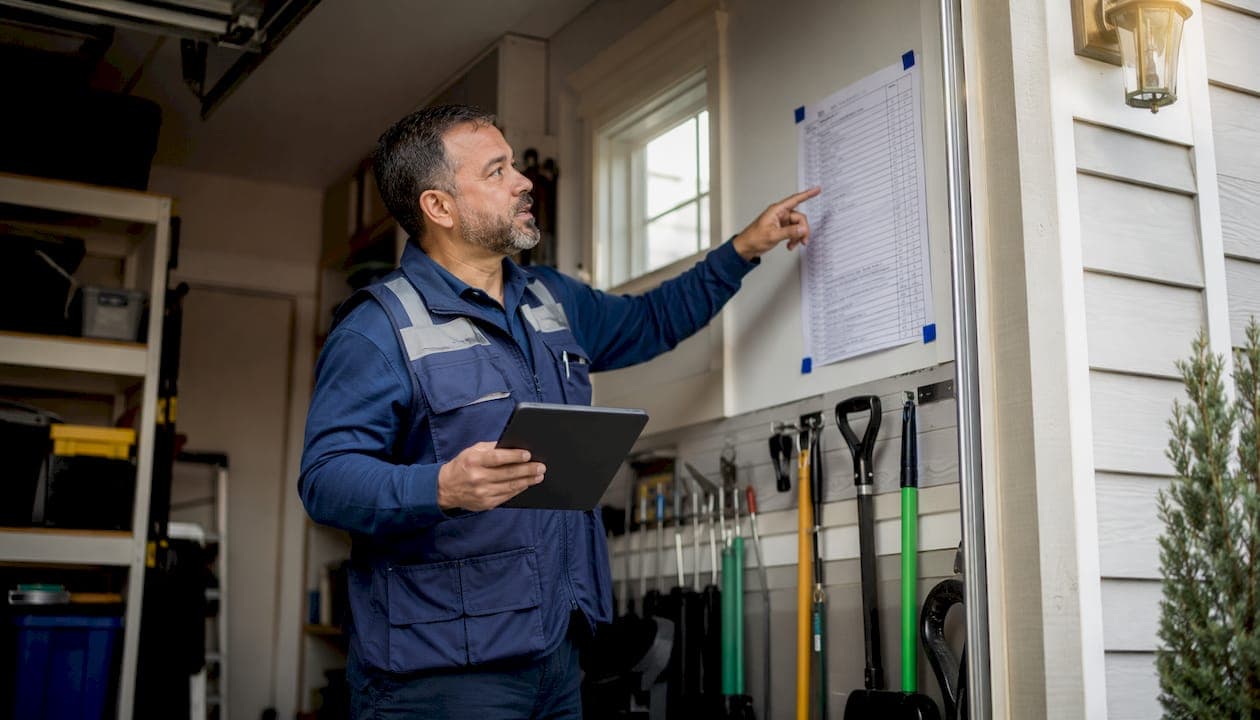
Home watch services pricing is defined as the per-visit or monthly fee a licensed inspector charges to check your property during your absence. Rates run from $30 to $160 per visit, with monthly totals landing between $150 and $700 for most single-family homes. Luxury concierge management can exceed $1,000 per month. Three factors drive nearly every quote you receive: visit frequency, property size, and the scope of services included. Understanding how those three levers interact puts you in control of the conversation before you call a single provider.
How does visit frequency affect home watch services pricing?
Visit frequency is the single biggest driver of your monthly home watch services cost. The math is straightforward: pricing scales linearly with the number of visits, not with the frequency tier itself. The cost per visit stays consistent whether you book weekly or monthly.
Here is how typical monthly totals break down by schedule:
- Weekly visits: $185–$500 per month. This schedule suits owners who are away for extended periods, live in hurricane or storm-prone areas, or carry insurance policies that require documented inspections.
- Bi-weekly visits: $95–$260 per month. The most common choice for seasonal homeowners who are absent for two to six months. It balances cost with adequate risk coverage.
- Monthly visits: $50–$150 per month. Appropriate for short absences or properties in low-risk climates with minimal mechanical systems.
Frequency also connects directly to insurance requirements. Many homeowner insurance policies for vacant or seasonal properties require documented inspections at set intervals. Skipping visits can void coverage during a claim. That makes the frequency decision a financial and legal one, not just a preference.
Seasonal upgrades add another layer. Post-storm inspections within 48 hours of a severe weather event deliver high return on investment during hurricane season or monsoon periods. Providers along Florida's Gulf Coast, for example, routinely offer this as an add-on during peak storm months.
Pro Tip: Evaluate your absence duration and local climate risks before choosing a visit schedule. A bi-weekly plan in a low-risk area often costs half of a weekly plan while covering 90% of the same risks.
What role does property size and complexity play in pricing?
Property size sets the floor for your per-visit rate. A condo under 2,000 square feet typically costs $30–$50 per visit, while a luxury estate over 4,000 square feet commands $85–$150 or more per visit. The difference reflects inspection time, the number of systems checked, and the liability the provider assumes.

| Property type | Approximate size | Per-visit cost |
|---|---|---|
| Condo or townhome | Under 2,000 sq ft | $30–$50 |
| Mid-size single-family home | 2,000–4,000 sq ft | $50–$85 |
| Large or luxury estate | Over 4,000 sq ft | $85–$150+ |
| Multi-feature estate with pool, spa, smart systems | Any size | $100–$160+ |
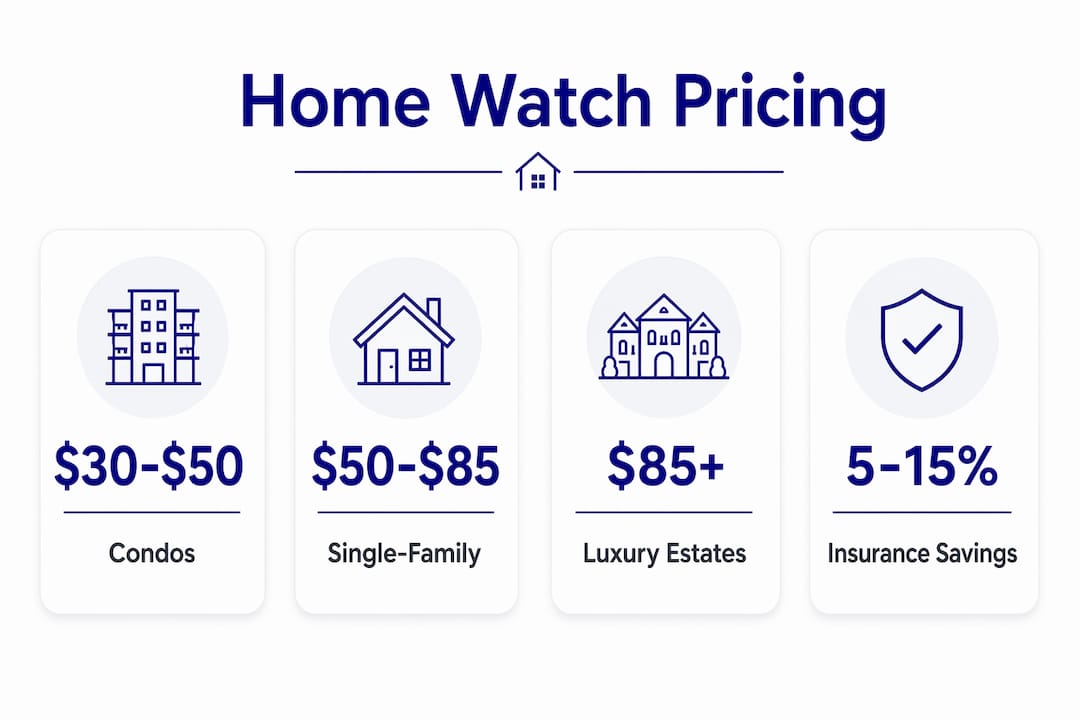
Complexity adds cost beyond square footage. Homes with pools, spas, smart home systems, or wine cellars require more inspection time and specialized knowledge. A property with a Lutron lighting system and a Pentair pool controller takes longer to verify than a standard home with a single HVAC unit.
Geographic and logistical factors also influence pricing. Properties in gated communities, remote coastal areas, or high-cost real estate markets carry higher rates. Providers factor in drive time, gate access procedures, and local labor costs when setting their fees.
A standard home watch inspection covers walk-throughs for leaks, pest activity, storm damage, and HVAC function. Larger or more complex homes simply have more of each to check, which extends the visit and raises the rate.
Pro Tip: Before requesting quotes, list every mechanical system, amenity, and access requirement your property has. Providers price more accurately when they know exactly what they are walking into.
How does service scope affect what you pay?
Service scope is where home watch services pricing gets personal. A basic inspection-only plan covers the walk-through and a written report. An expanded plan adds mail collection, vendor coordination, pool maintenance oversight, emergency response, and photo-documented reports with timestamps.
Detailed photo and timestamp documentation is not a luxury add-on. It is the difference between a covered insurance claim and a denied one. Providers who deliver this level of reporting justify higher fees with a concrete financial benefit.
Expanded service plans typically include:
- Arrival readiness: Stocking the refrigerator, adjusting thermostats, and preparing the home before you arrive.
- Vendor coordination: Scheduling and supervising contractors, landscapers, and repair crews on your behalf.
- Emergency response: Contacting you immediately when a problem is found and dispatching vetted vendors to address it.
- Mail and package handling: Collecting deliveries and forwarding time-sensitive correspondence.
- Pool and spa checks: Verifying chemical levels, equipment function, and visual condition.
Home watch is inspection-focused risk mitigation, not full property management. That distinction matters for pricing. Property managers handle tenant relations and operational tasks. Home watch providers focus on protecting your asset while you are away.
Providers offer free consultations to build custom plans because one-size-fits-all pricing fails luxury and complex properties. Use that consultation to define exactly which services you need and which you do not. Owners with multiple properties can negotiate portfolio discounts based on reduced drive time and consolidated scheduling.
Pro Tip: Ask providers to itemize each service and its cost. Bundling services you actually need is smart. Paying for services you will never use is not.
What are the insurance and risk benefits worth in real dollars?
The financial case for home watch services goes well beyond the inspection itself. Documented inspections can lower insurance premiums by 5–15% for vacant or seasonal properties. On a $3,000 annual premium, that is $150–$450 back in your pocket each year, which partially or fully offsets a basic monthly service plan.
"Undetected water damage costs $25,000 to $50,000 in repairs on average. A home watch plan at roughly $400 per month costs $4,800 per year. The math is not complicated. One prevented water event pays for more than a decade of service."
Early detection is where the real value lives. A slow leak under a sink, a failed HVAC unit in a Florida summer, or a broken window after a storm can each escalate into a five-figure repair if left unaddressed for weeks. Home watch providers catch these problems during routine visits, when the fix is still a plumber's service call rather than a full remediation project.
The risk mitigation benefits extend to:
- Mold prevention: Caught early, mold remediation costs hundreds. Left for a season, it costs tens of thousands.
- Pest detection: A termite colony discovered in month two is a targeted treatment. Discovered in month eight, it is structural damage.
- Security confirmation: Verified door and window locks, plus visual checks for signs of entry, reduce theft and vandalism exposure.
Pro Tip: Call your insurance agent before signing a home watch contract. Ask specifically whether documented inspection reports qualify your property for a premium reduction. Many agents confirm this benefit but rarely volunteer it.
Key Takeaways
Home watch services pricing scales linearly with visit frequency, property size, and service scope, making it one of the most customizable property protection investments available to homeowners.
| Point | Details |
|---|---|
| Per-visit rates vary by size | Condos run $30–$50 per visit; luxury estates run $85–$150 or more. |
| Frequency drives monthly cost | Weekly plans cost $185–$500/month; bi-weekly plans cost $95–$260/month. |
| Scope adds value and cost | Expanded plans with vendor coordination and photo reports justify higher fees. |
| Insurance discounts offset costs | Documented inspections can reduce premiums by 5–15%, recovering part of the annual fee. |
| Customization beats flat pricing | Free consultations and portfolio discounts make tailored plans more cost-efficient than standard packages. |
What I have learned about pricing and value in home watch services
After working with property owners along Florida's Emerald Coast, I have seen the same mistake repeated. Owners choose the lowest-priced provider, get minimal documentation, and then face an insurance dispute after a storm because their reports lack timestamps or photos. The cheapest plan is rarely the cheapest outcome.
The providers worth paying for do three things well. They show up on schedule without being reminded. They document everything with photos, timestamps, and written notes. And they call you the same day something is wrong, not three days later in a weekly summary email.
Technology has raised the floor on what good service looks like. Providers using property management software and client portals give you real-time access to inspection reports and photos. That transparency is not a bonus feature. It is the baseline for any provider worth hiring in 2026.
My honest advice: do not negotiate on visit frequency to save $40 a month if your property sits in a hurricane zone or has a pool. Negotiate on scope instead. Drop the services you genuinely do not need, keep the inspection cadence your risk profile requires, and ask for a portfolio discount if you own more than one property. That is where the real savings live.
— Zackary
Property care along 30A, done right
30apropertycollective serves homeowners along Florida's Emerald Coast who need more than a basic check-in service. Their Luxury Home Watch and Concierge Services are built around weekly inspections, storm preparedness, and arrival readiness, with plans tailored to each property's size and complexity.
Whether you own a Gulf-front estate or a 30A vacation home, 30apropertycollective matches the service scope to your property's actual needs. Transparent pricing, photo-documented reports, and a dedicated estate partner replace the guesswork of managing a property from a distance. Visit the full services overview to see which plan fits your property, or reach out to schedule a free consultation and get a quote built around your specific situation.
FAQ
What is the average cost of home watch services per month?
Most single-family homes pay between $150 and $700 per month depending on visit frequency and property size. Luxury or complex estates with pools and smart systems can exceed $1,000 per month.
How often should a home watch provider visit my property?
Weekly visits suit storm-prone areas and extended absences; bi-weekly visits cover most seasonal homeowners. Your insurance policy may specify a minimum inspection interval, so check your coverage terms before deciding.
Can home watch services lower my homeowner's insurance premium?
Documented inspections from a professional home watch provider can qualify you for insurance premium discounts of 5–15% on vacant or seasonal property policies. Ask your insurer directly whether timestamped inspection reports meet their documentation requirements.
What does a standard home watch inspection include?
A typical visit covers a walk-through for leaks, pest activity, storm damage, and HVAC function, plus a written report. Expanded plans add photo documentation, vendor coordination, pool checks, and emergency response.
Is home watch the same as property management?
Home watch is inspection-focused risk mitigation during owner absences. Property management covers operational tasks like tenant relations and rent collection. The two services serve different purposes and are priced differently.